Marvin J. Fine – författare
Visar alla böcker från författaren Marvin J. Fine. Handla med fri frakt och snabb leverans.
7 produkter
7 produkter
E-bok
PDF, Engelska, 20001 113 kr
Läs direkt efter köp
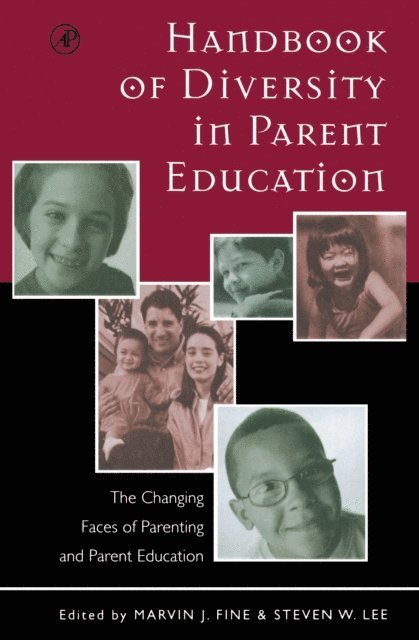
Traditionally, books on parent education have focused on techniques from a certain tradition, either behavioral or humanistic, that could be applied to any problem of parenting or child behavior change. These books have used a "cook-book" approach that is frequently oblivious to environmental conditions that influence behavior or take into account the individual differences of the children or families involved. This book highlights the complexity of our society and times by exploring the problems faced by diverse types of parents, children, and parenting situations. Moreover, the sensitive issues of parenting in unique populations are handled in a caring, straight-forward way with an emphasis on research-based parent education programs along with tips and strategies for everyday use.- Premier text on parent education in diverse populations- Features tips, strategies, websites and support for parents- Based upon "cutting edge" research in parent education- Models for developing problem-specific parenting programs- Step-by-step parent education programs for low-incidence problems- Features violence and crisis prevention and intervention skills for families
E-bok
PDF, Engelska, 20141 836 kr
Läs direkt efter köp
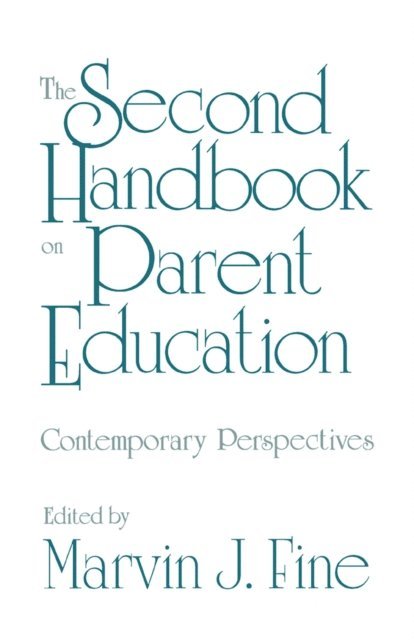
This book should enhance the reader''s understanding of the contemporary scene in parenting education, including effective programming, important issues, and future trends.
E-bok
PDF, Engelska, 2014756 kr
Läs direkt efter köp
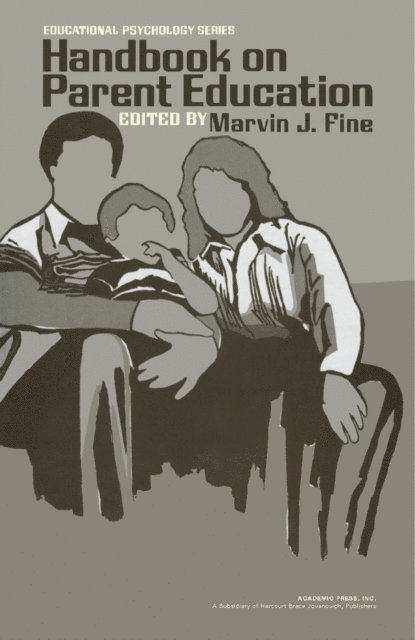
Handbook on Parent Education presents a contemporary picture of the state of the parent education movement. It tackles a number of critical issues such as the programs that are available or when parent education should begin. Different models of parent education are described, along with parenting programs for youth. The application of parenting programs for specific groups, including foster parents, parents of preschoolers, abusive parents, and parents of handicapped children, is also discussed. Comprised of 14 chapters, this book begins with an overview of the parent education movement as well as several prototype programs and some ethical issues. The distinction between education and therapy is explained, and parent education with special interest groups is described. In addition, problems of research and evaluation and a projection for the future are presented. Subsequent chapters focus on the state of the nuclear family in American society during the 1970s; Rudolf Dreikurs'' impact on childrearing practices and his contribution to individual psychology, together with the social context of child behavior; Haim Ginott''s approach to parent education; and the effects of parent effectiveness training on families. Transactional analysis approaches to parent education and parent education as a strategy for the prevention of child abuse are also examined. This monograph will appeal to educators, parents, sociologists, and educational psychologists.
E-bok
PDF, Engelska, 2012708 kr
Läs direkt efter köp
Hyperactivity has historically been a major concern of parents and teachers. Over the years, the term has come to mean many things to different persons. For some, the term is synonymous with "brain damage," and the prescribed course of treatment is medical. For others, the term is a catch all, covering almost any behaviors that are found to be obtrusive or disrup tive by the child''s caretakers. In recent years, there has been a great outcry by some over the use and abuse of the term as a justification for controlling the child. Others have expressed great concern over the excessive, inappro priate, or poorly monitored use of drug therapy with regard to hyperactivity. The current interest in hyperactive children is reflected in several major books (Cantwell, 1975; Feingold, 1975; Fine, 1977; Ross and Ross, 1976; Wender, 1973; Safer and Allen, 1976; Stewart and Olds, 1973). The num ber of published papers and symposia over the last several years is also voluminous. The main questions posed by practitioners revolve around intervention with the hyperactive child. The growing literature on intervention has identified a variety of approaches with demonstrated utility; including drug therapy, behavior modification, biofeedback, sensory-motor training, cog nitive training, environmental manipulations, and family therapy.
Häftad, Engelska, 2012
565 kr
Skickas inom 10-15 vardagar
Hyperactivity has historically been a major concern of parents and teachers. Over the years, the term has come to mean many things to different persons. For some, the term is synonymous with "brain damage," and the prescribed course of treatment is medical. For others, the term is a catch all, covering almost any behaviors that are found to be obtrusive or disrup tive by the child's caretakers. In recent years, there has been a great outcry by some over the use and abuse of the term as a justification for controlling the child. Others have expressed great concern over the excessive, inappro priate, or poorly monitored use of drug therapy with regard to hyperactivity. The current interest in hyperactive children is reflected in several major books (Cantwell, 1975; Feingold, 1975; Fine, 1977; Ross and Ross, 1976; Wender, 1973; Safer and Allen, 1976; Stewart and Olds, 1973). The num ber of published papers and symposia over the last several years is also voluminous. The main questions posed by practitioners revolve around intervention with the hyperactive child. The growing literature on intervention has identified a variety of approaches with demonstrated utility; including drug therapy, behavior modification, biofeedback, sensory-motor training, cog nitive training, environmental manipulations, and family therapy.
E-bok
PDF, Engelska, 2012708 kr
Läs direkt efter köp
Disturbed children constitute a sizeable and varied percentage of the child population. Generally, two to three percent have severe, longstanding problems and 20 to 30 percent have current, more transient problems. While preventive efforts are needed, it also seems obvious that many children will continue to function in a disturbed and disturbing fashion and will continue to require vari ous kinds of therapeutic interventions. These interventions will mainly occur in school and community settings. This book attempts to present a picture of some fairly popular models of intervention and to consider important related issues. There are probably as many ways of coping with disturbed children as there are creative, caring persons attempting to do the coping. A growing literature exists on ways of conceptual izing and intervening with such children. It was believed by the editor that an organized body of information on these concepts and techniques would prove useful to student and practitioner. A danger with such collections is that if they mainly portray novel or atypi cal techniques, while informative, the book quickly becomes passe and of li mited value. This book''s focus is on contemporary thought, but also on orien tations that have stood the test of some time and the stability of the under lying theory.
Häftad, Engelska, 2012
565 kr
Skickas inom 10-15 vardagar
Disturbed children constitute a sizeable and varied percentage of the child population. Generally, two to three percent have severe, longstanding problems and 20 to 30 percent have current, more transient problems. While preventive efforts are needed, it also seems obvious that many children will continue to function in a disturbed and disturbing fashion and will continue to require vari ous kinds of therapeutic interventions. These interventions will mainly occur in school and community settings. This book attempts to present a picture of some fairly popular models of intervention and to consider important related issues. There are probably as many ways of coping with disturbed children as there are creative, caring persons attempting to do the coping. A growing literature exists on ways of conceptual izing and intervening with such children. It was believed by the editor that an organized body of information on these concepts and techniques would prove useful to student and practitioner. A danger with such collections is that if they mainly portray novel or atypi cal techniques, while informative, the book quickly becomes passe and of li mited value. This book's focus is on contemporary thought, but also on orien tations that have stood the test of some time and the stability of the under lying theory.