Marvin R. Gottlieb Ph.D. – författare
Visar alla böcker från författaren Marvin R. Gottlieb Ph.D.. Handla med fri frakt och snabb leverans.
8 produkter
8 produkter
Inbunden, Engelska, 2007
843 kr
Skickas inom 10-15 vardagar
Matrix management was introduced in the 1970s in the context of competition from Japanese manufacturers, computerization of many technical and administrative tasks, and a recognition among business leaders that cross-functional teams (comprised of people from different departments and specialties) were necessary to create and produce complex products rapidly. Ideally, this approach, in which people are assigned to projects, rather than department managers, encourages collaboration, flexibility, and knowledge sharing, but in reality, it can often cause confusion, friction, and excessive bureaucracy. It fell out of fashion in the 1990s, but has resurfaced in a much wider array of companies today, as the pressure to innovate on ever-faster schedules encourages experimentation in organizational design.Marvin Gottlieb, who has studied and applied the principles of matrix management for over 25 years, takes us on a tour of this phenomenon—its evolution, current practices, and future applications. He argues that most organizations are taking on characteristics of matrix structure, with fluid teams and dotted-line reporting relationships across departments and divisions. Featuring case studies of successes and failures, he shows readers how to harness the power of the matrix structure while minimizing the conflict, disorientation, and resistance that often accompany the approach. In an environment where every company—large or small, entrepreneurial or established—is wrestling with the question of how to organize for maximum performance in a harshly competitive world, this book will give leaders and managers valuable insights and tools for promoting cultures that reward creativity and teamwork while maintaining strong leadership and accountability.
E-bok
PDF, Engelska, 20031 278 kr
Läs direkt efter köp
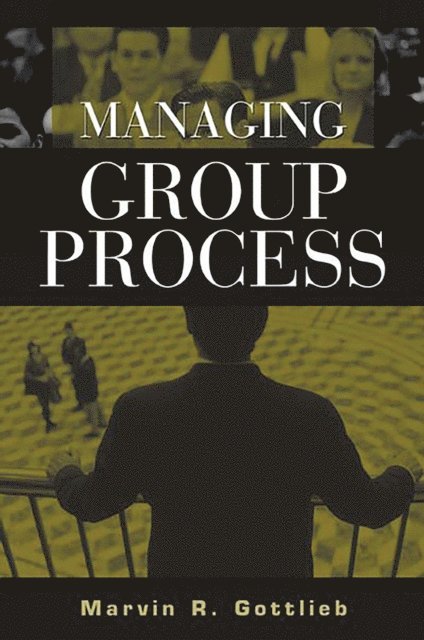
Aimed at front-line and senior managers faced with ongoing reorganization and an increasingly reluctant workforce, this book examines what it takes to facilitate problem solving, decision-making, and workforce retention and commitment. Gottlieb explains that managers can most effectively facilitate by adopting a hands-on strategy for processes rather than tasks. This book describes the skills and tools needed for leading and managing groups with consistency, commitment, and courage.Six core skills essential to facilitating group processes are presented:^L ^DBL Initiating^L ^DBL Questioning^L ^DBL Active Listening^L ^DBL Responding^L ^DBL Resolving^L ^DBL Closing/Committing^L Gottlieb discusses the most helpful tools a manager can use for facilitation, including planning, organizing, and directing group processes. Ethical guidelines are provided in conjunction with a discussion of the manager's role in the facilitation process.
E-bok
PDF, Engelska, 2007902 kr
Läs direkt efter köp
Matrix management was introduced in the 1970s in the context of competition from Japanese manufacturers, computerization of many technical and administrative tasks, and a recognition among business leaders that cross-functional teams (comprised of people from different departments and specialties) were necessary to create and produce complex products rapidly. Ideally, this approach, in which people are assigned to projects, rather than department managers, encourages collaboration, flexibility, and knowledge sharing, but in reality, it can often cause confusion, friction, and excessive bureaucracy. It fell out of fashion in the 1990s, but has resurfaced in a much wider array of companies today, as the pressure to innovate on ever-faster schedules encourages experimentation in organizational design.Marvin Gottlieb, who has studied and applied the principles of matrix management for over 25 years, takes us on a tour of this phenomenon—its evolution, current practices, and future applications. He argues that most organizations are taking on characteristics of matrix structure, with fluid teams and dotted-line reporting relationships across departments and divisions. Featuring case studies of successes and failures, he shows readers how to harness the power of the matrix structure while minimizing the conflict, disorientation, and resistance that often accompany the approach. In an environment where every company—large or small, entrepreneurial or established—is wrestling with the question of how to organize for maximum performance in a harshly competitive world, this book will give leaders and managers valuable insights and tools for promoting cultures that reward creativity and teamwork while maintaining strong leadership and accountability.
Inbunden, Engelska, 2017
638 kr
Skickas inom 10-15 vardagar
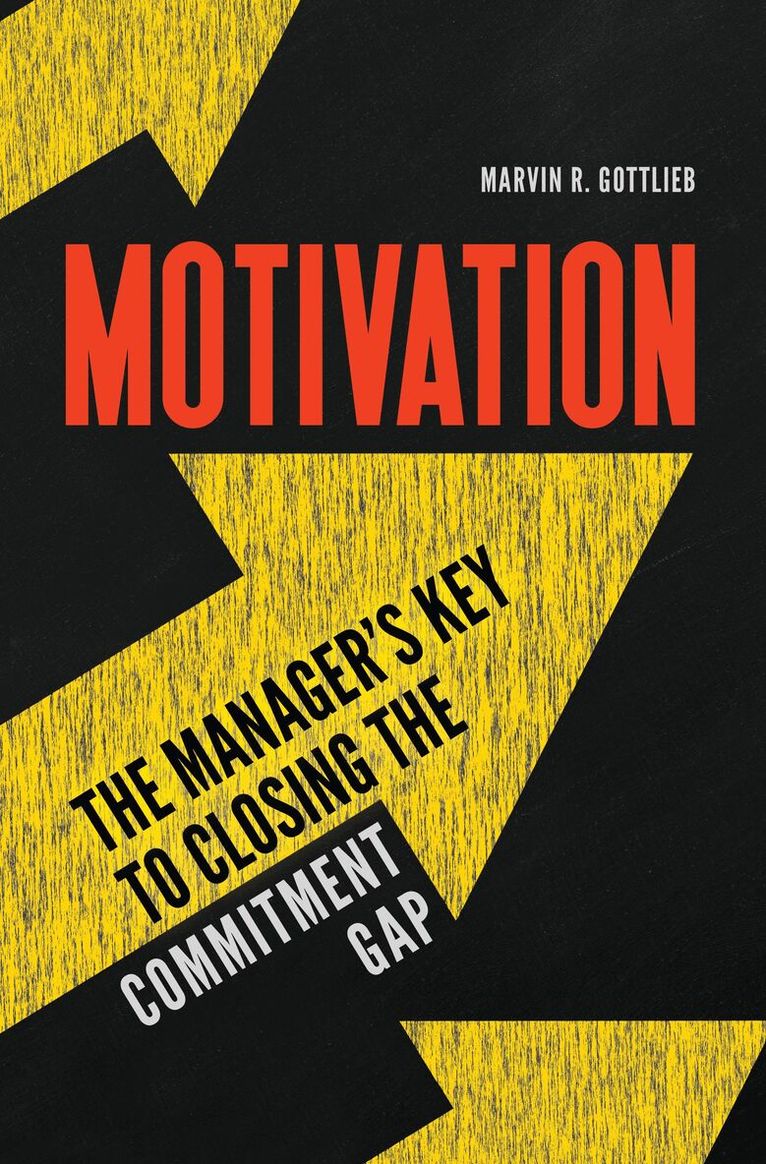
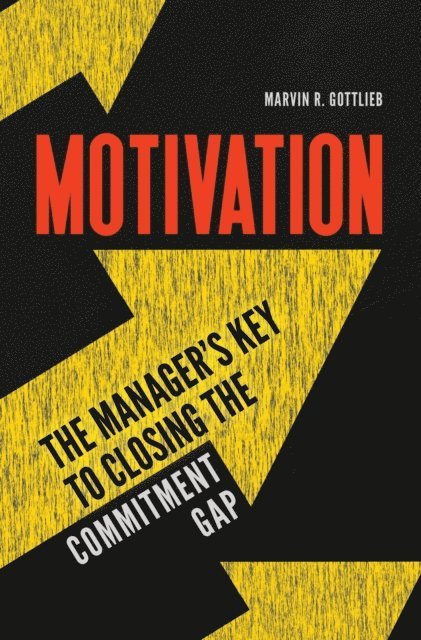
This book shows managers how to identify opportunities for increasing productivity by enhancing commitment and provides tools for building a high-performing team.More than ever, senior and frontline managers are tasked with the development and maintenance of highly productive teams—a formidable challenge in all situations. Organizational directives for "lean," highly responsive, change-adaptive workforces have created an environment in which every aspect of productivity must be examined and improved in the quest to meet increasingly competitive global goals. About 30 percent of productivity is lost from knowledge workers who withhold undetected discretionary effort because managers fail to tap into motivation dynamics that impact the level of individual and team commitment. This book gives managers the tools they need to motivate their teams to deliver significantly better results.Readers of Motivation: The Manager's Key to Closing the Commitment Gap will gain a foundational understanding of motivation from theoretical, experimental, and anecdotal perspectives and identify key areas of potential untapped productivity. The book explores the changing workforce values, economic pressures, and the revised compact between employers and employees that create the commitment gap that results in untapped productivity. Managers will see how to go through a diagnostic and relationship-building process that creates powerful and productive dialogues, resolves conflict, and pinpoints behaviors and identifies tools to build a fully committed, high-performing team.
E-bok
Engelska, 2017677 kr
Läs direkt efter köp
This book shows managers how to identify opportunities for increasing productivity by enhancing commitment and provides tools for building a high-performing team.More than ever, senior and frontline managers are tasked with the development and maintenance of highly productive teams—a formidable challenge in all situations. Organizational directives for "lean," highly responsive, change-adaptive workforces have created an environment in which every aspect of productivity must be examined and improved in the quest to meet increasingly competitive global goals. About 30 percent of productivity is lost from knowledge workers who withhold undetected discretionary effort because managers fail to tap into motivation dynamics that impact the level of individual and team commitment. This book gives managers the tools they need to motivate their teams to deliver significantly better results.Readers of Motivation: The Manager's Key to Closing the Commitment Gap will gain a foundational understanding of motivation from theoretical, experimental, and anecdotal perspectives and identify key areas of potential untapped productivity. The book explores the changing workforce values, economic pressures, and the revised compact between employers and employees that create the commitment gap that results in untapped productivity. Managers will see how to go through a diagnostic and relationship-building process that creates powerful and productive dialogues, resolves conflict, and pinpoints behaviors and identifies tools to build a fully committed, high-performing team.
Inbunden, Engelska, 1999
1 059 kr
Skickas inom 10-15 vardagar
Against a backdrop of downsizing, restructuring and other devastating changes within today's organizations, how does the executive actually go about getting things done? Not simply through the exercise of raw power, argues Gottlieb. Indeed, power and influence are not the same. Most articles in academic and professional business periodicals concentrate on power and provide scant insight into influencing—its techniques and various behaviors. In this work, Gottlieb, a specialist in management development and training, takes a big step toward correcting this imbalance and the confusion it creates. He explores a variety of approaches to getting work done that are both non-traditional and non-hierarchical in structure. Matrix or systems approaches have become commonplace, staff levels have thinned, and today's managers are increasingly dependent upon the cooperation of others in the organization, people over whom the manager has no direct authority. Managerial success depends, therefore, on an ability to influence others to comply and prioritize productively and efficiently.The book identifies the strategies available to those who want to develop or hone their influencing skills. It helps executives adapt their current influencing style to the new demands and requirements for leadership in today's unstable organizations, for example by building effective alliances and strong bases inside and outside of the organization for the exercise of one's influence. The book also helps managers construct dynamic organizational action plans for empowering and motivating others, and for providing bosses, peers, and subordinates with incentives to achieve goals. Gottlieb covers techniques to enhance persuasive and related selling techniques, examines several motivation issues for subordinates, and presents managers with approaches to using influence in the dual role of coach and counselor for staff and peers. Well illustrated with case studies, scenarios, and dialogues, the book will be essential for decision makers throughout the public and private sectors, and for all who aspire to decision-making positions in all types of organizations.
Inbunden, Engelska, 2003
1 199 kr
Skickas inom 10-15 vardagar
Aimed at front-line and senior managers faced with ongoing reorganization and an increasingly reluctant workforce, this book examines what it takes to facilitate problem solving, decision-making, and workforce retention and commitment. Gottlieb explains that managers can most effectively facilitate by adopting a hands-on strategy for processes rather than tasks. This book describes the skills and tools needed for leading and managing groups with consistency, commitment, and courage.Six core skills essential to facilitating group processes are presented:^L ^DBL Initiating^L ^DBL Questioning^L ^DBL Active Listening^L ^DBL Responding^L ^DBL Resolving^L ^DBL Closing/Committing^L Gottlieb discusses the most helpful tools a manager can use for facilitation, including planning, organizing, and directing group processes. Ethical guidelines are provided in conjunction with a discussion of the manager's role in the facilitation process.
E-bok
Engelska, 2017677 kr
Läs direkt efter köp
This book shows managers how to identify opportunities for increasing productivity by enhancing commitment and provides tools for building a high-performing team.More than ever, senior and frontline managers are tasked with the development and maintenance of highly productive teams—a formidable challenge in all situations. Organizational directives for "lean," highly responsive, change-adaptive workforces have created an environment in which every aspect of productivity must be examined and improved in the quest to meet increasingly competitive global goals. About 30 percent of productivity is lost from knowledge workers who withhold undetected discretionary effort because managers fail to tap into motivation dynamics that impact the level of individual and team commitment. This book gives managers the tools they need to motivate their teams to deliver significantly better results.Readers of Motivation: The Manager's Key to Closing the Commitment Gap will gain a foundational understanding of motivation from theoretical, experimental, and anecdotal perspectives and identify key areas of potential untapped productivity. The book explores the changing workforce values, economic pressures, and the revised compact between employers and employees that create the commitment gap that results in untapped productivity. Managers will see how to go through a diagnostic and relationship-building process that creates powerful and productive dialogues, resolves conflict, and pinpoints behaviors and identifies tools to build a fully committed, high-performing team.