Mary A. Renda – författare
Visar alla böcker från författaren . Handla med fri frakt och snabb leverans.
3 produkter
3 produkter
Häftad, Engelska, 2001
471 kr
Skickas
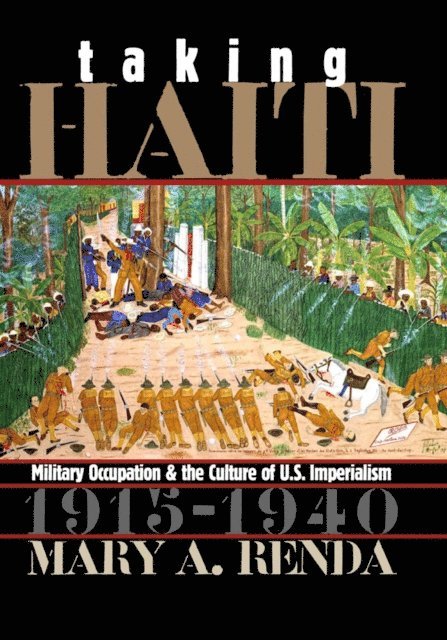
The US invasion of Haiti in July 1915 marked the start of a military occupation that would last nineteen years - and that fed an American fascination with Haiti that would flourish even longer. Exploring the cultural dimensions of the US contact with Haiti during the occupation and its aftermath, the author shows that what Americans thought and wrote about Haiti during those years contributed in crucial and unexpected ways to an emerging culture of US imperialism. At the start of this emerging culture, Renda argues, was American paternalism, which saw Haitians as wards of the United States. She explores the ways in which diverse Americans - including activists, intellectuals, artists, missionaries, marines and politicians - responded to paternalist constructs, shaping new versions of American culture along the way. Her analysis draws on; a rich record of US discourses on Haiti, including the writings of policy-makers; the diaries, letters, songs and memoirs of marines stationed in Haiti; and works by such writers as Eugene O'Neill, James Weldon Johnson, Langson Huges and Zora Neale Hurston.
445 kr
Läs direkt efter köp
The U.S. invasion of Haiti in July 1915 marked the start of a military occupation that lasted for nineteen years — and fed an American fascination with Haiti that flourished even longer. Exploring the cultural dimensions of U.S. contact with Haiti during the occupation and its aftermath, Mary Renda shows that what Americans thought and wrote about Haiti during those years contributed in crucial and unexpected ways to an emerging culture of U.S. imperialism.At the heart of this emerging culture, Renda argues, was American paternalism, which saw Haitians as wards of the United States. She explores the ways in which diverse Americans — including activists, intellectuals, artists, missionaries, marines, and politicians — responded to paternalist constructs, shaping new versions of American culture along the way. Her analysis draws on a rich record of U.S. discourses on Haiti, including the writings of policymakers; the diaries, letters, songs, and memoirs of marines stationed in Haiti; and literary works by such writers as Eugene O''Neill, James Weldon Johnson, Langston Hughes, and Zora Neale Hurston.Pathbreaking and provocative, Taking Haiti illuminates the complex interplay between culture and acts of violence in the making of the American empire.
E-bok
PDF, Engelska, 2004424 kr
Läs direkt efter köp
The U.S. invasion of Haiti in July 1915 marked the start of a military occupation that lasted for nineteen years — and fed an American fascination with Haiti that flourished even longer. Exploring the cultural dimensions of U.S. contact with Haiti during the occupation and its aftermath, Mary Renda shows that what Americans thought and wrote about Haiti during those years contributed in crucial and unexpected ways to an emerging culture of U.S. imperialism.At the heart of this emerging culture, Renda argues, was American paternalism, which saw Haitians as wards of the United States. She explores the ways in which diverse Americans — including activists, intellectuals, artists, missionaries, marines, and politicians — responded to paternalist constructs, shaping new versions of American culture along the way. Her analysis draws on a rich record of U.S. discourses on Haiti, including the writings of policymakers; the diaries, letters, songs, and memoirs of marines stationed in Haiti; and literary works by such writers as Eugene O''Neill, James Weldon Johnson, Langston Hughes, and Zora Neale Hurston.Pathbreaking and provocative, Taking Haiti illuminates the complex interplay between culture and acts of violence in the making of the American empire.