Mary G. Rolinson – författare
Visar alla böcker från författaren Mary G. Rolinson. Handla med fri frakt och snabb leverans.
4 produkter
4 produkter
Häftad, Engelska, 2007
464 kr
Skickas inom 10-15 vardagar
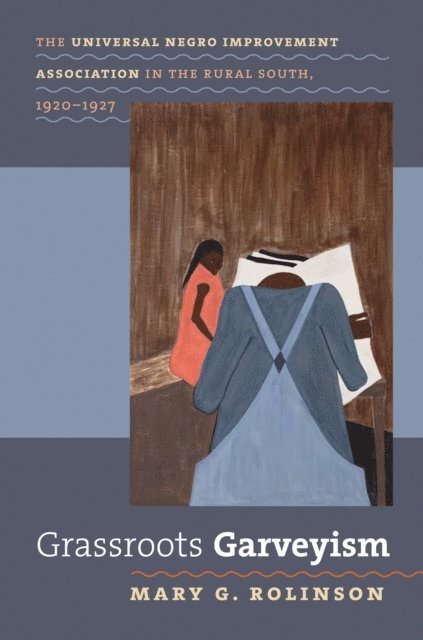
The black separatist movement led by Marcus Garvey has long been viewed as a phenomenon of African American organization in the urban North. But as Mary Rolinson demonstrates, the largest number of Universal Negro Improvement Association (UNIA) divisions and Garvey's most devoted and loyal followers were found in the southern Black Belt. Rolinson remaps the movement to include this vital but overlooked region. Rolinson shows how Garvey's southern constituency sprang from cities, countryside churches, and sharecropper cabins. Southern Garveyites adopted pertinent elements of the movement's ideology and developed strategies for community self-defense and self-determination. These southern African Americans maintained a spiritual attachment to their African identities and developed a fiercely racial nationalism, building on the rhetoric and experiences of black organizers from the nineteenth-century South. Garveyism provided a common bond during the upheaval of the Great Migration, Rolinson contends, and even after the UNIA had all but disappeared in the South in the 1930s, the movement's tenets of race organization, unity, and pride continued to flourish in other forms of black protest for generations.
E-bok
Engelska, 2012381 kr
Läs direkt efter köp
The black separatist movement led by Marcus Garvey has long been viewed as a phenomenon of African American organization in the urban North. But as Mary Rolinson demonstrates, the largest number of Universal Negro Improvement Association (UNIA) divisions and Garvey’s most devoted and loyal followers were found in the southern Black Belt. Tracing the path of organizers from northern cities to Virginia, and then from the Upper to the Deep South, Rolinson remaps the movement to include this vital but overlooked region.Rolinson shows how Garvey’s southern constituency sprang from cities, countryside churches, and sharecropper cabins. Southern Garveyites adopted pertinent elements of the movement’s ideology and developed strategies for community self-defense and self-determination. These southern African Americans maintained a spiritual attachment to their African identities and developed a fiercely racial nationalism, building on the rhetoric and experiences of black organizers from the nineteenth-century South. Garveyism provided a common bond during the upheaval of the Great Migration, Rolinson contends, and even after the UNIA had all but disappeared in the South in the 1930s, the movement’s tenets of race organization, unity, and pride continued to flourish in other forms of black protest for generations.
E-bok
PDF, Engelska, 2012866 kr
Läs direkt efter köp
The black separatist movement led by Marcus Garvey has long been viewed as a phenomenon of African American organization in the urban North. But as Mary Rolinson demonstrates, the largest number of Universal Negro Improvement Association (UNIA) divisions and Garvey''s most devoted and loyal followers were found in the southern Black Belt. Tracing the path of organizers from northern cities to Virginia, and then from the Upper to the Deep South, Rolinson remaps the movement to include this vital but overlooked region.Rolinson shows how Garvey''s southern constituency sprang from cities, countryside churches, and sharecropper cabins. Southern Garveyites adopted pertinent elements of the movement''s ideology and developed strategies for community self-defense and self-determination. These southern African Americans maintained a spiritual attachment to their African identities and developed a fiercely racial nationalism, building on the rhetoric and experiences of black organizers from the nineteenth-century South. Garveyism provided a common bond during the upheaval of the Great Migration, Rolinson contends, and even after the UNIA had all but disappeared in the South in the 1930s, the movement''s tenets of race organization, unity, and pride continued to flourish in other forms of black protest for generations.
E-bok
PDF, Engelska, 2012381 kr
Läs direkt efter köp
The black separatist movement led by Marcus Garvey has long been viewed as a phenomenon of African American organization in the urban North. But as Mary Rolinson demonstrates, the largest number of Universal Negro Improvement Association (UNIA) divisions and Garvey’s most devoted and loyal followers were found in the southern Black Belt. Tracing the path of organizers from northern cities to Virginia, and then from the Upper to the Deep South, Rolinson remaps the movement to include this vital but overlooked region.Rolinson shows how Garvey’s southern constituency sprang from cities, countryside churches, and sharecropper cabins. Southern Garveyites adopted pertinent elements of the movement’s ideology and developed strategies for community self-defense and self-determination. These southern African Americans maintained a spiritual attachment to their African identities and developed a fiercely racial nationalism, building on the rhetoric and experiences of black organizers from the nineteenth-century South. Garveyism provided a common bond during the upheaval of the Great Migration, Rolinson contends, and even after the UNIA had all but disappeared in the South in the 1930s, the movement’s tenets of race organization, unity, and pride continued to flourish in other forms of black protest for generations.