Mary Gribbin – författare
Visar alla böcker från författaren Mary Gribbin. Handla med fri frakt och snabb leverans.
18 produkter
Science
A History in 100 Experiments
E-bok, 2016
198 kr
Lägg i varukorg
A history of science distilled into 100 notable experiments – epic moments that have fuelled our understanding of Earth and the Universe beyond.The history of science is a fascinating and long one, covering thousands of years of history. The development of scientific experiments involves some of …
Out of the Shadow of a Giant
How Newton Stood on the Shoulders of Hooke and Halley
E-bok, 2017
88 kr
Lägg i varukorg
Shortlisted for the BSHS Hughes Prize What if Isaac Newton had never lived? Robert Hooke and Edmond Halley, whose place in history has been overshadowed by the giant figure of Newton, were pioneering scientists within their own right, and instrumental in establishing the Royal Society. Whilst …
Out of the Shadow of a Giant
How Newton Stood on the Shoulders of Hooke and Halley
Häftad, 2018
147 kr
Lägg i varukorg
Shortlisted for the BSHS Hughes Prize What if Isaac Newton had never lived? Robert Hooke and Edmond Halley, whose place in history has been overshadowed by the giant figure of Newton, were pioneering scientists within their own right, and instrumental in establishing the Royal Society. Whilst …
Out of the Shadow of a Giant
How Newton Stood on the Shoulders of Hooke and Halley
Ljudbok, 2017
221 kr
Lägg i varukorg
Shortlisted for the BSHS Hughes PrizeWhat if Isaac Newton had never lived?Robert Hooke and Edmond Halley, whose place in history has been overshadowed by the giant figure of Newton, were pioneering scientists within their own right, and instrumental in establishing the Royal Society.Whilst Newton …
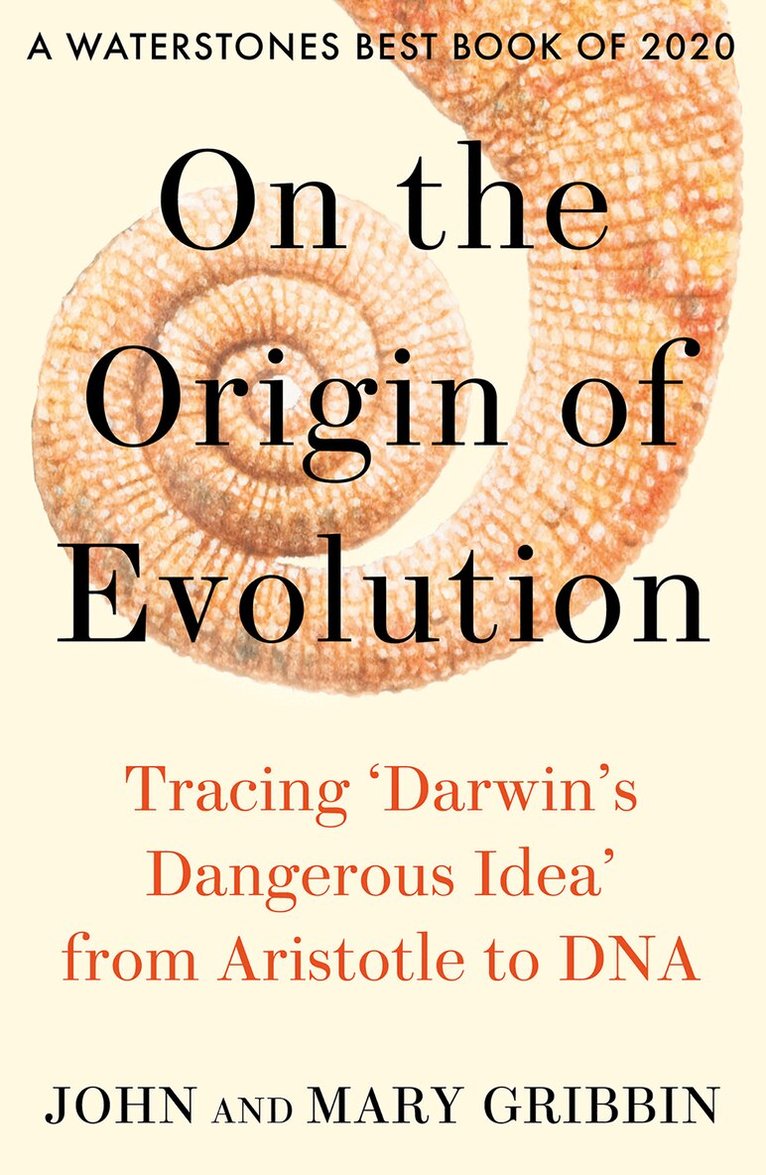
On the Origin of Evolution
Tracing ‘Darwin’s Dangerous Idea’ from Aristotle to DNA
E-bok, 2020
87 kr
Lägg i varukorg
A Waterstones Best Book of 2020The theory of evolution by natural selection did not spring fully formed and unprecedented from the brain of Charles Darwin. Rather it has been examined and debated by philosophers the world over for thousands of years.This lively history traces the evolution of the …
On the Origin of Evolution
Tracing ‘Darwin’s Dangerous Idea’ from Aristotle to DNA
Ljudbok, 2020
191 kr
Lägg i varukorg
A Waterstones Best Book of 2020The theory of evolution by natural selection did not spring fully formed and unprecedented from the brain of Charles Darwin. Rather it has been examined and debated by philosophers the world over for thousands of years.This lively history traces the evolution of the …
On the Origin of Evolution
Tracing ‘Darwin’s Dangerous Idea’ from Aristotle to DNA
Häftad, 2021
133 kr
Lägg i varukorg
A Waterstones Best Book of 2020The theory of evolution by natural selection did not spring fully formed and unprecedented from the brain of Charles Darwin. Rather it has been examined and debated by philosophers the world over for thousands of years.This lively history traces the evolution of the …
Stardust
Supernovae and Life -- The Cosmic Connection
Av John R. Gribbin, Mary Gribbin
Häftad, 2001
473 kr
Lägg i varukorg
We are made of stardust-and so is all life as we know it. All the chemical elements on earth except hydrogen-including the ones in our bodies-have been processed inside stars, scattered across the universe in great stellar explosions, and recycled to become new stars, planets, and parts of us.In …
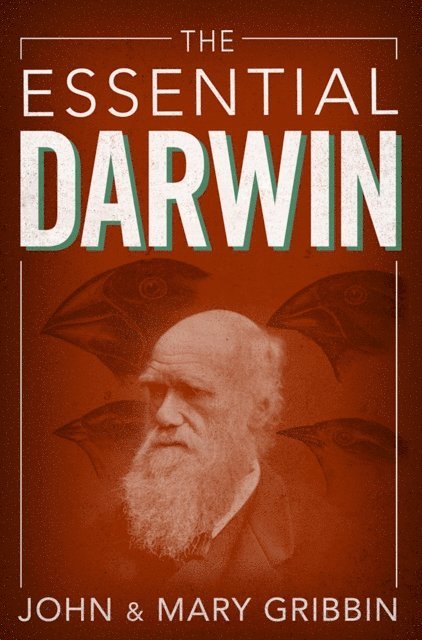
Essential Darwin
E-bok, 2014
51 kr
Lägg i varukorg
Charles Darwin was the epitome of the Victorian gentleman amateur scientist, living entirely off inherited wealth and the income from his books. At the same time, however, he was the most professional scientist of his day. Darwin''s life is full of contrast. In his youth, he seemed likely to become …
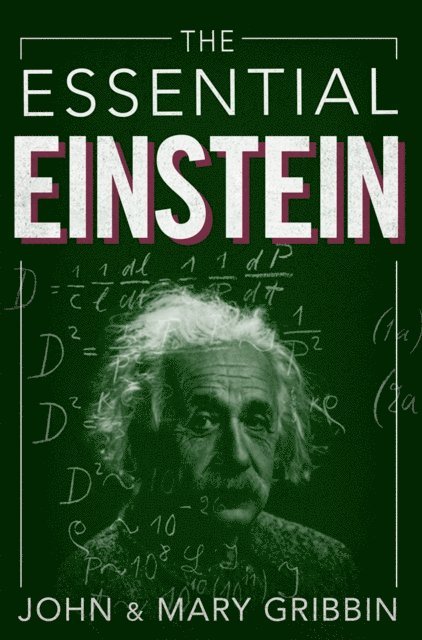
Essential Einstein
E-bok, 2014
51 kr
Lägg i varukorg
The definitive scientific icon of the twentieth century, Albert Einstein is remember for one equation, E=mc², and the image of a white-haired, pipe-smoking professor who didn’t wear socks. But the equation comes from a time when all of his great work was done. The real Albert Einstein – the high …
Essential Galileo
E-bok, 2014
50 kr
Lägg i varukorg
Galileo Galilei (1564-1642) was the first scientist in the modern use of the term. Instead of relying on the works of Aristotle, he actually carried out experiments to test theories – legend has it that one of his experiments involved throwing weights off the Leaning Tower of Pisa. His astronomical …
On The Origin of Evolution
Tracing ‘Darwin’s Dangerous Idea’ from Aristotle to DNA
Inbunden, 2022
367 kr
Lägg i varukorg
The theory of evolution by natural selection did not spring fully formed and unprecedented from the brain of Charles Darwin. The idea of evolution had been around, in various guises, since the time of Ancient Greece. And nor did theorizing about evolution stop with what Daniel Dennett called …
On The Origin of Evolution
Tracing 'Darwin's Dangerous Idea' from Aristotle to DNA
E-bok, 2022
316 kr
Lägg i varukorg
The theory of evolution by natural selection did not spring fully formed and unprecedented from the brain of Charles Darwin. The idea of evolution had been around, in various guises, since the time of Ancient Greece. And nor did theorizing about evolution stop with what Daniel Dennett called …
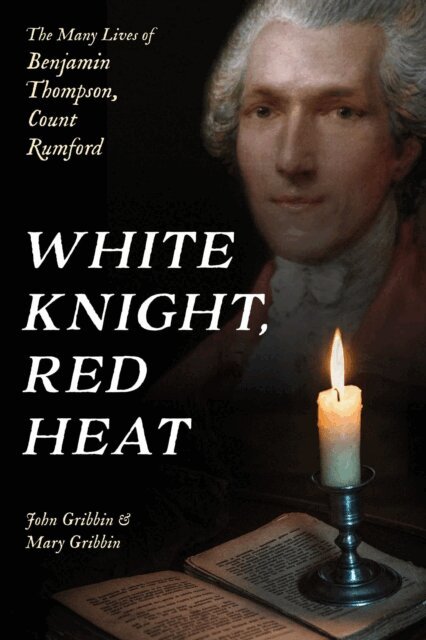
White Knight, Red Heat
The Many Lives of Benjamin Thompson, Count Rumford
Inbunden, 2023
308 kr
Lägg i varukorg
President Franklin Delano Roosevelt said that “Thomas Jefferson, Benjamin Franklin, and Count Rumford are the greatest minds that America has produced,” and indeed, Rumford was a peer of theirs, and arguably contributed more to the scientific canon, and yet is nowhere near as well known. Born in …
White Knight, Red Heat
E-bok, 2023
322 kr
Lägg i varukorg
President Franklin Delano Roosevelt said that ';Thomas Jefferson, Benjamin Franklin, and Count Rumford are the greatest minds that America has produced,' and indeed, Rumford was a peer of theirs, and arguably contributed more to the scientific canon, and yet is nowhere near as well known. Born in …