Mary Louise Adams – författare
Visar alla böcker från författaren Mary Louise Adams. Handla med fri frakt och snabb leverans.
4 produkter
4 produkter
Häftad, Engelska, 1997
360 kr
Skickas inom 5-8 vardagar
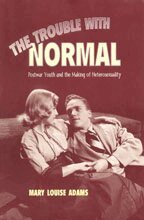
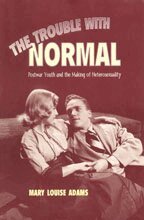
In the years after the Second World War, economic and social factors combined to produce an intense concern over the sexual development and behaviour of young people. In a context where heterosexuality and 'normality' were understood to be synonymous and assumed to be necessary for social and national stability, teenagers were the target of a range of materials and practices meant to turn young people into proper heterosexuals.In this study, Mary Louise Adams explores discourses about youth and their place in the production and reproduction of heterosexual norms. She examines debates over juvenile delinquency, indecent literature, and sex education to show not why heterosexuality became a peculiar obsession in English Canada following the Second World War as much as how it came to hold such sway.Drawing on feminist theory, cultural studies, and lesbian/gay studies, The Trouble with Normal is the first Canadian study of 'youth' as a sexual and moral category. Adams looks not only at sexual material aimed at teenagers but also at sexual discourses generally, for what they had to say about young people and for the ways in which 'youth,' as a concept, made those discourses work. She argues that postwar insecurities about young people narrowed the sexual possibilities of both young people and adults. While much of the recent history of sexuality examines sexuality 'from the margins,' The Trouble with Normal is firmly committed to examining the 'centre,' to unpacking normality itself. As the first book-length study of the history of sexuality in postwar Canada, it will make an important contribution to the growing international literature on sexual regulation.
E-bok
PDF, Engelska, 1997443 kr
Läs direkt efter köp
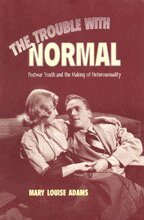
In the years after the Second World War, economic and social factors combined to produce an intense concern over the sexual development and behaviour of young people. In a context where heterosexuality and 'normality' were understood to be synonymous and assumed to be necessary for social and national stability, teenagers were the target of a range of materials and practices meant to turn young people into proper heterosexuals.In this study, Mary Louise Adams explores discourses about youth and their place in the production and reproduction of heterosexual norms. She examines debates over juvenile delinquency, indecent literature, and sex education to show not why heterosexuality became a peculiar obsession in English Canada following the Second World War as much as how it came to hold such sway.Drawing on feminist theory, cultural studies, and lesbian/gay studies, The Trouble with Normal is the first Canadian study of 'youth' as a sexual and moral category. Adams looks not only at sexual material aimed at teenagers but also at sexual discourses generally, for what they had to say about young people and for the ways in which 'youth,' as a concept, made those discourses work. She argues that postwar insecurities about young people narrowed the sexual possibilities of both young people and adults. While much of the recent history of sexuality examines sexuality 'from the margins,' The Trouble with Normal is firmly committed to examining the 'centre,' to unpacking normality itself. As the first book-length study of the history of sexuality in postwar Canada, it will make an important contribution to the growing international literature on sexual regulation.
E-bok
PDF, Engelska, 2016470 kr
Läs direkt efter köp
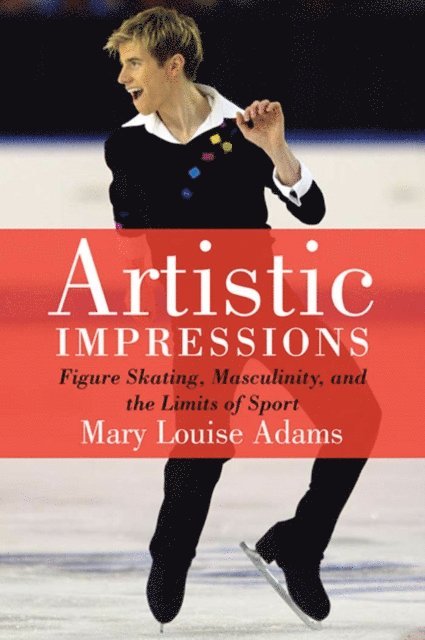
In contemporary North America, figure skating ranks among the most 'feminine' of sports and few boys take it up for fear of being labelled effeminate or gay. Yet figure skating was once an exclusively male pastime - women did not skate in significant numbers until the late 1800s, at least a century after the founding of the first skating club. Only in the 1930s did figure skating begin to acquire its feminine image.Artistic Impressions is the first history to trace figure skating's striking transformation from gentlemen's art to 'girls' sport. With a focus on masculinity, Mary Louise Adams examines how skating's evolving gender identity has been reflected on the ice and in the media, looking at rules, technique, and style and at ongoing debates about the place of 'art' in sport. Uncovering the little known history of skating, Artistic Impressions shows how ideas about sport, gender, and sexuality have combined to limit the forms of physical expression available to men.
E-bok
Engelska, 2011447 kr
Läs direkt efter köp
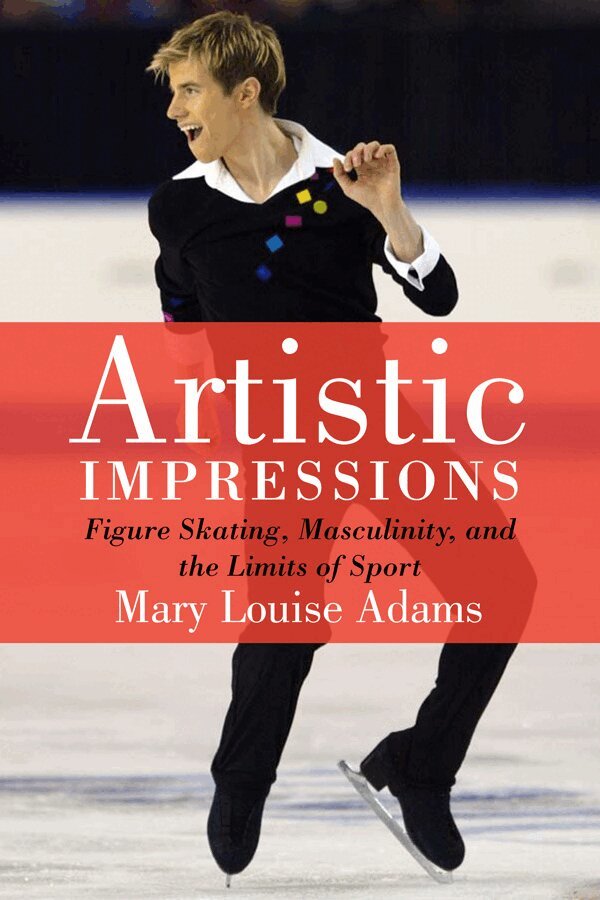
In contemporary North America, figure skating ranks among the most 'feminine' of sports and few boys take it up for fear of being labelled effeminate or gay. Yet figure skating was once an exclusively male pastime - women did not skate in significant numbers until the late 1800s, at least a century after the founding of the first skating club. Only in the 1930s did figure skating begin to acquire its feminine image.Artistic Impressions is the first history to trace figure skating's striking transformation from gentlemen's art to 'girls' sport. With a focus on masculinity, Mary Louise Adams examines how skating's evolving gender identity has been reflected on the ice and in the media, looking at rules, technique, and style and at ongoing debates about the place of 'art' in sport. Uncovering the little known history of skating, Artistic Impressions shows how ideas about sport, gender, and sexuality have combined to limit the forms of physical expression available to men.