Mary M. Atwater – författare
Visar alla böcker från författaren Mary M. Atwater. Handla med fri frakt och snabb leverans.
5 produkter
5 produkter
7 472 kr
Skickas inom 10-15 vardagar
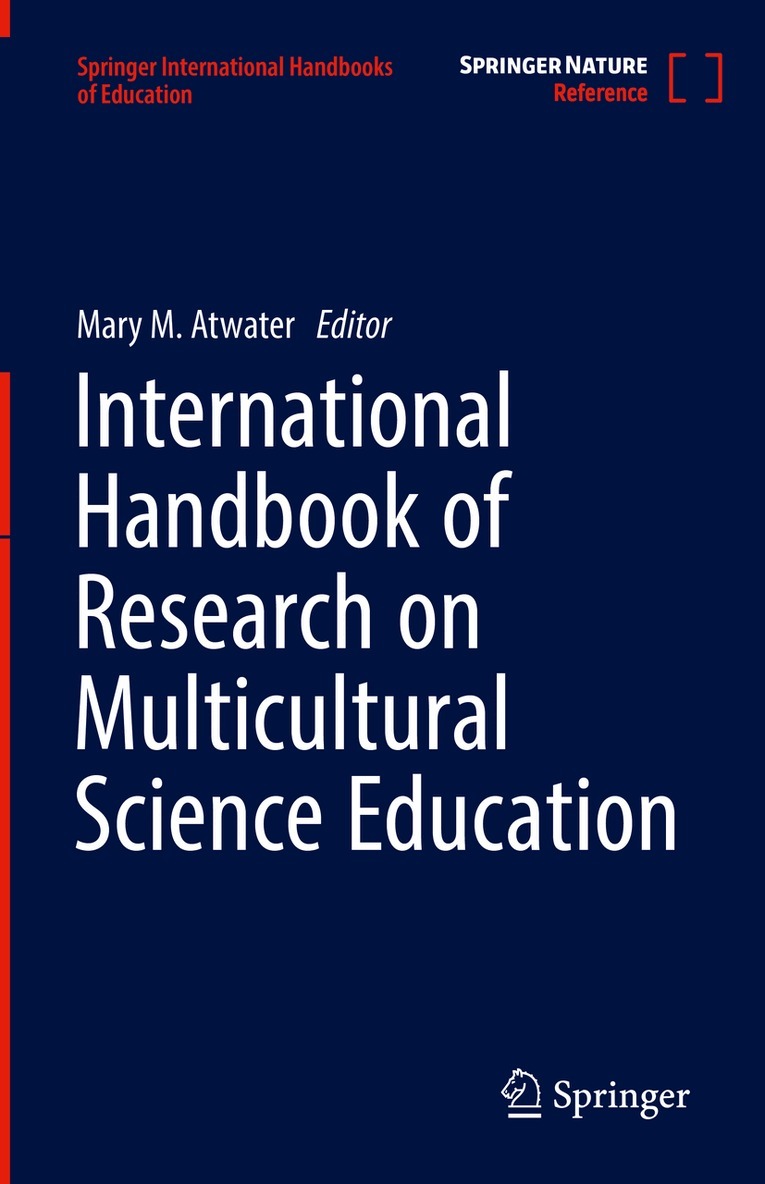
This handbook gathers in one volume the major research and scholarship related to multicultural science education that has developed since the field was named and established by Atwater in 1993. Culture is defined in this handbook as an integrated pattern of shared values, beliefs, languages, worldviews, behaviors, artifacts, knowledge, and social and political relationships of a group of people in a particular place or time that the people use to understand or make meaning of their world, each other, and other groups of people and to transmit these to succeeding generations. The research studies include both different kinds of qualitative and quantitative studies. The chapters in this volume reflect differing ideas about culture and its impact on science learning and teaching in different K-14 contexts and policy issues. Research findings about groups that are underrepresented in STEM in the United States, and in other countries related to language issues and indigenous knowledge are included in this volume.
Del 65 - Contemporary Trends and Issues in Science Education
Creating and Maintaining a Home in Science Education Research
Voices Across the African Diaspora, Volume 1
Inbunden, Engelska, 2025
1 589 kr
Skickas inom 10-15 vardagar
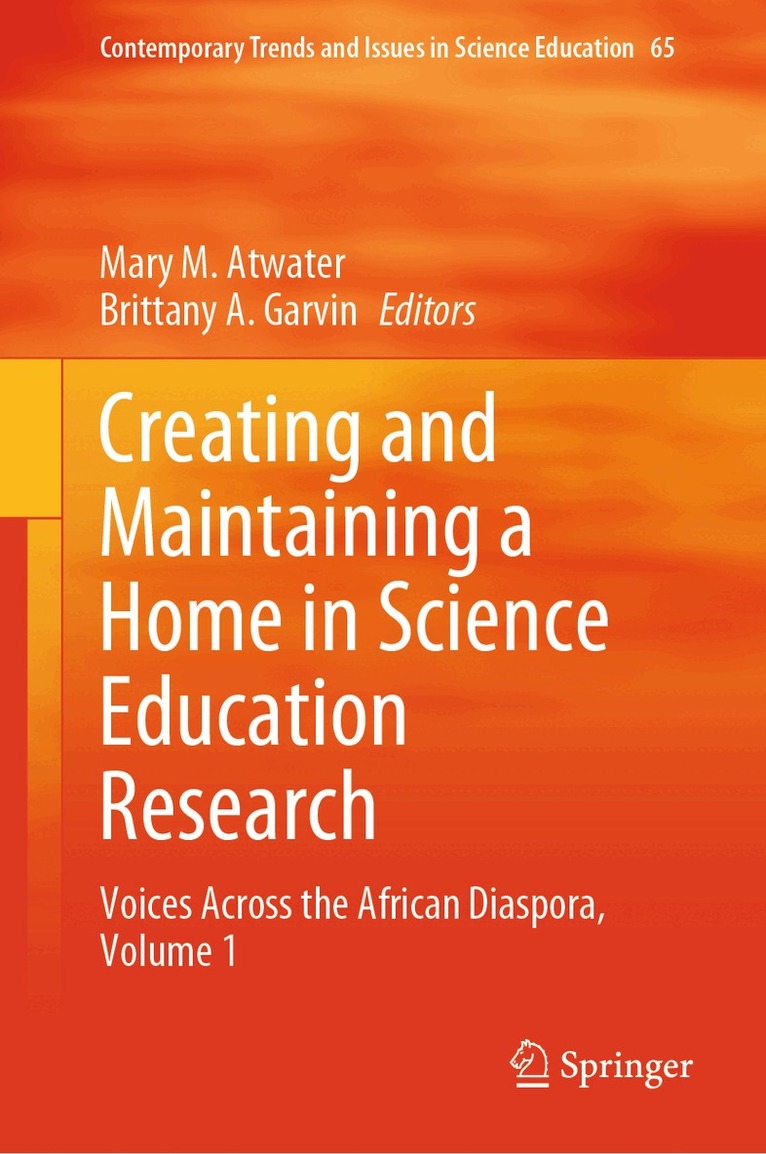
This first volume presents narratives from science education researchers of African ancestry, reflecting on the significance of a professional home. Through personal and scholarly perspectives, Black researchers share experiences of seeking, establishing, or finding belonging in science education across diverse settings. Authors from various institutions offer insights into traditionally White universities and a distinct home in Africa. By showcasing counter-narratives and strategies, this book supports the next generation of science education researchers and teacher educators. Drawing from interdisciplinary traditions—historical, philosophical, psychological, and sociological—it provides a nuanced understanding of research, identity, and community within the field.
Del 66 - Contemporary Trends and Issues in Science Education
Creating and Maintaining a Home in Science Education Research
Voices Across the African Diaspora, Volume 2
Inbunden, Engelska, 2025
1 589 kr
Skickas inom 10-15 vardagar
This second volume explores the challenges faced by science education researchers of African ancestry in securing an ideal academic home. Highlighting systemic barriers, it advocates for addressing teacher shortages and informs the development of equitable teacher education programs, particularly for Teacher of Color and Indigenous Teachers (TOCIT). Featuring narratives from researchers navigating less-than-ideal environments, transitioning between institutions, or preparing for retirement, it offers invaluable insights into adaptation and resilience. With contributions from diverse institutional backgrounds, including Historically Black institutions, it concludes with policy and practice recommendations to foster inclusive science education and advance equity for African-ancestry professionals.
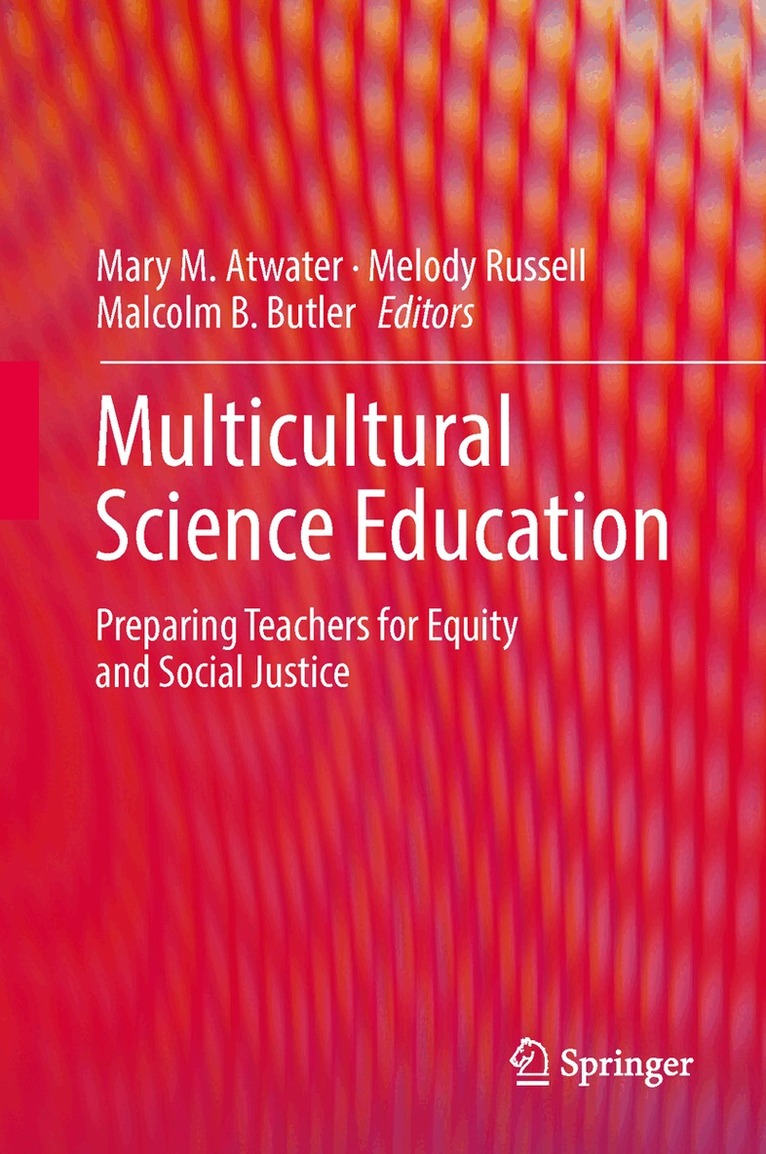
Multicultural Science Education
Preparing Teachers for Equity and Social Justice
Inbunden, Engelska, 2013
1 167 kr
Skickas inom 10-15 vardagar
This book offers valuable guidance for science teacher educators looking for ways to facilitate preservice and inservice teachers’ pedagogy relative to teaching students from underrepresented and underserved populations in the science classroom. It also provides solutions that will better equip science teachers of underrepresented student populations with effective strategies that challenge the status quo, and foster classrooms environment that promotes equity and social justice for all of their science students.Multicultural Science Education illuminates historically persistent, yet unresolved issues in science teacher education from the perspectives of a remarkable group of science teacher educators and presents research that has been done to address these issues. It centers on research findings on underserved and underrepresented groups of students and presents frameworks, perspectives, and paradigms that have implications for transforming science teacher education. In addition, the chapters provide an analysis of the socio-cultural-political consequences in the ways in which science teacher education is theoretically conceptualized and operationalized in the United States.The book provides teacher educators with a framework for teaching through a lens of equity and social justice, one that may very well help teachers enhance the participation of students from traditionally underrepresented and underserved groups in science, technology, engineering, and mathematics (STEM) areas and help them realize their full potential in science. Moreover, science educators will find this book useful for professional development workshops and seminars for both novice and veteran science teachers."Multicultural Science Education: Preparing Teachers for Equity and Social Justice directly addresses the essential role that science teacher education plays for the future of an informed and STEM knowledgeable citizenry. The editors and authors review the beginnings of multicultural science education, and then highlight findings from studies on issues of equity, underrepresentation, cultural relevancy, English language learning, and social justice. The most significant part of this book is the move to the policy level—providing specific recommendations for policy development, implementation, assessment and analysis, with calls to action for all science teacher educators, and very significantly, all middle and high school science teachers and prospective teachers.By emphasizing the important role that multicultural science education has played in providing the knowledge base and understanding of exemplary science education, Multicultural Science Education: Preparing Teachers for Equity and Social Justice gives the reader a scope and depth of the field, along with examples of strategies to use with middle and high school students. These classroom instructional strategies are based on sound science and research. Readers are shown the balance between research-based data driven models articulated with successful instructional design. Science teacher educators will find this volume of great value as they work with their pre-service and in-service teachers about how to address and infuse multicultural science education within their classrooms.For educators to be truly effective in their classrooms, they must examine every component of the learning and teaching process. Multicultural Science Education: Preparing Teachers for Equity and Social Justice provides not only the intellectual and research bases underlying multicultural studies in science education, but also the pragmatic side. All teachers and teacher educators can infuse these findings and recommendations into their classrooms in a dynamic way, and ultimately provide richer learning experiences for all students."Patricia Simmons, North Carolina State University, Raleigh, USA"This provocative collection of chapters is a presentation in gutsiness. Ingenious in construction and sequencing, this book will influence science teacher educators by introducing them to issues of equity and social justice directly related to women and people of color. The authors unflinchingly interrogate issues of equity which need to be addressed in science education courses."This provocative collection of chapters is a presentation in gutsiness. Ingenious in construction and sequencing, this book will influence science teacher educators by introducing them to issues of equity and social justice directly related to women and people of color. The authors unflinchingly interrogate issues of equity which need to be addressed in science education courses.It begins with setting current cultural and equity issue within a historic frame. The first chapter sets the scene by moving the reader through 400 years in which African-American’s were ‘scientifically excluded from science’. This is followed by a careful review of the JimCrow era, an analysis of equity issues of women and ends with an examination of sociocultural consciousness and culturally responsive teaching.Two chapters comprise the second section. Each chapter examines the role of the science teacher in providing a safe place by promoting equity and social justice in the classroom. The three chapters in the third section focus on secondary science teachers. Each addresses issues of preparation that provides new teachers with understanding of equity and provokes questions of good teaching. Section four enhances and expands the first section as the authors suggest cultural barriers the impact STEM engagement by marginalized groups. The last section, composed of three chapters, interrogates policy issues that influence the science classroom."Molly Weinburgh, Texas Christian University, Fort Worth, USA

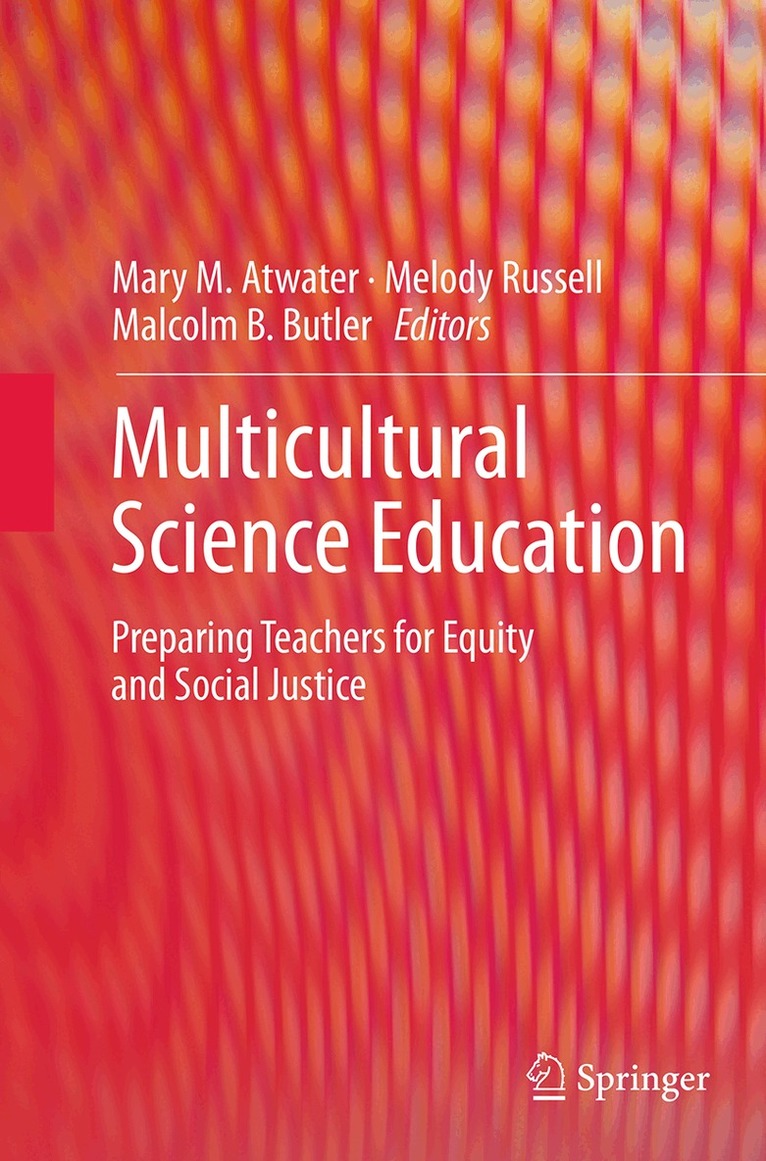
Multicultural Science Education
Preparing Teachers for Equity and Social Justice
Häftad, Engelska, 2016
1 167 kr
Skickas inom 10-15 vardagar
This book offers valuable guidance for science teacher educators looking for ways to facilitate preservice and inservice teachers’ pedagogy relative to teaching students from underrepresented and underserved populations in the science classroom. It also provides solutions that will better equip science teachers of underrepresented student populations with effective strategies that challenge the status quo, and foster classrooms environment that promotes equity and social justice for all of their science students.Multicultural Science Education illuminates historically persistent, yet unresolved issues in science teacher education from the perspectives of a remarkable group of science teacher educators and presents research that has been done to address these issues. It centers on research findings on underserved and underrepresented groups of students and presents frameworks, perspectives, and paradigms that have implications for transforming science teacher education. In addition, the chapters provide an analysis of the socio-cultural-political consequences in the ways in which science teacher education is theoretically conceptualized and operationalized in the United States.The book provides teacher educators with a framework for teaching through a lens of equity and social justice, one that may very well help teachers enhance the participation of students from traditionally underrepresented and underserved groups in science, technology, engineering, and mathematics (STEM) areas and help them realize their full potential in science. Moreover, science educators will find this book useful for professional development workshops and seminars for both novice and veteran science teachers."Multicultural Science Education: Preparing Teachers for Equity and Social Justice directly addresses the essential role that science teacher education plays for the future of an informed and STEM knowledgeable citizenry. The editors and authors review the beginnings of multicultural science education, and then highlight findings from studies on issues of equity, underrepresentation, cultural relevancy, English language learning, and social justice. The most significant part of this book is the move to the policy level—providing specific recommendations for policy development, implementation, assessment and analysis, with calls to action for all science teacher educators, and very significantly, all middle and high school science teachers and prospective teachers.By emphasizing the important role that multicultural science education has played in providing the knowledge base and understanding of exemplary science education, Multicultural Science Education: Preparing Teachers for Equity and Social Justice gives the reader a scope and depth of the field, along with examples of strategies to use with middle and high school students. These classroom instructional strategies are based on sound science and research. Readers are shown the balance between research-based data driven models articulated with successful instructional design. Science teacher educators will find this volume of great value as they work with their pre-service and in-service teachers about how to address and infuse multicultural science education within their classrooms.For educators to be truly effective in their classrooms, they must examine every component of the learning and teaching process. Multicultural Science Education: Preparing Teachers for Equity and Social Justice provides not only the intellectual and research bases underlying multicultural studies in science education, but also the pragmatic side. All teachers and teacher educators can infuse these findings and recommendations into their classrooms in a dynamic way, and ultimately provide richer learning experiences for all students."Patricia Simmons, North Carolina State University, Raleigh, USA"This provocative collection of chapters is a presentation in gutsiness. Ingenious in construction and sequencing, this book will influence science teacher educators by introducing them to issues of equity and social justice directly related to women and people of color. The authors unflinchingly interrogate issues of equity which need to be addressed in science education courses."This provocative collection of chapters is a presentation in gutsiness. Ingenious in construction and sequencing, this book will influence science teacher educators by introducing them to issues of equity and social justice directly related to women and people of color. The authors unflinchingly interrogate issues of equity which need to be addressed in science education courses.It begins with setting current cultural and equity issue within a historic frame. The first chapter sets the scene by moving the reader through 400 years in which African-American’s were ‘scientifically excluded from science’. This is followed by a careful review of the JimCrow era, an analysis of equity issues of women and ends with an examination of sociocultural consciousness and culturally responsive teaching.Two chapters comprise the second section. Each chapter examines the role of the science teacher in providing a safe place by promoting equity and social justice in the classroom. The three chapters in the third section focus on secondary science teachers. Each addresses issues of preparation that provides new teachers with understanding of equity and provokes questions of good teaching. Section four enhances and expands the first section as the authors suggest cultural barriers the impact STEM engagement by marginalized groups. The last section, composed of three chapters, interrogates policy issues that influence the science classroom."Molly Weinburgh, Texas Christian University, Fort Worth, USA