Mary Orr – författare
Visar alla böcker från författaren Mary Orr. Handla med fri frakt och snabb leverans.
10 produkter
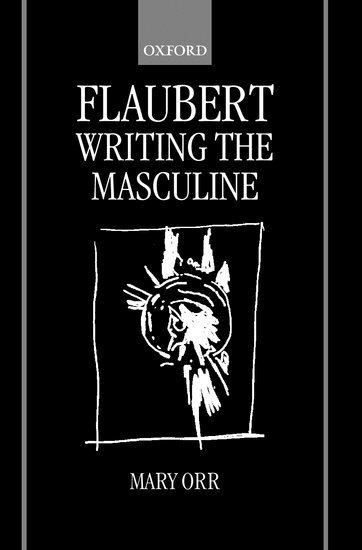
Flaubert: Writing the Masculine
Av Mary Orr
Inbunden, 2000
3495 kr
Lägg i varukorg
Flaubert: Writing the Masculine offers a new approach to Flaubert's major writing and to gender studies as a whole. Through a combination of close reading with a knowledge of current gender studies and particular attention to the sociohistorical and legal contexts of nineteenth-century France, it …
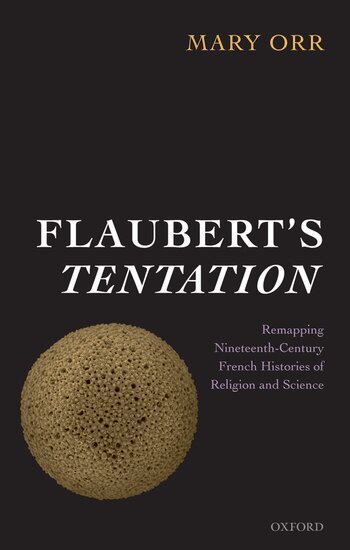
Flaubert's Tentation
Remapping Nineteenth-Century French Histories of Religion and Science
Av Mary Orr
Inbunden, 2008
2547 kr
Lägg i varukorg
This is the first comprehensive study in English of Flaubert's least well-known masterpiece, the final version of his Temptation of Saint Anthony (1874) which, thanks to Foucault, has the reputation of being an arcane and erudite 'fantastic library' or, thanks to genetic criticism, is a 'narrative' …
Intertextuality
Debates and Contexts
Av Mary Orr
Inbunden, 2003
1048 kr
Lägg i varukorg
This book is a comprehensive introduction to the idea of intertextuality and the debates surrounding it, focusing on the four key thinkers whose work has been central to these debates - Kristeva, Barthes, Bloom and Genette. A comprehensive introduction to 'intertextuality', a term which describes …
Intertextuality
Debates and Contexts
Av Mary Orr
Häftad, 2003
373 kr
Lägg i varukorg
This book is a comprehensive introduction to the idea of intertextuality and the debates surrounding it, focusing on the four key thinkers whose work has been central to these debates - Kristeva, Barthes, Bloom and Genette. A comprehensive introduction to 'intertextuality', a term which describes …
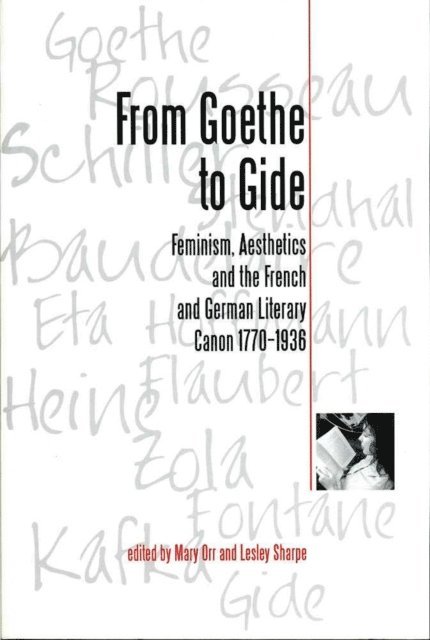
From Goethe To Gide
Feminism, Aesthetics and the Literary Canon in France and Germany, 1770-1936
Inbunden, 2005
1141 kr
Lägg i varukorg
From Goethe to Gide brings together twelve essays on canonical male writers (six French and six German) commissioned from leading specialists from Britain and North America.These essays, aimed at final year undergraduates and postgraduates, focus on Rousseau, Goethe, Schiller, Hoffmann, Stendhal, …
From Goethe To Gide
Feminism, Aesthetics and the Literary Canon in France and Germany, 1770-1936
Häftad, 2005
354 kr
Lägg i varukorg
From Goethe to Gide brings together twelve essays on canonical male writers (six French and six German) commissioned from leading specialists from Britain and North America.These essays, aimed at final year undergraduates and postgraduates, focus on Rousseau, Goethe, Schiller, Hoffmann, Stendhal, …
From Goethe To Gide
Feminism, Aesthetics and the Literary Canon in France and Germany, 1770-1936
E-bok, 2015
396 kr
Lägg i varukorg
From Goethe to Gide brings together twelve essays on canonical male writers (six French and six German) commissioned from leading specialists from Britain and North America. These essays, aimed at final year undergraduates and postgraduates, focus on Rousseau, Goethe, Schiller, Hoffmann, Stendhal, …
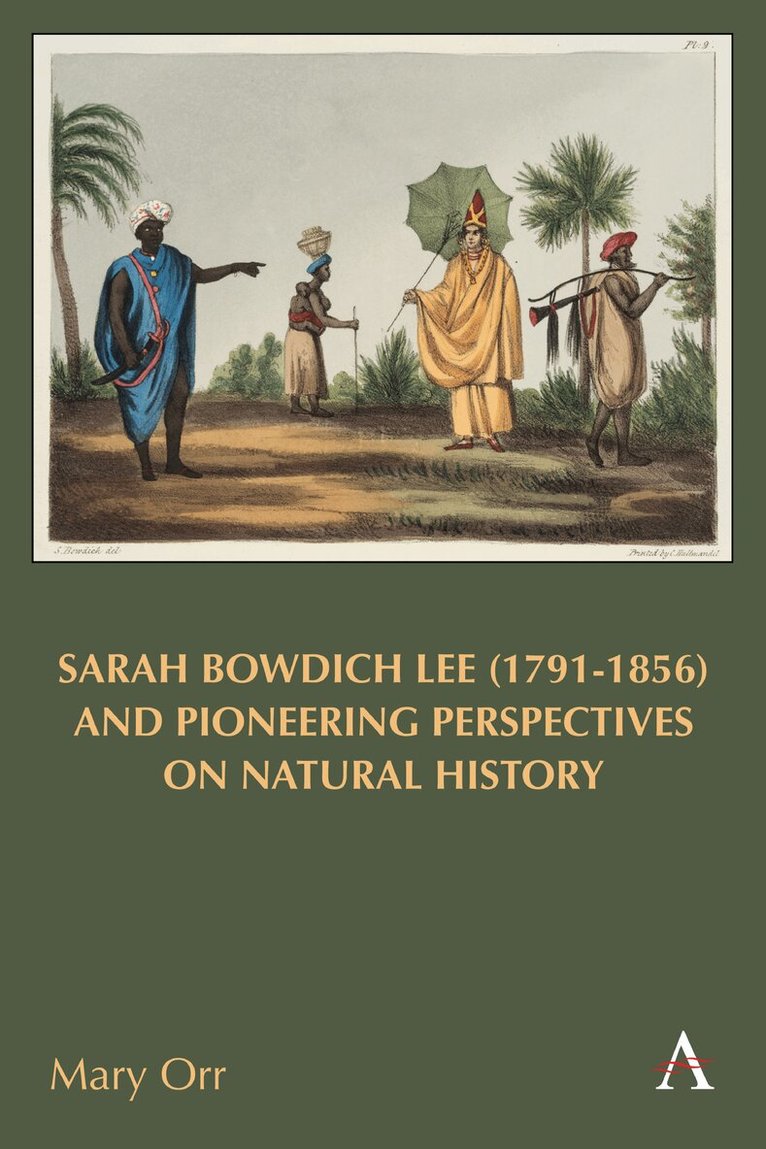
Sarah Bowdich Lee (1791-1856) and Pioneering Perspectives on Natural History
Av Mary Orr
Inbunden, 2024
1226 kr
Lägg i varukorg
History from below uncovers overlooked protagonists contributing to (inter)national endeavour often against considerable odds. Mrs T. Edward Bowdich then Mrs R. Lee (1791–1856) is indicative. When women allegedly cannot participate in early nineteenth-century scientific exploration, discovery and …
Narratives of French Modernity
Themes, Forms and Metamorphoses- Essays in Honour of David Gascoigne
Av Mary Orr, Lorna Milne
E-bok, 2011
688 kr
Lägg i varukorg
Narratives of French Modernity
Themes, Forms and Metamorphoses- Essays in Honour of David Gascoigne
Av Mary Orr, Lorna Milne
Häftad, 2011
786 kr
Lägg i varukorg
Inspired by the work of their colleague David Gascoigne, a group of scholars from the UK and France examine in this book the narrative strategies of some of the most interesting and important French writers of the twentieth and twenty-first centuries. Stretching chronologically from 1905 to 2005, …