Mary P. Nichols – författare
Visar alla böcker från författaren Mary P. Nichols. Handla med fri frakt och snabb leverans.
11 produkter
11 produkter
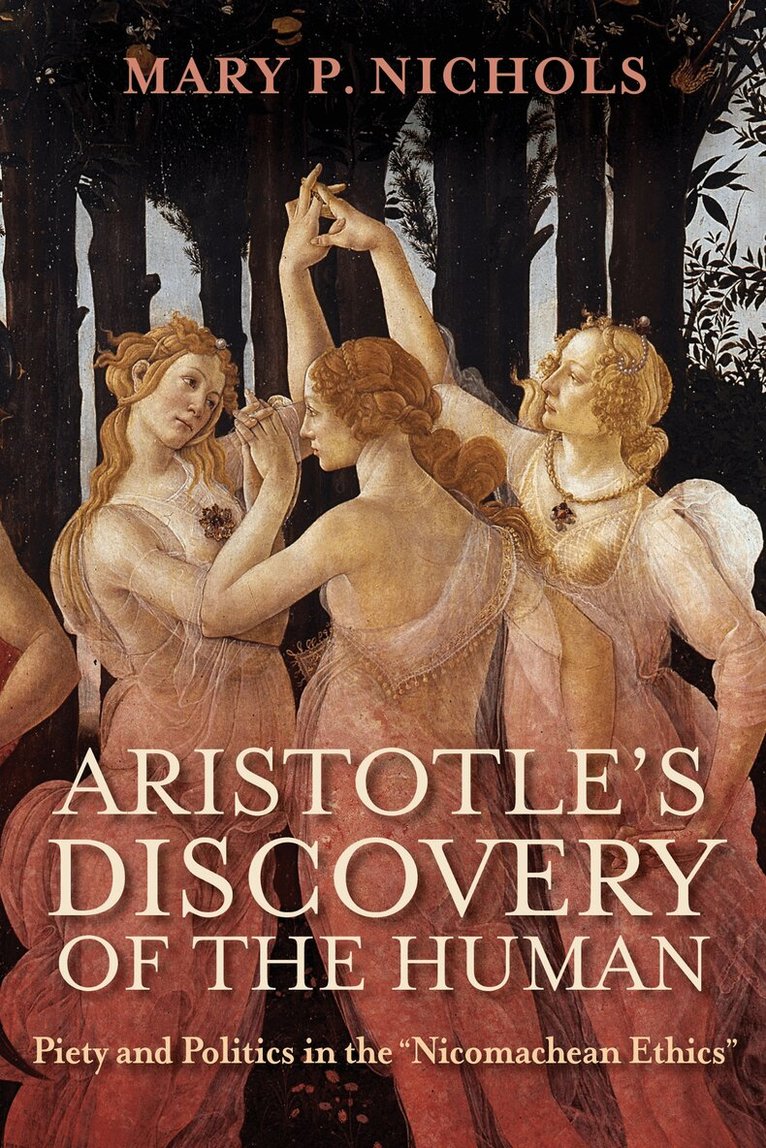
Aristotle's Discovery of the Human
Piety and Politics in the "Nicomachean Ethics"
Inbunden, Engelska, 2023
702 kr
Skickas inom 10-15 vardagar
Aristotle's Discovery of the Human offers a fresh, illuminating, and accessible analysis of one of the Western philosophical tradition's most important texts.In Aristotle's Discovery of the Human, noted political theorist Mary P. Nichols explores the ways in which Aristotle brings the gods and the divine into his "philosophizing about human affairs" in his Nicomachean Ethics. Her analysis shows that, for Aristotle, both piety and politics are central to a flourishing human life. Aristotle argues that piety provides us not only an awareness of our kinship to the divine, and hence elevates human life, but also an awareness of a divinity that we cannot entirely assimilate or fathom. Piety therefore supports a politics that strives for excellence at the same time that it checks excess through a recognition of human limitation.Proceeding through each of the ten books of the Ethics, Nichols shows that this prequel to Aristotle's Politics is as theoretical as it is practical. Its goal of improving political life and educating citizens and statesmen is inseparable from its pursuit of the truth about human beings and their relation to the divine. In the final chapter, which turns to contemporary political debate, Nichols's suggestion of the possibility of supplementing and deepening liberalism on Aristotelian grounds is supported by the account of human nature, virtue, friendship, and community developed throughout her study of the Ethics.
Aristotle's Discovery of the Human
Piety and Politics in the "Nicomachean Ethics"
Häftad, Engelska, 2025
475 kr
Skickas inom 10-15 vardagar
Aristotle's Discovery of the Human offers a fresh, illuminating, and accessible analysis of one of the Western philosophical tradition's most important texts.In Aristotle's Discovery of the Human, noted political theorist Mary P. Nichols explores the ways in which Aristotle brings the gods and the divine into his "philosophizing about human affairs" in his Nicomachean Ethics. Her analysis shows that, for Aristotle, both piety and politics are central to a flourishing human life. Aristotle argues that piety provides us not only an awareness of our kinship to the divine, and hence elevates human life, but also an awareness of a divinity that we cannot entirely assimilate or fathom. Piety therefore supports a politics that strives for excellence at the same time that it checks excess through a recognition of human limitation.Proceeding through each of the ten books of the Ethics, Nichols shows that this prequel to Aristotle's Politics is as theoretical as it is practical. Its goal of improving political life and educating citizens and statesmen is inseparable from its pursuit of the truth about human beings and their relation to the divine. In the final chapter, which turns to contemporary political debate, Nichols's suggestion of the possibility of supplementing and deepening liberalism on Aristotelian grounds is supported by the account of human nature, virtue, friendship, and community developed throughout her study of the Ethics.
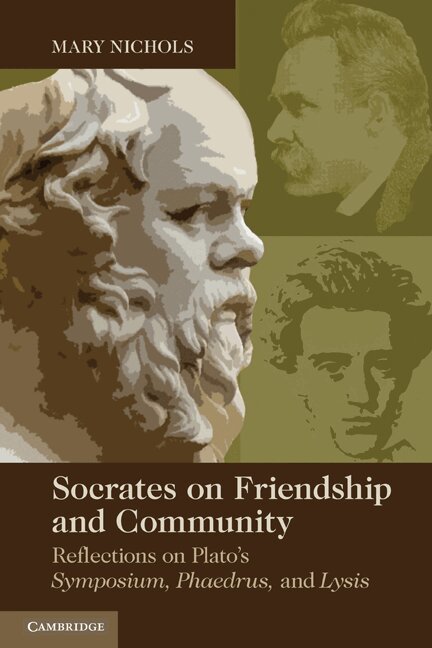
Socrates on Friendship and Community
Reflections on Plato's Symposium, Phaedrus,andLysis
Häftad, Engelska, 2010
560 kr
Skickas inom 7-10 vardagar
In Socrates on Friendship and Community, Mary P. Nichols addresses Kierkegaard's and Nietzsche's criticism of Socrates and recovers the place of friendship and community in Socratic philosophizing. This approach stands in contrast to the modern philosophical tradition, in which Plato's Socrates has been viewed as an alienating influence on Western thought and life. Nichols' rich analysis of both dramatic details and philosophic themes in Plato's Symposium, Phaedras, and Lysis shows how love finds its fulfilment in the reciprocal relation of friends. Nichols also shows how friends experience another as their own and themselves as belonging to another. Their experience, she argues, both sheds light on the nature of philosophy and serves as a standard for a political life that does justice to human freedom and community.
Socrates on Friendship and Community
Reflections on Plato's Symposium, Phaedrus,andLysis
Inbunden, Engelska, 2008
1 245 kr
Skickas inom 7-10 vardagar
In Socrates on Friendship and Community, Mary P. Nichols addresses Kierkegaard's and Nietzsche's criticism of Socrates and recovers the place of friendship and community in Socratic philosophizing. This approach stands in contrast to the modern philosophical tradition, in which Plato's Socrates has been viewed as an alienating influence on Western thought and life. Nichols' rich analysis of both dramatic details and philosophic themes in Plato's Symposium, Phaedras, and Lysis shows how love finds its fulfilment in the reciprocal relation of friends. Nichols also shows how friends experience another as their own and themselves as belonging to another. Their experience, she argues, both sheds light on the nature of philosophy and serves as a standard for a political life that does justice to human freedom and community.
679 kr
Skickas inom 7-10 vardagar
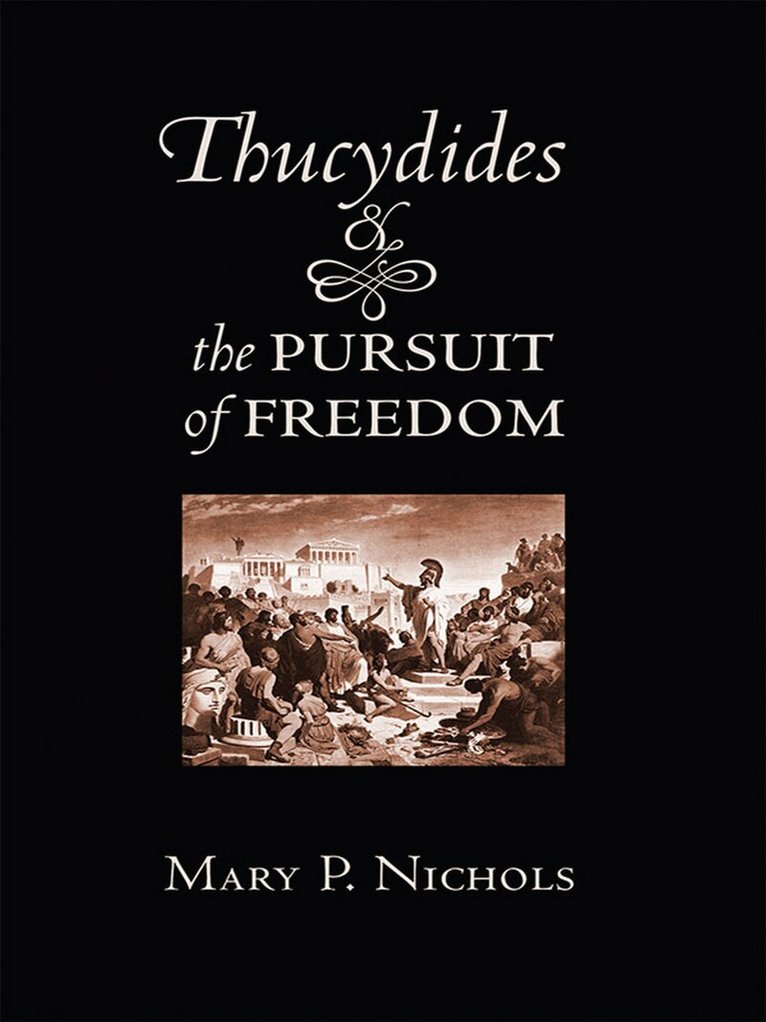
In Thucydides and the Pursuit of Freedom, Mary P. Nichols argues for the centrality of the idea of freedom in Thucydides' thought. Through her close reading of his History of the Peloponnesian War, she explores the manifestations of this theme. Cities and individuals in Thucydides' history take freedom as their goal, whether they claim to possess it and want to maintain it or whether they desire to attain it for themselves or others. Freedom is the goal of both antagonists in the Peloponnesian War, Sparta and Athens, although in different ways. One of the fullest expressions of freedom can be seen in the rhetoric of Thucydides' Pericles, especially in his famous funeral oration. More than simply documenting the struggle for freedom, however, Thucydides himself is taking freedom as his cause. On the one hand, he demonstrates that freedom makes possible human excellence, including courage, self-restraint, deliberation, and judgment, which support freedom in turn. On the other hand, the pursuit of freedom, in one's own regime and in the world at large, clashes with interests and material necessity, and indeed the very passions required for its support. Thucydides' work, which he himself considered a possession for all time, therefore speaks very much to our time, encouraging the defense of freedom while warning of the limits and dangers in doing so. The powerful must defend freedom, Thucydides teaches, but beware that the cost not become freedom itself.
675 kr
Skickas inom 10-15 vardagar
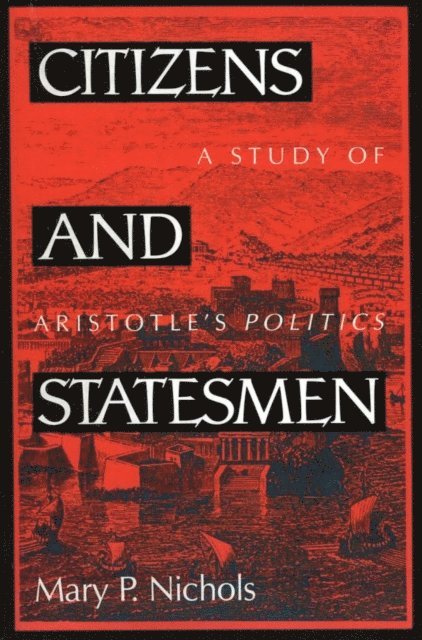
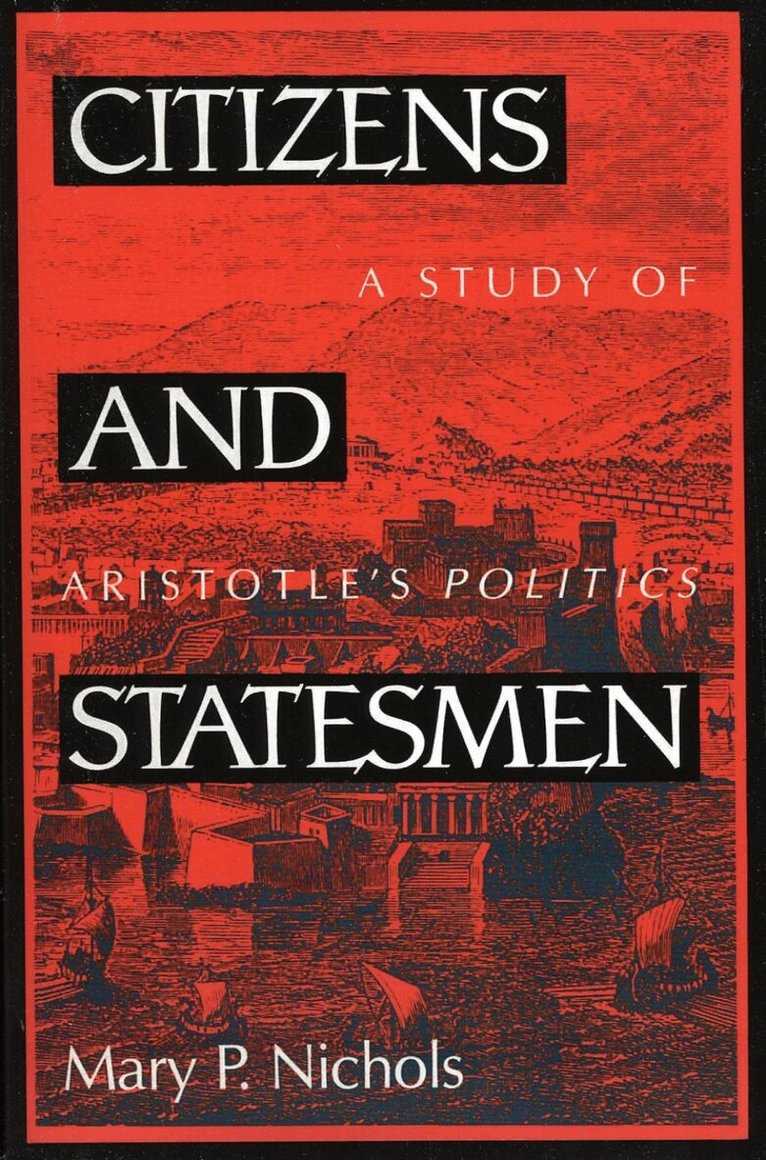
Two important criticisms of contemporary liberalism turn to Aristotle's political thought for support - that which advocates participatory democracy, and that sympathetic to the rule of a virtuous or philosophic elite. In this commentary on Aristotle's politics the author explores how Aristotle offers political rule as an alternative to both the rule of aristocratic virtue and an unchecked participatory democracy. Writing in lucid prose, she offers an interpretation grounded in a close reading of the text, and combining a respectful and patient attempt to understand Aristotle in his own terms with a wide, sympathetic, and argumentative reading in the secondary literature.
277 kr
Skickas inom 10-15 vardagar
For too long, the films of Woody Allen have been interpreted as expressions of deconstructionism, nihilism, and postmodern angst. In this pathbreaking new book, distinguished writer Mary P. Nichols challenges these assumptions by arguing that Allen's entire body of work, from Play It Again, Sam to Mighty Aphrodite, is actually an attempt to explore and reconcile the tension between art and life. As witty and complex as its subject, Reconstructing Woody shows why Allen, despite his recent personal turmoil, is immensely concerned with human ethics, goodness, and virtue. Ardent fans and strident detractors will view Woody Allen's films from an entirely new perspective.
566 kr
Skickas inom 3-6 vardagar
This book takes a fresh look at Socrates as he appeared to three ancient writers: Aristophanes, who attacked him for his theoretical studies; Plato, who immortalized him in his dialogues; and Aristotle, who criticized his political views. It addresses the questions of the interrelation of politics and philosophy by looking at Aristophanes' Clouds, Plato's Republic, and Book II of Aristotle's Politics-three sides of a debate on the value of Socrates' philosophic life.Mary Nichols first discusses the relation between Aristophanes and Plato, showing that the city as Socrates' place of activity in the Republic resembles the philosophic thinktank mocked in Aristophanes' Clouds. By representing the extremes of the Republic's city, Plato shows that the dangers attributed by Aristophanes to the city are actually inherent in political life itself. They were to be moderated by Socratic political philosophy rather than Aristophanean comedy.Nichols concludes by showing how Aristotle addressed the question at issue between Plato and Aristophanes when he founded his political science. Judging Plato's and Aristophanes' positions as partial, Nichols argues that Aristotle based his political science on the necessity to philosophy of political involvement and the necessity to politics of philosophical thought.
1 572 kr
Skickas inom 5-8 vardagar
891 kr
Skickas inom 5-8 vardagar
1 405 kr
Skickas inom 5-8 vardagar
Provides a wide array of material on the fundamental themes of American political life. This volume encourages professors and students to engage with timeless questions and issues facing the American regime.