Maryanne L. Fisher - Böcker
Visar alla böcker från författaren Maryanne L. Fisher. Handla med fri frakt och snabb leverans.
5 produkter
5 produkter
108 kr
Kommande
Very Short Introductions: Brilliant, Sharp, InspiringHow did our brains change over the course of evolution, and what did it mean for our ancestors? Why do we behave the way we do today? Evolutionary psychology is the only framework that allows us to fully understand the nuances of humans' motivations, emotions, cognitions, and behaviours. Our bodies have evolved over time, and so too have our brains. How we respond to situations emotionally, our thoughts, our motivations, and our behaviours have a deep heritage based on the successes of our ancestors in meeting their survival or reproductive needs. In this Very Short Introduction Maryanne L. Fisher and T. Joel Wade unfold the intriguing idea that our brain, like every other body part, has been shaped over time by natural and sexual selection. Fisher and Wade consider the contexts in which our ancestors thrived and explore how people today think and act using an evolutionary compass. This research-oriented exploration addresses diverse topics, organised into chapters on the principles underlying this approach, survival issues, group alliances, aggression, family dynamics, and mating strategies. It touches on a broad array of topics like fears, disgust, attraction, sibling conflict, friendship, and homicide. ABOUT THE SERIES: The Very Short Introductions series from Oxford University Press contains hundreds of titles in almost every subject area. These pocket-sized books are the perfect way to get ahead in a new subject quickly. Our expert authors combine facts, analysis, perspective, new ideas, and enthusiasm to make interesting and challenging topics highly readable.
2 169 kr
Skickas inom 5-8 vardagar
While women are generally perceived to be less competitive than men, women compete in many ways and in a variety of situations. Women try to make themselves look more attractive to draw the attention of a desirable mate. They will use gossip as a form of informational warfare to influence reputations. They compete as mothers to gain access to resources that directly influence the health of their children. They use selfies posted on social media to manipulate others' perceptions. Women compete all of their lives: in the womb, through adolescence and adulthood, and into their elder years.The topic of women's competition has gained significant momentum over the years. Edited by Maryanne L. Fisher, The Oxford Handbook of Women and Competition provides readers with direct evidence of this growth and is one of the first scholarly volumes to focus specifically on this topic. Fisher and her team of contributors offer a definitive worldview of the current state of knowledge regarding competition among women today. Many of the chapters are grounded within an evolutionary framework, allowing for authors to investigate the adaptive nature of women's competitive behaviors, motivations, and cognition. Other chapters rely on alternative frameworks, with contributors also asserting that socio-cultural forces are the culprit shaping women's competitive drives. Additionally, several contributors focus their attention on issues faced by adolescent girls, and explore the developmental trajectories for young women through adulthood.Designed to serve as a source of inspiration for future research and direction, The Oxford Handbook of Women and Competition is a stand-out scholarly text focusing on the many competitive forces driving women today.
1 420 kr
Skickas inom 5-8 vardagar
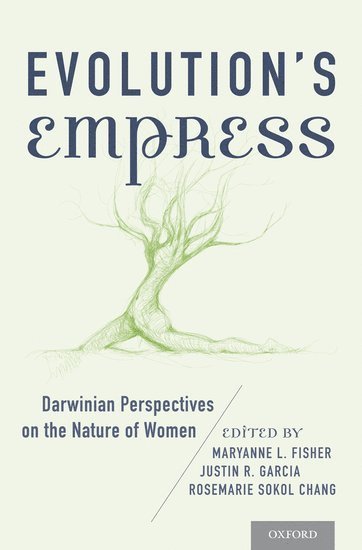
Over the last decade, there has been increasing debate as to whether feminism and evolutionary psychology can co-exist. Such debates often conclude with a resounding "no," often on the grounds that the former is a political movement while the latter is a field of scientific inquiry. In the midst of these debates, there has been growing dissatisfaction within the field of evolutionary psychology about the way the discipline (and others) have repeatedly shown women to be in passive roles when it comes to survival and reproduction. Evolutionary behavioral research has made significant strides in the past few decades, but continues to take for granted many theoretical assumption that are perhaps, in light of the most recent evidence, misguided. As a result, the research community has missed important areas of research, and in some cases, will likely come to inaccurate conclusions based on existing dogma, rather than rigorous, theoretically driven research. Bias in the field of evolutionary psychology echoes the complaints against the political movement attached to academic feminisms. This is an intellectual squabble where much is at stake, including a fundamental understanding of the evolutionary significance of women's roles in culture, mothering, reproductive health and physiology, mating, female alliances, female aggression, and female intrasexual competition.Evolution's Empress identifies women as active agents within the evolutionary process. The chapters in this volume focus on topics as diverse as female social interactions, mate competition and mating strategies, motherhood, women's health, sex differences in communication and motivation, sex discrimination, and women in literature. The volume editors bring together a diverse range of perspectives to demonstrate ways in which evolutionary approaches to human behavior have thus far been too limited. By reconsidering the role of women in evolution, this volume furthers the goal of generating dialogue between the realms of women's studies and evolutionary psychology.
To Eat or Not to Eat Meat
How Vegetarian Dietary Choices Influence Our Social Lives
Inbunden, Engelska, 2019
1 289 kr
Skickas inom 10-15 vardagar
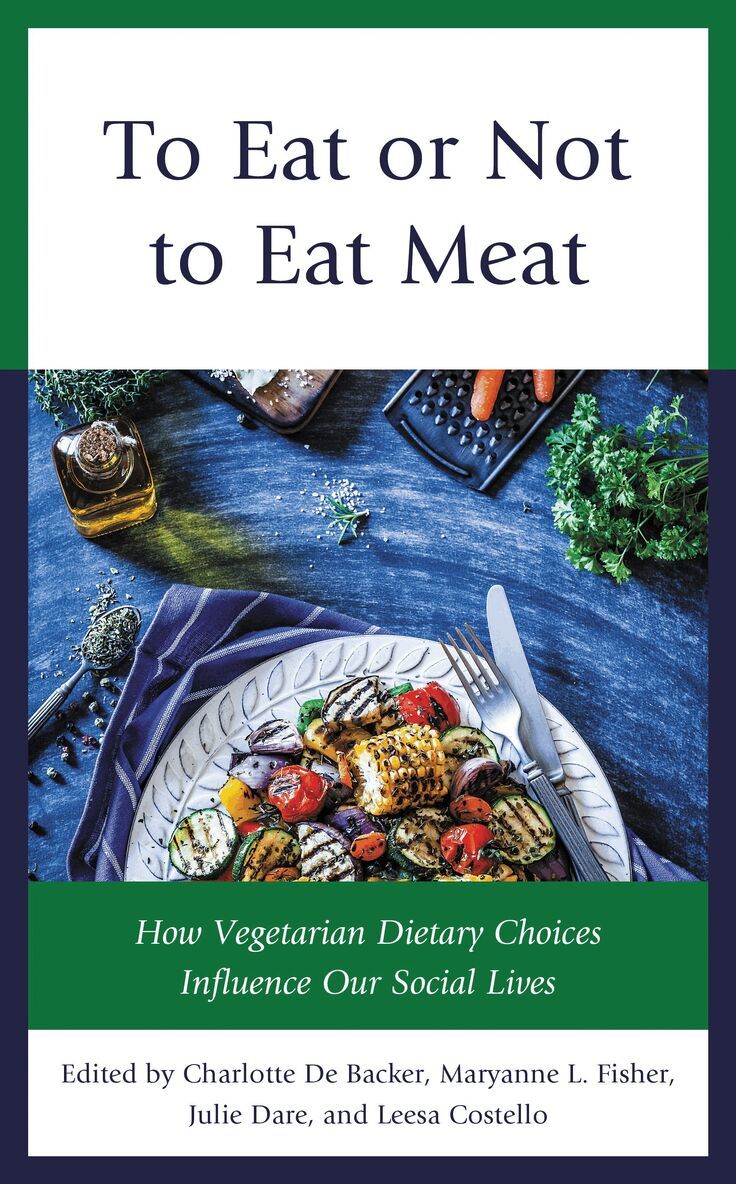
Increasingly, people are shifting to vegetarian, plant-based, or vegan diets. This shift is having profound effects on our social interactions, and this is the focus of this book. Becoming a vegetarian or vegan involves more than just changing your diet. It can change how you socially and emotionally connect with family, friends and the broader community, shape your outlook on life, and open up new worlds and contacts. It can also lead to uncomfortable situations, if dietary choices involving a rejection of meat are read by others as an ethical and moral judgement on mainstream dietary choices. This book adopts an innovative narrative approach, and draws on stories across the globe to consider how the food choices we make in our everyday lives can lead to complex, and sometimes life changing, social consequences. The narratives cover a range of topics, including the moral reasons behind some individuals’ decision to change their diets, the religious or ecological considerations, and the potential health and social ramifications. To date, the social consequences of selecting a plant-based diet have been sorely overlooked in favour of texts that have documented the benefits of such diets, and usually focus on health, animal welfare and/or environmental issues, with the aim of persuading readers to give up meat, and change to a ‘healthy’ and/or ‘sustainable’ diet. Cultural studies texts considering vegetarianism or veganism have typically targeted academic audiences with analyses of how identity is constructed through food and dietary choices. In contrast, this book offers a unique window onto how our social lives are implicated in our food choices, and is critical in understanding the importance of diet as embedded in complex social processes.
To Eat or Not to Eat Meat
How Vegetarian Dietary Choices Influence Our Social Lives
Häftad, Engelska, 2022
461 kr
Skickas inom 10-15 vardagar
Increasingly, people are shifting to vegetarian, plant-based, or vegan diets. This shift is having profound effects on our social interactions, and this is the focus of this book. Becoming a vegetarian or vegan involves more than just changing your diet. It can change how you socially and emotionally connect with family, friends and the broader community, shape your outlook on life, and open up new worlds and contacts. It can also lead to uncomfortable situations, if dietary choices involving a rejection of meat are read by others as an ethical and moral judgement on mainstream dietary choices. This book adopts an innovative narrative approach, and draws on stories across the globe to consider how the food choices we make in our everyday lives can lead to complex, and sometimes life changing, social consequences. The narratives cover a range of topics, including the moral reasons behind some individuals’ decision to change their diets, the religious or ecological considerations, and the potential health and social ramifications. To date, the social consequences of selecting a plant-based diet have been sorely overlooked in favour of texts that have documented the benefits of such diets, and usually focus on health, animal welfare and/or environmental issues, with the aim of persuading readers to give up meat, and change to a ‘healthy’ and/or ‘sustainable’ diet. Cultural studies texts considering vegetarianism or veganism have typically targeted academic audiences with analyses of how identity is constructed through food and dietary choices. In contrast, this book offers a unique window onto how our social lives are implicated in our food choices, and is critical in understanding the importance of diet as embedded in complex social processes.