Masakazu Shoji – författare
Visar alla böcker från författaren Masakazu Shoji. Handla med fri frakt och snabb leverans.
10 produkter
10 produkter
1 914 kr
Skickas inom 3-6 vardagar
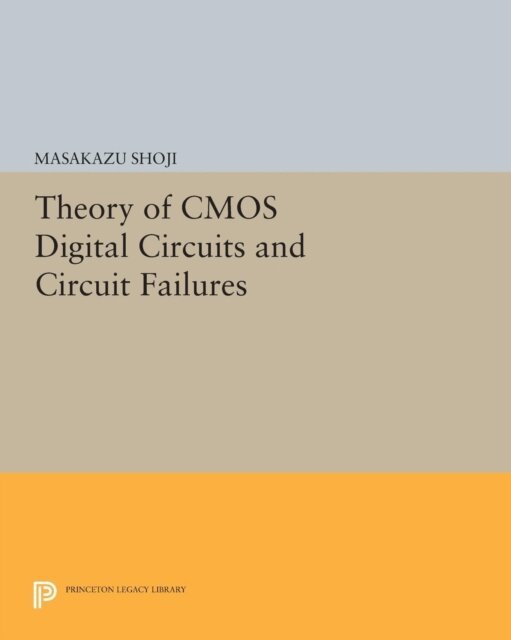
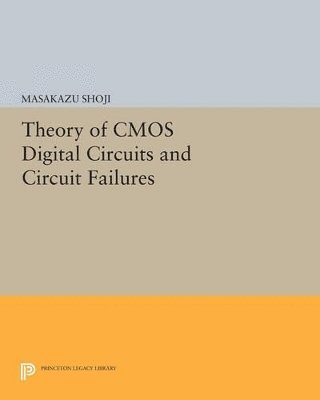
CMOS chips are becoming increasingly important in computer circuitry. They have been widely used during the past decade, and they will continue to grow in popularity in those application areas that demand high performance. Challenging the prevailing opinion that circuit simulation can reveal all problems in CMOS circuits, Masakazu Shoji maintains that simulation cannot completely remove the often costly errors that occur in circuit design. To address the failure modes of these circuits more fully, he presents a new approach to CMOS circuit design based on his systematizing of circuit design error and his unique theory of CMOS digital circuit operation. In analyzing CMOS digital circuits, the author focuses not on effects originating from the characteristics of the device (MOSFET) but on those arising from their connection. This emphasis allows him to formulate a powerful but ultimately simple theory explaining the effects of connectivity by using a concept of the states of the circuits, called microstates.Shoji introduces microstate sequence diagrams that describe the state changes (or the circuit connectivity changes), and he uses his microstate theory to analyze many of the conventional CMOS digital circuits. These analyses are practically all in closed-form, and they provide easy physical interpretation of the circuit's working mechanisms, the parametric dependence of performance, and the circuit's failure modes. Originally published in 1992. The Princeton Legacy Library uses the latest print-on-demand technology to again make available previously out-of-print books from the distinguished backlist of Princeton University Press. These editions preserve the original texts of these important books while presenting them in durable paperback and hardcover editions. The goal of the Princeton Legacy Library is to vastly increase access to the rich scholarly heritage found in the thousands of books published by Princeton University Press since its founding in 1905.
4 831 kr
Skickas inom 3-6 vardagar
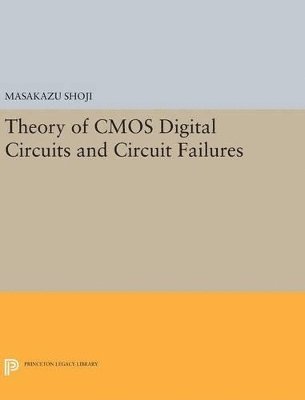
CMOS chips are becoming increasingly important in computer circuitry. They have been widely used during the past decade, and they will continue to grow in popularity in those application areas that demand high performance. Challenging the prevailing opinion that circuit simulation can reveal all problems in CMOS circuits, Masakazu Shoji maintains that simulation cannot completely remove the often costly errors that occur in circuit design. To address the failure modes of these circuits more fully, he presents a new approach to CMOS circuit design based on his systematizing of circuit design error and his unique theory of CMOS digital circuit operation. In analyzing CMOS digital circuits, the author focuses not on effects originating from the characteristics of the device (MOSFET) but on those arising from their connection. This emphasis allows him to formulate a powerful but ultimately simple theory explaining the effects of connectivity by using a concept of the states of the circuits, called microstates.Shoji introduces microstate sequence diagrams that describe the state changes (or the circuit connectivity changes), and he uses his microstate theory to analyze many of the conventional CMOS digital circuits. These analyses are practically all in closed-form, and they provide easy physical interpretation of the circuit's working mechanisms, the parametric dependence of performance, and the circuit's failure modes. Originally published in 1992. The Princeton Legacy Library uses the latest print-on-demand technology to again make available previously out-of-print books from the distinguished backlist of Princeton University Press. These editions preserve the original texts of these important books while presenting them in durable paperback and hardcover editions. The goal of the Princeton Legacy Library is to vastly increase access to the rich scholarly heritage found in the thousands of books published by Princeton University Press since its founding in 1905.

1 062 kr
Skickas inom 10-15 vardagar
The most commonly used parameter of digital circuits, the gate delay time, does not exist. This problem emerges most clearly in the high-speed CMOS, above 1 GHz clock frequency. This book explains why that is so and then how to deal with the situation in a practical manner. Most of the large IC companies, and many of the small IC design companies, are now racing to capture above 1 GHz clock CMOS IC markets. A few examples of such companies in the United States are Motorola, Intel and DEC. Numerous small design-only companies are also interested in this technology. The above 1 GHz circuit design is an extremely difficult concept. The text shows that the fastest CMOS circuits can be understood and designed only after understanding their quantum-mechanical nature. The book should help the circuit designer to learn how to deal with the problems of circuit delay when the gate delay is not a valid concept at high switching speeds and how to design the fastest critical paths. It outlines essential and fundamental guidelines for designing the fastest CMOS circuits. It also explains how to design and structure computer-aided designs to deal with above 1 GHz circuits.It should be of interest to IC designers and CAD professionals alike.
1 062 kr
Skickas inom 10-15 vardagar
The electronic circuit is a proud child of twentieth century natural science. In a hundred short years it has developed to the point that it now enhances nearly every aspect of human life. Yet our basic understanding of electronic-circuit operation, electronic -circuittheory, has not made significant progress during the semiconductor industry's explosive growth from 1950s to the present. This is because the electronic circuit has never been considered to be a challenging research subject by physi cists. Linear passive circuit theory was established by the late 1940s. After the advent of the semiconductor electron devices, the interest of the technical community shifted away from circuit theory. Twenty years later, when integrated circuit technology began an explosive growth, cir cuit theory was again left behind in the shadow of rapidly progressing computer-aided design (CAD) technology. The present majority view is that electronic-circuit theory stands in a subordinate position to CAD and to device-processing technology. In 1950s and 1960s, several new semiconductor devices were invented every year, and each new device seemed to have some interesting funda mental physical mechanisms that appeared worth investigating. Com pared to attractive device physics, the problems of the semiconductor device circuit appeared less sophisticated and less attractive. Bright minds of the time drifted away from circuit theory to electron-device physics. After thirty years only one type of semiconductor device, the electron triode with several variations survived, whereas hundreds of them went into oblivion.
215 kr
Skickas inom 5-8 vardagar
308 kr
Skickas inom 5-8 vardagar
370 kr
Skickas inom 5-8 vardagar
494 kr
Skickas inom 5-8 vardagar
217 kr
Skickas inom 5-8 vardagar
475 kr
Skickas inom 5-8 vardagar