807 kr
Skickas inom 10-15 vardagar
807 kr
Skickas inom 10-15 vardagar
977 kr
Läs direkt efter köp
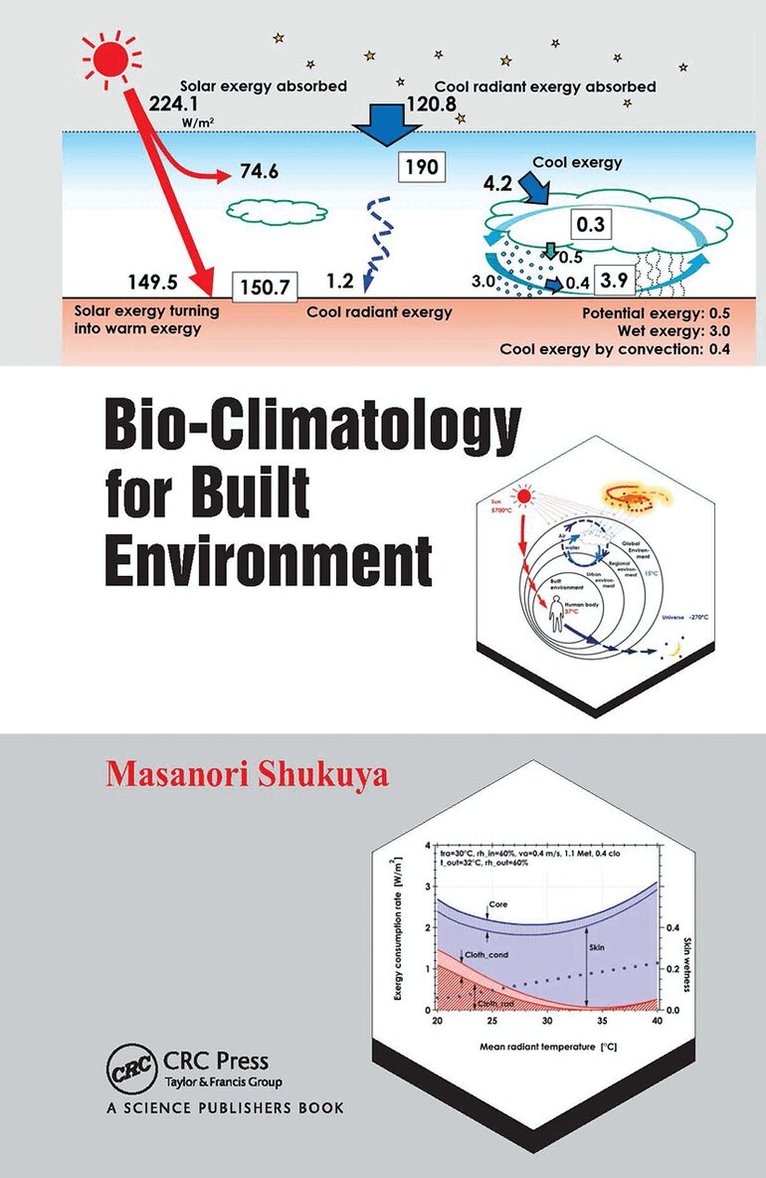
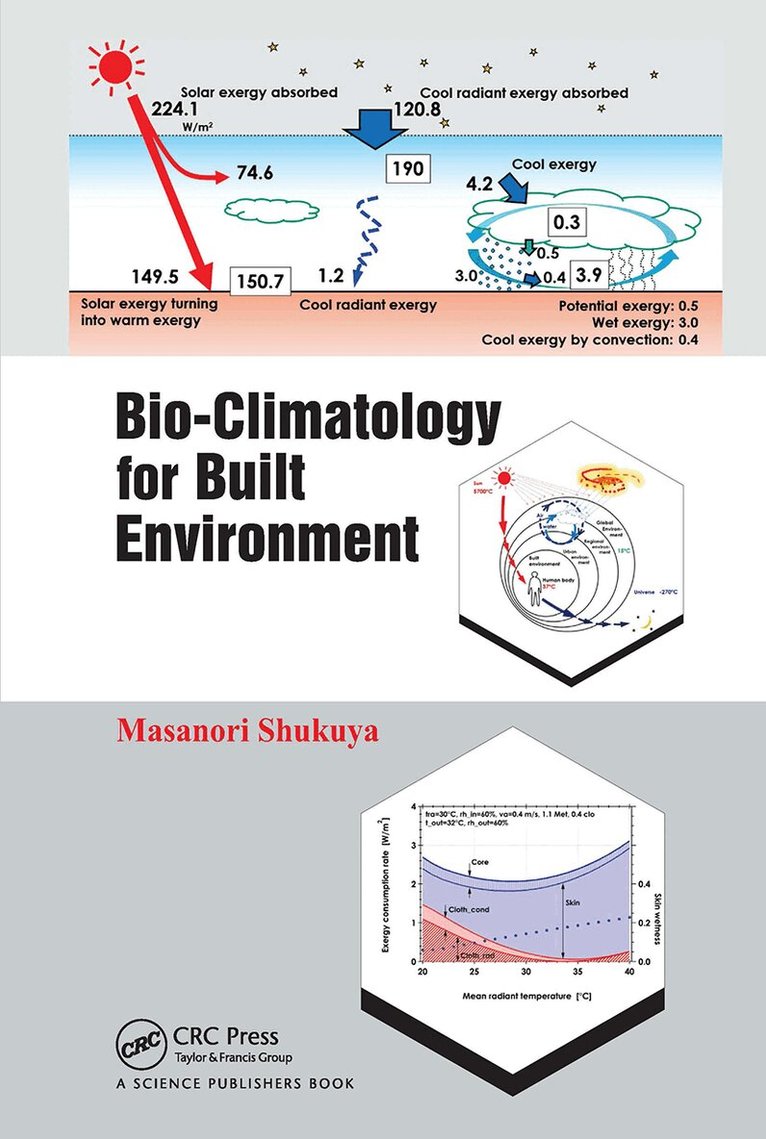
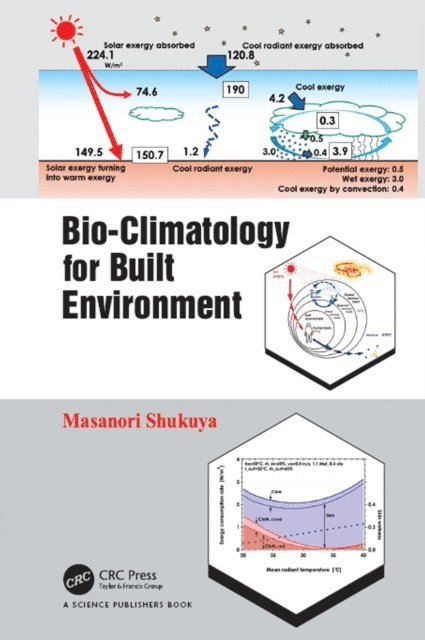
Indoor climate is determined by rational lighting, heating, cooling and ventilating systems. For occupants'' well-being it should be consistent with how regional outdoor climate works in the flow of radiation via four paths of heat transfer: radiation; convection; conduction; and evaporation. This book starts with the relationship between the human body and its immediate environmental space followed by a brief introduction of passive and active systems for indoor climate conditioning. The nature of light and heat is discussed with a focus on building envelope systems such as walls and windows, and then examined from the viewpoint of thermodynamics and human-biology. Some examples are given to enable a better understanding of luminous and thermal characteristics of our most immediate environment particularly for those professionally involved in environmental planning, designing, and engineering to know about bio-climatic design principle.
1 701 kr
Skickas inom 10-15 vardagar
2 127 kr
Läs direkt efter köp
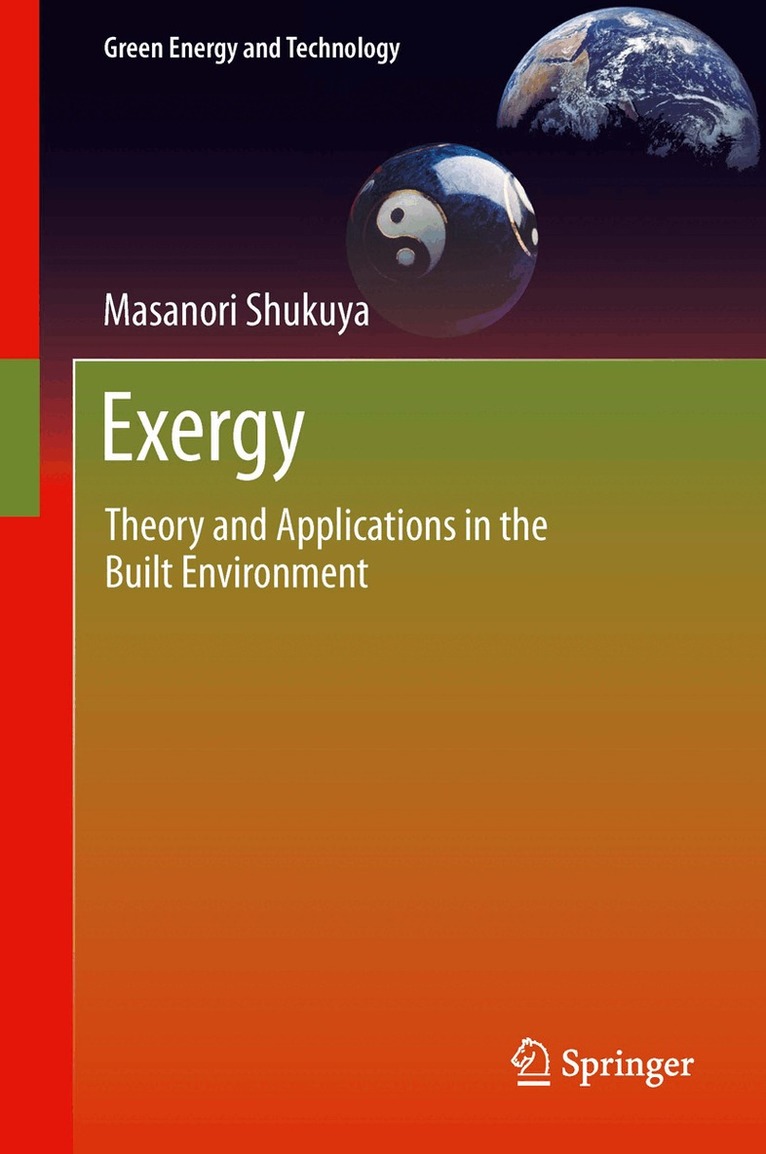
Many people, professionals and non-professionals alike, recognize that it is of critical importance to solve global energy and environmental issues. For this purpose, it is essential to have a scientific understanding of what is meant by the “energy” issue is and the “environmental” issue. The concept of “exergy” is a scientific concept that exactly fits.
The concept of ‘energy’ is a scientifically-well established concept, namely ‘to be conserved’. Then the question is what is really consumed. Exergy: Theory and Applications in the Built Environment is dedicated to answer this fundamental question by discussing the theory of “exergy” and by demonstrating its use extensively to describe a variety of systems in particular for built-environmental conditioning. Our immediate environmental space works within the flow of energy and matter in an “exergy-entropy” process, and the built environment can be designed with these energy & environmental issues in mind.
Exergy: Theory and Applications in the Built Environment introduces readers who are not familiar with thermodynamics to the concept of exergy with a variety of discussion on the built-environmental space such as heating, cooling, lighting, and others. Readers, including students, researchers, planners, architects and engineers, will obtain a better picture of a sustainable built-environment.
1 701 kr
Skickas inom 10-15 vardagar
3 836 kr
Skickas inom 10-15 vardagar
977 kr
Läs direkt efter köp
Indoor climate is determined by rational lighting, heating, cooling and ventilating systems. For occupants'' well-being it should be consistent with how regional outdoor climate works in the flow of radiation via four paths of heat transfer: radiation; convection; conduction; and evaporation. This book starts with the relationship between the human body and its immediate environmental space followed by a brief introduction of passive and active systems for indoor climate conditioning. The nature of light and heat is discussed with a focus on building envelope systems such as walls and windows, and then examined from the viewpoint of thermodynamics and human-biology. Some examples are given to enable a better understanding of luminous and thermal characteristics of our most immediate environment particularly for those professionally involved in environmental planning, designing, and engineering to know about bio-climatic design principle.
807 kr
Skickas inom 10-15 vardagar
977 kr
Läs direkt efter köp
Indoor climate is determined by rational lighting, heating, cooling and ventilating systems. For occupants'' well-being it should be consistent with how regional outdoor climate works in the flow of radiation via four paths of heat transfer: radiation; convection; conduction; and evaporation. This book starts with the relationship between the human body and its immediate environmental space followed by a brief introduction of passive and active systems for indoor climate conditioning. The nature of light and heat is discussed with a focus on building envelope systems such as walls and windows, and then examined from the viewpoint of thermodynamics and human-biology. Some examples are given to enable a better understanding of luminous and thermal characteristics of our most immediate environment particularly for those professionally involved in environmental planning, designing, and engineering to know about bio-climatic design principle.
1 701 kr
Skickas inom 10-15 vardagar
2 127 kr
Läs direkt efter köp
Many people, professionals and non-professionals alike, recognize that it is of critical importance to solve global energy and environmental issues. For this purpose, it is essential to have a scientific understanding of what is meant by the “energy” issue is and the “environmental” issue. The concept of “exergy” is a scientific concept that exactly fits.
The concept of ‘energy’ is a scientifically-well established concept, namely ‘to be conserved’. Then the question is what is really consumed. Exergy: Theory and Applications in the Built Environment is dedicated to answer this fundamental question by discussing the theory of “exergy” and by demonstrating its use extensively to describe a variety of systems in particular for built-environmental conditioning. Our immediate environmental space works within the flow of energy and matter in an “exergy-entropy” process, and the built environment can be designed with these energy & environmental issues in mind.
Exergy: Theory and Applications in the Built Environment introduces readers who are not familiar with thermodynamics to the concept of exergy with a variety of discussion on the built-environmental space such as heating, cooling, lighting, and others. Readers, including students, researchers, planners, architects and engineers, will obtain a better picture of a sustainable built-environment.
1 701 kr
Skickas inom 10-15 vardagar
3 836 kr
Skickas inom 10-15 vardagar
977 kr
Läs direkt efter köp
Indoor climate is determined by rational lighting, heating, cooling and ventilating systems. For occupants'' well-being it should be consistent with how regional outdoor climate works in the flow of radiation via four paths of heat transfer: radiation; convection; conduction; and evaporation. This book starts with the relationship between the human body and its immediate environmental space followed by a brief introduction of passive and active systems for indoor climate conditioning. The nature of light and heat is discussed with a focus on building envelope systems such as walls and windows, and then examined from the viewpoint of thermodynamics and human-biology. Some examples are given to enable a better understanding of luminous and thermal characteristics of our most immediate environment particularly for those professionally involved in environmental planning, designing, and engineering to know about bio-climatic design principle.