Masatoshi Nei – författare
Visar alla böcker från författaren Masatoshi Nei. Handla med fri frakt och snabb leverans.
6 produkter
6 produkter
E-bok
PDF, Engelska, 2013626 kr
Läs direkt efter köp
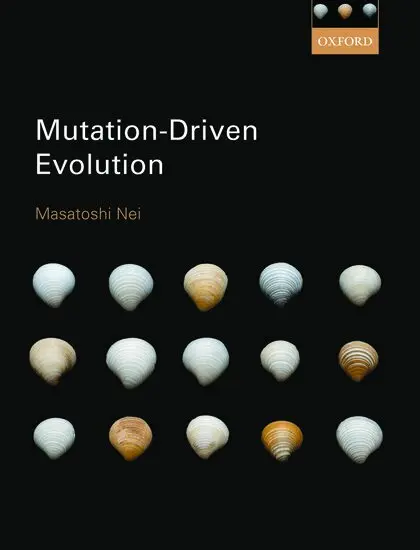
The purpose of this book is to present a new mechanistic theory of mutation-driven evolution based on recent advances in genomics and evolutionary developmental biology. The theory asserts, perhaps somewhat controversially, that the driving force behind evolution is mutation, with natural selection being of only secondary importance. The word ''mutation'' is used to describe any kind of change in DNA such as nucleotide substitution, gene duplication/deletion,chromosomal change, and genome duplication. A brief history of the principal evolutionary theories (Darwinism, mutationism, neo-Darwinism, and neo-mutationism) that preceded the theory of mutation-driven evolution is also presented in the context of the last 150 years of research. However, the core of thebook is concerned with recent studies of genomics and the molecular basis of phenotypic evolution, and their relevance to mutation-driven evolution. In contrast to neo-Darwinism, mutation-driven evolution is capable of explaining real examples of evolution such as the evolution of olfactory receptors, sex-determination in animals, and the general scheme of hybrid sterility. In this sense the theory proposed is more realistic than its predecessors, and gives a more logical explanation of variousevolutionary events.Mutation-Driven Evolution is suitable for graduate level students as well as professional researchers (both empiricists and theoreticians) in the fields of molecular evolution and population genetics. It assumes that the readers are acquainted with basic knowledge of genetics and molecular biology.
E-bok
Engelska, 2013626 kr
Läs direkt efter köp
The purpose of this book is to present a new mechanistic theory of mutation-driven evolution based on recent advances in genomics and evolutionary developmental biology. The theory asserts, perhaps somewhat controversially, that the driving force behind evolution is mutation, with natural selection being of only secondary importance. The word ''mutation'' is used to describe any kind of change in DNA such as nucleotide substitution, gene duplication/deletion,chromosomal change, and genome duplication. A brief history of the principal evolutionary theories (Darwinism, mutationism, neo-Darwinism, and neo-mutationism) that preceded the theory of mutation-driven evolution is also presented in the context of the last 150 years of research. However, the core of thebook is concerned with recent studies of genomics and the molecular basis of phenotypic evolution, and their relevance to mutation-driven evolution. In contrast to neo-Darwinism, mutation-driven evolution is capable of explaining real examples of evolution such as the evolution of olfactory receptors, sex-determination in animals, and the general scheme of hybrid sterility. In this sense the theory proposed is more realistic than its predecessors, and gives a more logical explanation of variousevolutionary events.Mutation-Driven Evolution is suitable for graduate level students as well as professional researchers (both empiricists and theoreticians) in the fields of molecular evolution and population genetics. It assumes that the readers are acquainted with basic knowledge of genetics and molecular biology.
E-bok
PDF, Engelska, 20001 271 kr
Läs direkt efter köp
During the last ten years, remarkable progress has occurred in the study of molecular evolution. Among the most important factors that are responsible for this progress are the development of new statistical methods and advances in computational technology. In particular, phylogenetic analysis of DNA or protein sequences has become a powerful tool for studying molecular evolution. Along with this developing technology, the application of the new statistical and computational methods has become more complicated and there is no comprehensive volume that treats these methods in depth. Molecular Evolution and Phylogenetics fills this gap and present various statistical methods that are easily accessible to general biologists as well as biochemists, bioinformatists and graduate students. The text covers measurement of sequence divergence, construction of phylogenetic trees, statistical tests for detection of positive Darwinian selection, inference of ancestral amino acid sequences, construction of linearized trees, and analysis of allele frequency data. Emphasis is given to practical methods of data analysis, and methods can be learned by working through numerical examples using the computer program MEGA2 that is provided.
Häftad, Engelska, 2014
806 kr
Skickas inom 7-10 vardagar
The purpose of this book is to present a new mechanistic theory of mutation-driven evolution based on recent advances in genomics and evolutionary developmental biology. The theory asserts, perhaps somewhat controversially, that the driving force behind evolution is mutation, with natural selection being of only secondary importance. The word 'mutation' is used to describe any kind of change in DNA such as nucleotide substitution, gene duplication/deletion, chromosomal change, and genome duplication. A brief history of the principal evolutionary theories (Darwinism, mutationism, neo-Darwinism, and neo-mutationism) that preceded the theory of mutation-driven evolution is also presented in the context of the last 150 years of research. However, the core of the book is concerned with recent studies of genomics and the molecular basis of phenotypic evolution, and their relevance to mutation-driven evolution. In contrast to neo-Darwinism, mutation-driven evolution is capable of explaining real examples of evolution such as the evolution of olfactory receptors, sex-determination in animals, and the general scheme of hybrid sterility. In this sense the theory proposed is more realistic than its predecessors, and gives a more logical explanation of various evolutionary events.Mutation-Driven Evolution is suitable for graduate level students as well as professional researchers (both empiricists and theoreticians) in the fields of molecular evolution and population genetics. It assumes that the readers are acquainted with basic knowledge of genetics and molecular biology.
E-bok
Engelska, 20001 271 kr
Läs direkt efter köp
During the last ten years, remarkable progress has occurred in the study of molecular evolution. Among the most important factors that are responsible for this progress are the development of new statistical methods and advances in computational technology. In particular, phylogenetic analysis of DNA or protein sequences has become a powerful tool for studying molecular evolution. Along with this developing technology, the application of the new statistical and computational methods has become more complicated and there is no comprehensive volume that treats these methods in depth. Molecular Evolution and Phylogenetics fills this gap and present various statistical methods that are easily accessible to general biologists as well as biochemists, bioinformatists and graduate students. The text covers measurement of sequence divergence, construction of phylogenetic trees, statistical tests for detection of positive Darwinian selection, inference of ancestral amino acid sequences, construction of linearized trees, and analysis of allele frequency data. Emphasis is given to practical methods of data analysis, and methods can be learned by working through numerical examples using the computer program MEGA2 that is provided.
Häftad, Engelska, 1989
1 431 kr
Skickas inom 3-6 vardagar
-- The Scientist