Mason Kunze – författare
Visar alla böcker från författaren Mason Kunze. Handla med fri frakt och snabb leverans.
3 produkter
3 produkter
E-bok
Engelska, 202179 kr
Läs direkt efter köp
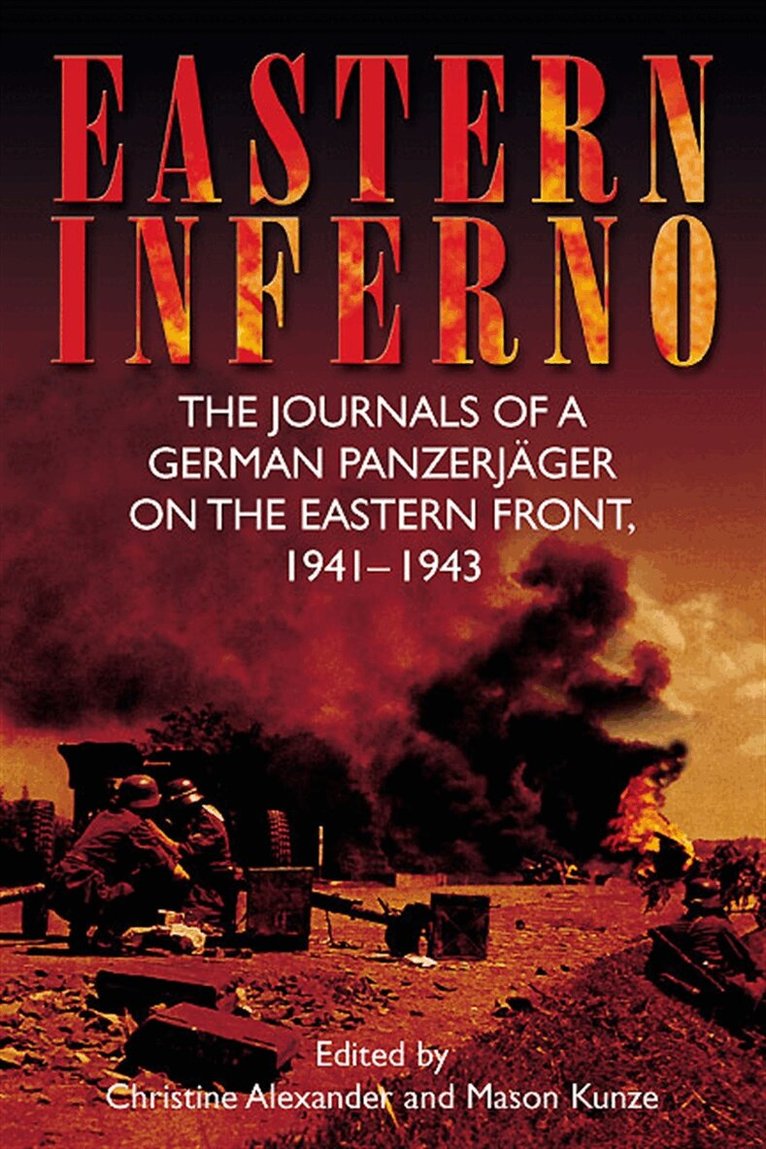
This book presents the remarkable personal journals of a German soldier who participated in Operation Barbarossa and subsequent battles on the Eastern Front, revealing the combat experience of the German-Russian War as seldom seen before.Hans Roth was a member of the anti-tank (Panzerjager) battalion, 299th Infantry Division, attached to Sixth Army, as the invasion of Russia began. Writing as events transpired, he recorded the mystery and tension as the Germans deployed on the Soviet frontier in June 1941. Then a firestorm broke loose as the Wehrmacht tore across the front, forging into the primitive vastness of the East. During the Kiev encirclement, Roth's unit was under constant attack as the Soviets desperately tried to break through the German ring. At one point, after the enemy had finally been beaten, a friend serving with the SS led him to a site where he witnessed civilians being massacred en masse (which may well have been Babi Yar). After suffering through a horrible winter against apparently endless Russian reserves, his division went on the offensive again, this time on the northern wing of "Case Gelb," the German drive toward Stalingrad.In these journals, attacks and counterattacks are described in "you are there" detail, as Roth wrote privately, as if to keep himself sane, knowing that his honest accounts of the horrors in the East could never pass through Wehrmacht censors. When the Soviet counteroffensive of winter 1942 begins, his unit is stationed alongside the Italian 8th Army, and his observations of its collapse, as opposed to the reaction of the German troops sent to stiffen its front, are of special fascination.Roth’s three journals were discovered many years after his disappearance, tucked away in the home of his brother, with whom he was known to have had a deep bond. After his brother’s death, his family discovered them and quickly sent them to Rosel, Roth’s wife. In time, Rosel handed down the journals to Erika, Roth’s only daughter, who had meantime immigrated to America.Hans Roth was doubtlessly working on a fourth journal before he was reported missing in action in July 1944 during the battle known as the Destruction of Army Group Center. Although Roth’s ultimate fate remains unknown, what he did leave behind, now finally revealed, is an incredible firsthand account of the horrific war the Germans waged in Russia.
Häftad, Engelska, 2013
178 kr
Skickas
This book presents the remarkable personal journals of a German soldier who participated in Operation Barbarossa and subsequent battles on the Eastern Front, revealing the combat experience of the German-Russian War as seldom seen before.Hans Roth was a member of the anti-tank (Panzerjäger) battalion, 299th Infantry Division, attached to Sixth Army, as the invasion of Russia began. Writing as events transpired, he recorded the mystery and tension as the Germans deployed on the Soviet frontier in 1941. Then a firestorm broke loose as the Wehrmacht broke across the front. During the Kiev encirclement, Roth’s unit was under constant attack as the Soviets desperately tried to break through the German ring. At one point, a friend serving with the SS led him to a site where he witnessed civilians being massacred (which may well have been Babi Yar). After suffering through a horrible winter against apparently endless Russian reserves, his division went on the offensive again, this time on the northern wing of “Case Gelb,” the German drive toward Stalingrad In these journals, attacks and counterattacks are described in “you are there” detail, as if to keep himself sane, knowing that his honest accounts of the horrors in the East could never pass through Wehrmacht censors. These journals, including original maps, some of which Roth himself helped compose, were recently discovered by his descendants. Roth was able to bring three of them back to his wife during the war, and after she emigrated to America she kept them but never spoke of them. Roth never brought back a fourth journal, as his fate after the summer of 1943 in Russia is still unknown. What he did leave behind, now finally revealed, is an incredible firsthand account of the horrific war the Germans waged in Russia.
Häftad, Engelska, 2022
173 kr
Skickas
This book presents the remarkable personal journals of a German soldier who participated in Operation Barbarossa and subsequent battles on the Eastern Front, revealing the combat experience of the German-Russian War as seldom seen before. Hans Roth was a member of the anti-tank (Panzerjäger) battalion, 299th Infantry Division, attached to Sixth Army, as the invasion of Russia began. Writing as events transpired, he recorded the mystery and tension as the Germans deployed on the Soviet frontier in 1941. Then a firestorm broke loose as the Wehrmacht broke across the front. During the Kiev encirclement, Roth’s unit was under constant attack as the Soviets desperately tried to break through the German ring. At one point, a friend serving with the SS led him to a site where he witnessed civilians being massacred (which may well have been Babi Yar). After suffering through a horrible winter against apparently endless Russian reserves, his division went on the offensive again, this time on the northern wing of 'Case Gelb', the German drive toward Stalingrad. In these journals, attacks and counterattacks are described in 'you are there' detail, as if to keep himself sane, knowing that his honest accounts of the horrors in the East could never pass through Wehrmacht censors. When the Soviet counteroffensive of winter 1942 commences, his unit is stationed alongside the Italian 8th Army, and his observations of its collapse, as opposed to the reaction of the German troops sent to stiffen its front, are particularly fascinating. These journals, including original maps, some of which Roth himself helped compose, were recently discovered by his descendants, who arranged for the translation of their long-lost grandfather’s journals. Roth was able to bring three of them back to his wife during the war, but never brought back a fourth journal, as his fate after the summer of 1943 in Russia is still unknown. What he did leave behind, now finally revealed, is an incredible first-hand account of the horrific war the Germans waged in Russia.