Massimo Mazzotti - Böcker
Visar alla böcker från författaren Massimo Mazzotti. Handla med fri frakt och snabb leverans.
8 produkter
8 produkter
1 465 kr
Skickas inom 3-6 vardagar
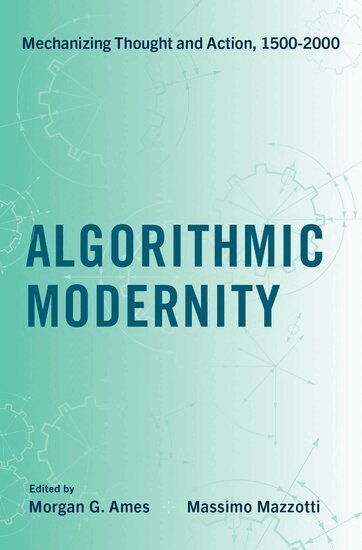
Algorithms have been transforming human society long before the advent of computing. Yet they continue to exist in relative invisibility despite their presence behind many of our modern social interactions. The rhetoric of algorithmic neutrality is more alive than ever, and algorithms are often depicted as obvious and unproblematic—without context and without history. Algorithmic Modernity draws together the history of mathematics and intellectual history to convey the enduring global history of the algorithm as a computational tool, epistemic ideal, and rhetorical figure alongside the ascendance of modernity. Through historical reconstructions of relevant thinkers and cultural phenomena over the last five hundred years, this collection of essays reveals how algorithms became the standard method for solving problems from the early inclusion of algorithms in Newton's formation of calculus to their later influence in the New Deal economy. Together, these essays create an informed history for readers interested in the social and cultural implications of today's pervasive digital algorithm. Featuring experts in mathematics, history, and computing, Algorithmic Modernity presents a multi-faceted exploration of the genealogy of algorithmic thinking in modern times.
1 020 kr
Skickas inom 7-10 vardagar
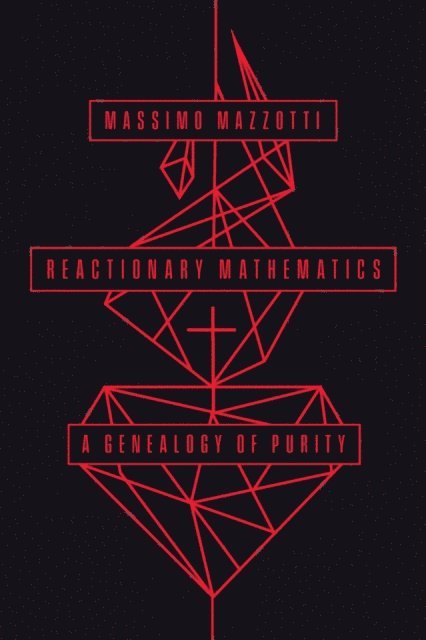
A forgotten episode of mathematical resistance reveals the rise of modern mathematics and its cornerstone, mathematical purity, as political phenomena. The nineteenth century opened with a major shift in European mathematics, and in the Kingdom of Naples, this occurred earlier than elsewhere. Between 1790 and 1830 its leading scientific institutions rejected as untrustworthy the “very modern mathematics” of French analysis and in its place consolidated, legitimated, and put to work a different mathematical culture. The Neapolitan mathematical resistance was a complete reorientation of mathematical practice. Over the unrestricted manipulation and application of algebraic algorithms, Neapolitan mathematicians called for a return to Greek-style geometry and the preeminence of pure mathematics. For all their apparent backwardness, Massimo Mazzotti explains, they were arguing for what would become crucial features of modern mathematics: its voluntary restriction through a new kind of rigor and discipline, and the complete disconnection of mathematical truth from the empirical world—in other words, its purity. The Neapolitans, Mazzotti argues, were reacting to the widespread use of mathematical analysis in social and political arguments: theirs was a reactionary mathematics that aimed to technically refute the revolutionary mathematics of the Jacobins. During the Restoration, the expert groups in the service of the modern administrative state reaffirmed the role of pure mathematics as the foundation of a newly rigorous mathematics, which was now conceived as a neutral tool for modernization. What Mazzotti’s penetrating history shows us in vivid detail is that producing mathematical knowledge was equally about producing certain forms of social, political, and economic order.
311 kr
Skickas inom 7-10 vardagar
A forgotten episode of mathematical resistance reveals the rise of modern mathematics and its cornerstone, mathematical purity, as political phenomena. The nineteenth century opened with a major shift in European mathematics, and in the Kingdom of Naples, this occurred earlier than elsewhere. Between 1790 and 1830 its leading scientific institutions rejected as untrustworthy the “very modern mathematics” of French analysis and in its place consolidated, legitimated, and put to work a different mathematical culture. The Neapolitan mathematical resistance was a complete reorientation of mathematical practice. Over the unrestricted manipulation and application of algebraic algorithms, Neapolitan mathematicians called for a return to Greek-style geometry and the preeminence of pure mathematics. For all their apparent backwardness, Massimo Mazzotti explains, they were arguing for what would become crucial features of modern mathematics: its voluntary restriction through a new kind of rigor and discipline, and the complete disconnection of mathematical truth from the empirical world—in other words, its purity. The Neapolitans, Mazzotti argues, were reacting to the widespread use of mathematical analysis in social and political arguments: theirs was a reactionary mathematics that aimed to technically refute the revolutionary mathematics of the Jacobins. During the Restoration, the expert groups in the service of the modern administrative state reaffirmed the role of pure mathematics as the foundation of a newly rigorous mathematics, which was now conceived as a neutral tool for modernization. What Mazzotti’s penetrating history shows us in vivid detail is that producing mathematical knowledge was equally about producing certain forms of social, political, and economic order.
22 172 kr
Skickas inom 10-15 vardagar
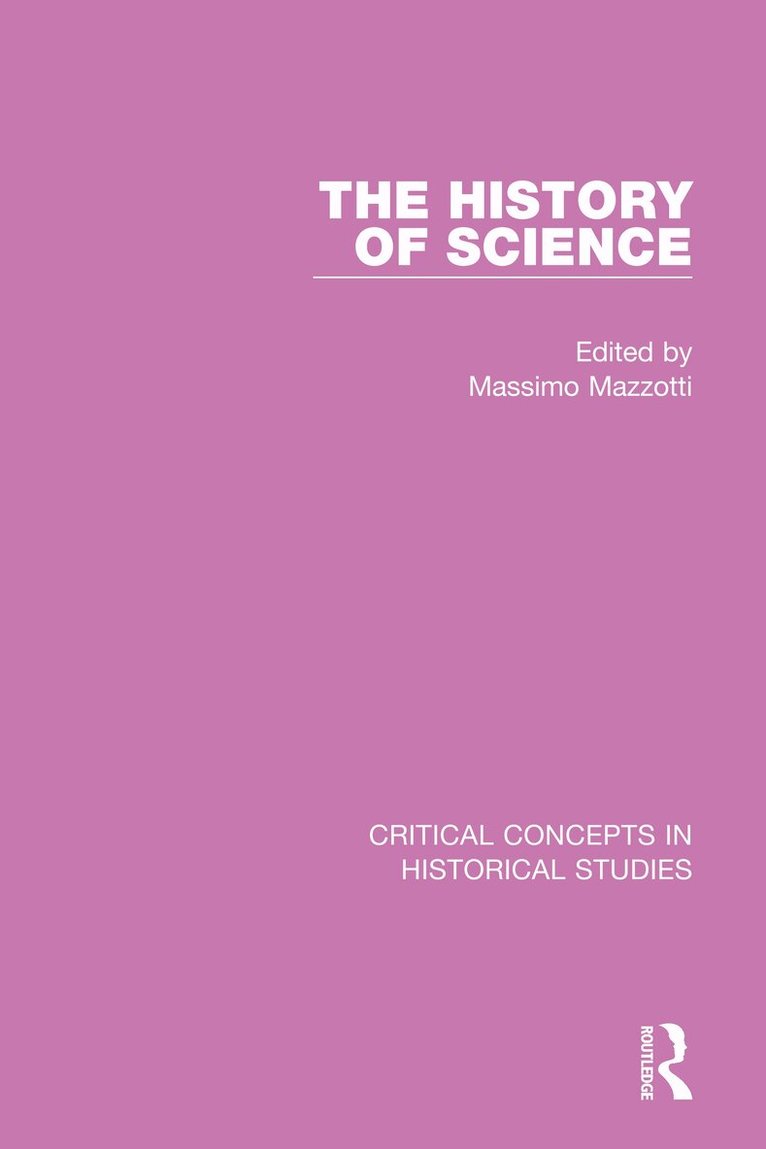
Science is one of the main features of the contemporary world, and shapes our lives to an extent that has no precedents in history. Yet science as we know it today is the outcome of contingent social processes, and its global success is far from self-explanatory. How did it happen? How did science emerge in history and became the most authoritative source of knowledge available in late modern societies? This set of volumes addresses these crucial questions through a selection of exemplary publications spanning antiquity to the present day. The reader will find an effective survey of the best scholarship in this rapidly growing field, and a map of the main revolutions as well as the long-term continuities that have characterized our understanding the world and our attempts to control it. The collection brings together areas of inquiry that have become increasingly distant and specialized, such as the history of antique science or Cold War studies, within broader narratives of the making of the modern world. They also reassess the traditional assumption of the exclusively Greek and Western origins of modern science, situating relevant knowledge, practices, and artefacts within the global networks that sustained them: in ancient as well as in modern times. The gathered materials address key historiographical issues, such as the relationship between science, magic, and religion; the role of science in nation-building processes; and the relationship between science and technology.
2 289 kr
Skickas inom 10-15 vardagar
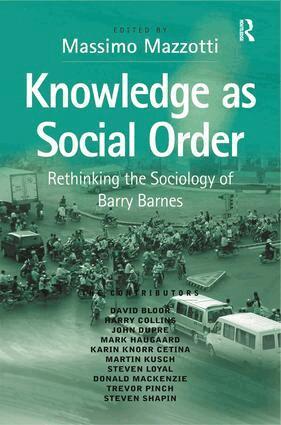
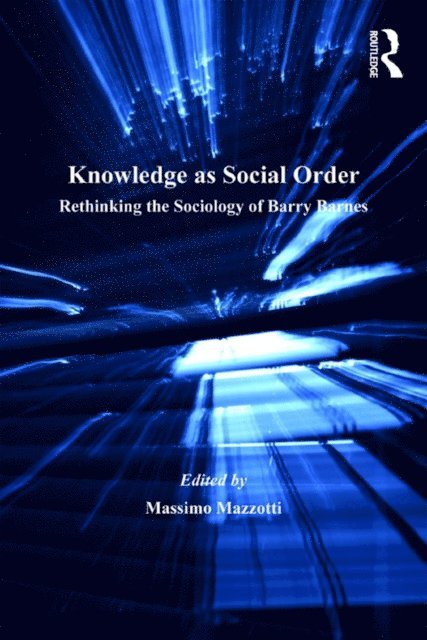
Investigating a theme first pioneered by Barry Barnes in the early 1970s, this volume explores the relationship between social order and legitimate knowledge and is intended as a tribute to Barnes' seminal role in the development of the discipline of science and technology studies (STS). The contributors highlight the way in which Barnes' work has shaped their way of conceptualizing the basic relation between knowledge and society. In doing this they explore the original sociological underpinnings of STS while pointing to the way in which Barnes' interdisciplinary work has been developed to tackle current concerns in the field as well as in social theory. They also address the concerns of social scientists who are investigating the nature of power and agency and the problem of social order, emphasizing the essential role played by scientific knowledge and technological machinery in the construction of social life. Contributors to the volume include Martin Kusch, Steven Loyal, Mark Haugaard, David Bloor, Trevor Pinch, John Dupre, Donald MacKenzie, Harry Collins, Steven Shapin and Karin Knorr Cetina.
Del 2 - Johns Hopkins Studies in the History of Mathematics
World of Maria Gaetana Agnesi, Mathematician of God
Inbunden, Engelska, 2008
588 kr
Tillfälligt slut
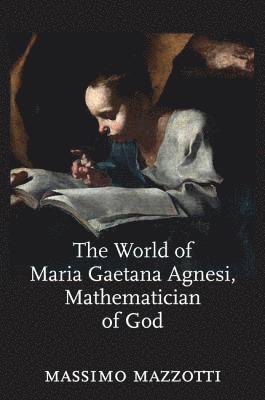
She is best known for her curve, the witch of Agnesi, which appears in almost all high school and undergraduate math books. She was a child prodigy who frequented the salon circuit, discussing mathematics, philosophy, history, and music in multiple languages. She wrote one of the first vernacular textbooks on calculus and was appointed chair of mathematics at the university in Bologna. In later years, however, she became a prominent figure within the Catholic Enlightenment, gave up the academic world, and devoted herself to the poor, the sick, the hungry, and the homeless. Indeed, the life of Maria Agnesi reveals a complex and enigmatic figure-one of the most fascinating characters in the history of mathematics. Using newly discovered archival documents, Massimo Mazzotti reconstructs the wide spectrum of Agnesi's social experience and examines her relationships to various traditions-religious, political, social, and mathematical. This meticulous study shows how she and her fellow Enlightenment Catholics modified tradition in an effort to reconcile aspects of modern philosophy and science with traditional morality and theology.Mazzotti's original and provocative investigation is also the first targeted study of the Catholic Enlightenment and its influence on modern science. He argues that Agnesi's life is the perfect lens through which we can gain a greater understanding of mid-eighteenth-century cultural trends in continental Europe.
752 kr
Skickas inom 10-15 vardagar
Investigating a theme first pioneered by Barry Barnes in the early 1970s, this volume explores the relationship between social order and legitimate knowledge and is intended as a tribute to Barnes' seminal role in the development of the discipline of science and technology studies (STS). The contributors highlight the way in which Barnes' work has shaped their way of conceptualizing the basic relation between knowledge and society. In doing this they explore the original sociological underpinnings of STS while pointing to the way in which Barnes' interdisciplinary work has been developed to tackle current concerns in the field as well as in social theory. They also address the concerns of social scientists who are investigating the nature of power and agency and the problem of social order, emphasizing the essential role played by scientific knowledge and technological machinery in the construction of social life. Contributors to the volume include Martin Kusch, Steven Loyal, Mark Haugaard, David Bloor, Trevor Pinch, John Dupre, Donald MacKenzie, Harry Collins, Steven Shapin and Karin Knorr Cetina.
Del 2 - Johns Hopkins Studies in the History of Mathematics
World of Maria Gaetana Agnesi, Mathematician of God
Häftad, Engelska, 2018
319 kr
Skickas inom 7-10 vardagar
The fascinating true story of mathematician Maria Agnesi.She is best known for her curve, the witch of Agnesi, which appears in almost all high school and undergraduate math books. She was a child prodigy who frequented the salon circuit, discussing mathematics, philosophy, history, and music in multiple languages. She wrote one of the first vernacular textbooks on calculus and was appointed chair of mathematics at the university in Bologna. In later years, however, she became a prominent figure within the Catholic Enlightenment, gave up academics, and devoted herself to the poor, the sick, the hungry, and the homeless. Indeed, the life of Maria Agnesi reveals a complex and enigmatic figure—one of the most fascinating characters in the history of mathematics. Using newly discovered archival documents, Massimo Mazzotti reconstructs the wide spectrum of Agnesi's social experience and examines her relationships to various traditions—religious, political, social, and mathematical. This meticulous study shows how she and her fellow Enlightenment Catholics modified tradition in an effort to reconcile aspects of modern philosophy and science with traditional morality and theology.Mazzotti's original and provocative investigation is also the first targeted study of the Catholic Enlightenment and its influence on modern science. He argues that Agnesi's life is the perfect lens through which we can gain a greater understanding of mid-eighteenth-century cultural trends in continental Europe.