Massimo Sargiacomo - Böcker
Visar alla böcker från författaren Massimo Sargiacomo. Handla med fri frakt och snabb leverans.
5 produkter
5 produkter
464 kr
Skickas inom 5-8 vardagar
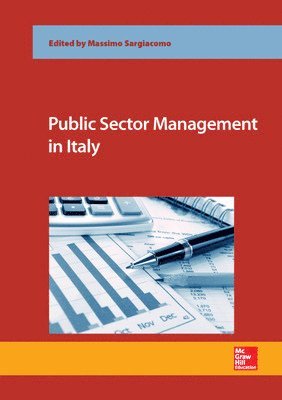
In the last two decades major reforms have been addressed to the broad Italian Public Sector, requiring the introduction of New Public Management-inspired ideas and tools, thus calling for further research in this field. The convergence of EU Countries towards the Euro deadline of December 31,2013 has also accelerated the managerial transformation process, as well as the consequent deployment in the Public Sector of techniques and practices widely adopted in the private sector. This refereed co-authored volume firstly introduces researchers, students and professionals into the characteristics of stakeholder and governance structures in public entities, and then guides them into different areas and issues of public sector organizations. Thus, the book seeks to provide a portrayal of the main challenges affecting different areas of Public Sector in Italy in a longitudinal manner. Accordingly, the volume initially analyzes some of the issues faced by the State bureaucratic apparatus and Regional governments, and it later provides examinations on Local Governments, Provinces, Public Transports, Healthcare and Universities. The book is built upon several years of research and teaching of the editor and co-authors in the Public Sector. This experience permitted them in some cases to also examine - within the common scientific borders of New Public Management ideas - the interrelations of Public Management and Accounting, as well as Human Resources Performance Management. Written and designed to provide a cross-areas examination of current Italian Public Sector issues and challenges, the volume provides a comprehensive investigation of a single Country, and contains not only robust theoretical insights but also recent empirical evidences of different case-studies investigated by the co-authors.
719 kr
Skickas inom 10-15 vardagar
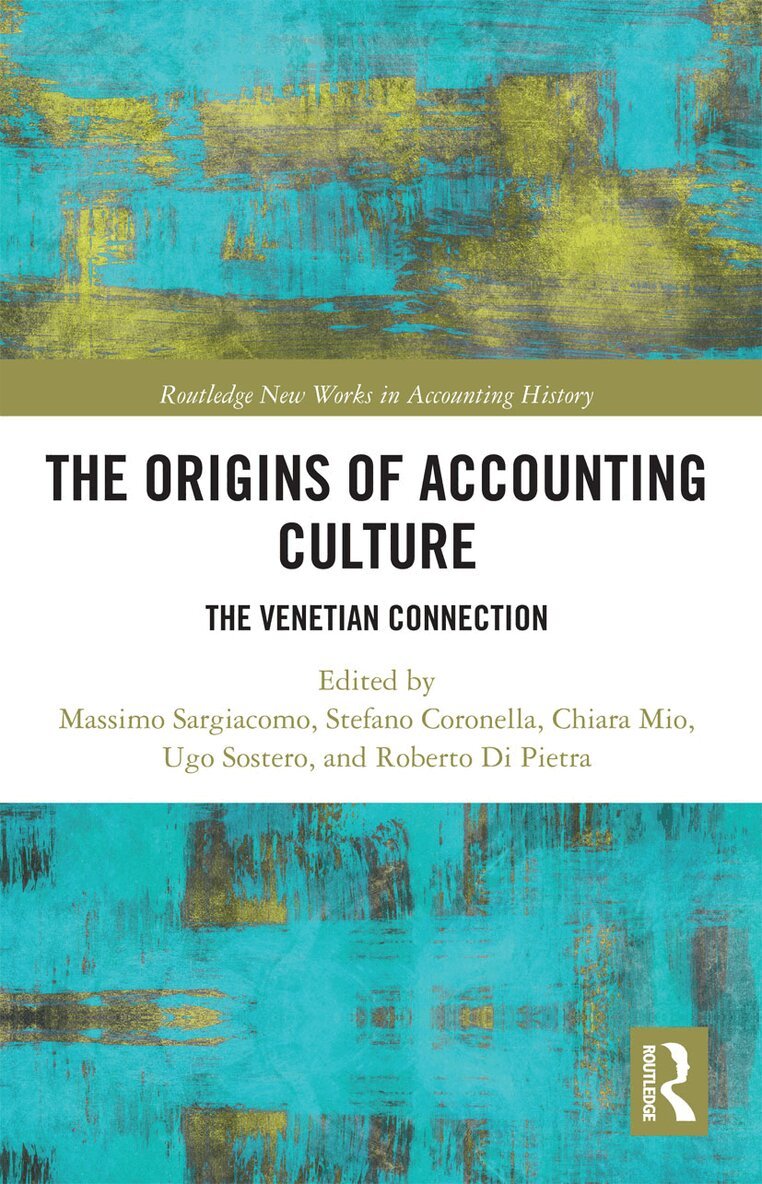
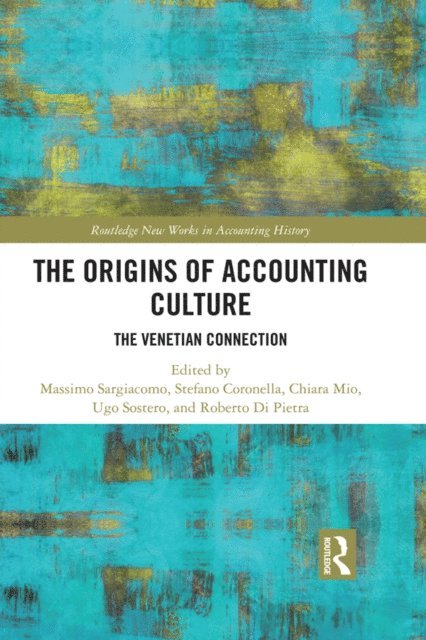
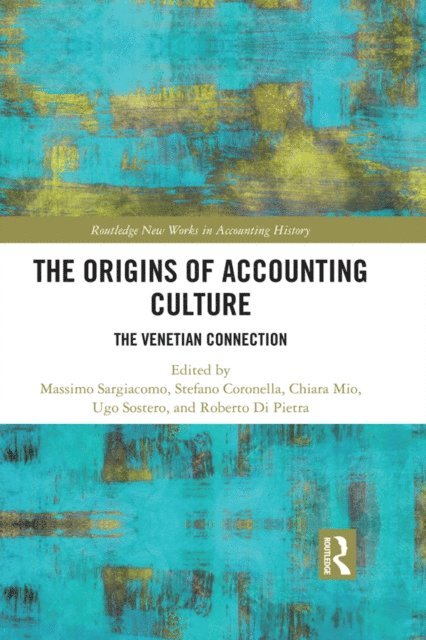
The Origins Of Accounting Culture aim at studying the origins of the accounting culture in Venice, with a specific focus on accounting education. The period covered by the work ranges from Luca Pacioli to the foundation (in 1868) of the Royal Advanced School of Commerce (Regia Scuola Superiore di Commercio), that in 2018 is celebrating its 150 anniversary as Ca’ Foscari University of Venice.Ever since the Middle Ages, Venice was home of a number of favourable circumstances that have been accumulating over the years. As a trading city par excellence, Venice allowed the spreading of the bookkeeping at first among firms and then in the public administration that was much in need of sophisticated accounting principles for the purpose of controlling its activities.Venice was among the first cities to implement Gutenberg print method and it quickly became the most important city in the world in the publishing industry, allowing printing and spreading the first handbooks about double-entry bookkeeping and merchant studies.The Origins Of Accounting Culture goes beyond the study of Luca Pacioli and tackles in a more organic and holistic way the social and economic conditions that allowed the accounting culture to spread in Venice. This book will be a vital resource to academics and researchers in the fields of Accounting, Accounting History, Economic Development and related disciplines.
2 358 kr
Skickas inom 10-15 vardagar
The Origins Of Accounting Culture aim at studying the origins of the accounting culture in Venice, with a specific focus on accounting education. The period covered by the work ranges from Luca Pacioli to the foundation (in 1868) of the Royal Advanced School of Commerce (Regia Scuola Superiore di Commercio), that in 2018 is celebrating its 150 anniversary as Ca’ Foscari University of Venice.Ever since the Middle Ages, Venice was home of a number of favourable circumstances that have been accumulating over the years. As a trading city par excellence, Venice allowed the spreading of the bookkeeping at first among firms and then in the public administration that was much in need of sophisticated accounting principles for the purpose of controlling its activities.Venice was among the first cities to implement Gutenberg print method and it quickly became the most important city in the world in the publishing industry, allowing printing and spreading the first handbooks about double-entry bookkeeping and merchant studies.The Origins Of Accounting Culture goes beyond the study of Luca Pacioli and tackles in a more organic and holistic way the social and economic conditions that allowed the accounting culture to spread in Venice. This book will be a vital resource to academics and researchers in the fields of Accounting, Accounting History, Economic Development and related disciplines.
691 kr
Skickas inom 10-15 vardagar
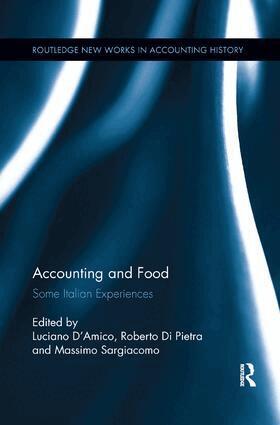
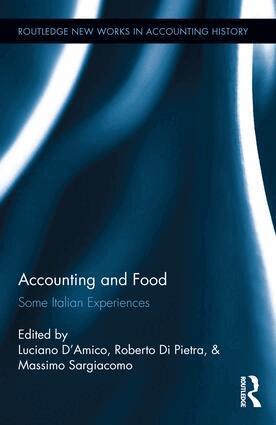
The interrelations between accounting and food have been hitherto neglected at an international level. This regret is particularly meaningful with regards to Italy, where 'Food', besides being a physiological need to satisfy, is one of the main pillars of the 'Made in Italy' Industry, and the so-called Italian life-style, which has become a part of the popular culture. Accounting and Food seeks to explore the accounting, business and financial history of some of the most prestigious Italian food producers. Moreover, given that "Food" has been at the center of production and trade throughout the history of mankind, food production and commerce will be investigated from the critical angles of accounting, accountants and merchants. Relatedly, the interconnected history of the Food fairs and expositions of the major Italian trade centers will be also unveiled.Accounting and Food examines the role of accounting, accountants and merchants in food production and international trade (e.g., grain, wine, etc...) as well as considering the history of food producers, paying particular attention to the role played by women entrepreneurs over time.Finally the book explores the interrelations of accounting, food and state, local authorities and social institutions, in particular in so far these latter institutions were involved in the Political economy, regulation, allocation and distribution of food to populations and societies.Accounting and Food will be of particular interest to researches and scholars in the field of accounting history but also to those working in the areas of regional development, regional economics, food and sociology and other related disciplines.
2 358 kr
Skickas inom 10-15 vardagar
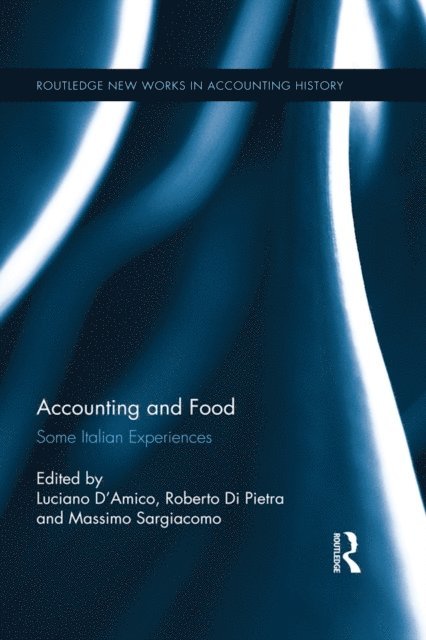
The interrelations between accounting and food have been hitherto neglected at an international level. This regret is particularly meaningful with regards to Italy, where 'Food', besides being a physiological need to satisfy, is one of the main pillars of the 'Made in Italy' Industry, and the so-called Italian life-style, which has become a part of the popular culture. Accounting and Food seeks to explore the accounting, business and financial history of some of the most prestigious Italian food producers. Moreover, given that "Food" has been at the center of production and trade throughout the history of mankind, food production and commerce will be investigated from the critical angles of accounting, accountants and merchants. Relatedly, the interconnected history of the Food fairs and expositions of the major Italian trade centers will be also unveiled.Accounting and Food examines the role of accounting, accountants and merchants in food production and international trade (e.g., grain, wine, etc...) as well as considering the history of food producers, paying particular attention to the role played by women entrepreneurs over time.Finally the book explores the interrelations of accounting, food and state, local authorities and social institutions, in particular in so far these latter institutions were involved in the Political economy, regulation, allocation and distribution of food to populations and societies.Accounting and Food will be of particular interest to researches and scholars in the field of accounting history but also to those working in the areas of regional development, regional economics, food and sociology and other related disciplines.