Matei Zaharia – författare
375 kr
Läs direkt efter köp
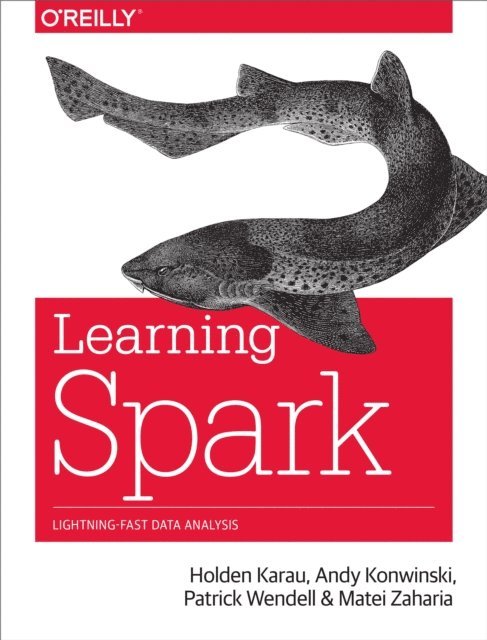
Data in all domains is getting bigger. How can you work with it efficiently? This book introduces Apache Spark, the open source cluster computing system that makes data analytics fast to write and fast to run. With Spark, you can tackle big datasets quickly through simple APIs in Python, Java, and Scala.
Written by the developers of Spark, this book will have data scientists and engineers up and running in no time. You’ll learn how to express parallel jobs with just a few lines of code, and cover applications from simple batch jobs to stream processing and machine learning.
Quickly dive into Spark capabilities such as distributed datasets, in-memory caching, and the interactive shellLeverage Spark’s powerful built-in libraries, including Spark SQL, Spark Streaming, and MLlibUse one programming paradigm instead of mixing and matching tools like Hive, Hadoop, Mahout, and StormLearn how to deploy interactive, batch, and streaming applicationsConnect to data sources including HDFS, Hive, JSON, and S3Master advanced topics like data partitioning and shared variables375 kr
Läs direkt efter köp
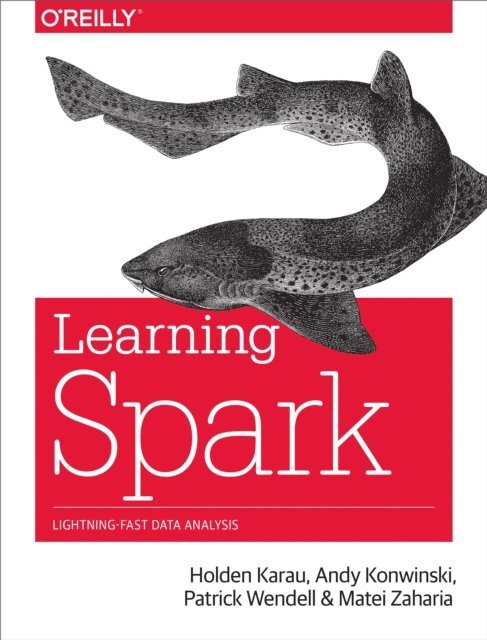
Data in all domains is getting bigger. How can you work with it efficiently? This book introduces Apache Spark, the open source cluster computing system that makes data analytics fast to write and fast to run. With Spark, you can tackle big datasets quickly through simple APIs in Python, Java, and Scala.
Written by the developers of Spark, this book will have data scientists and engineers up and running in no time. You’ll learn how to express parallel jobs with just a few lines of code, and cover applications from simple batch jobs to stream processing and machine learning.
Quickly dive into Spark capabilities such as distributed datasets, in-memory caching, and the interactive shellLeverage Spark’s powerful built-in libraries, including Spark SQL, Spark Streaming, and MLlibUse one programming paradigm instead of mixing and matching tools like Hive, Hadoop, Mahout, and StormLearn how to deploy interactive, batch, and streaming applicationsConnect to data sources including HDFS, Hive, JSON, and S3Master advanced topics like data partitioning and shared variables527 kr
Skickas inom 5-8 vardagar
605 kr
Läs direkt efter köp
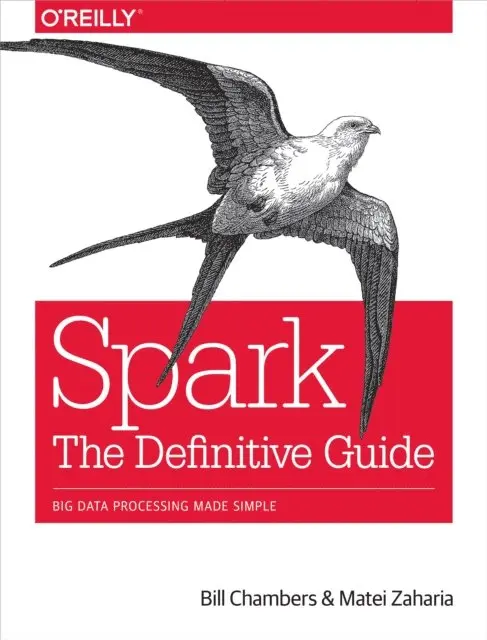
Learn how to use, deploy, and maintain Apache Spark with this comprehensive guide, written by the creators of the open-source cluster-computing framework. With an emphasis on improvements and new features in Spark 2.0, authors Bill Chambers and Matei Zaharia break down Spark topics into distinct sections, each with unique goals.
Youâ??ll explore the basic operations and common functions of Sparkâ??s structured APIs, as well as Structured Streaming, a new high-level API for building end-to-end streaming applications. Developers and system administrators will learn the fundamentals of monitoring, tuning, and debugging Spark, and explore machine learning techniques and scenarios for employing MLlib, Sparkâ??s scalable machine-learning library.
Get a gentle overview of big data and SparkLearn about DataFrames, SQL, and Datasetsâ??Sparkâ??s core APIsâ??through worked examplesDive into Sparkâ??s low-level APIs, RDDs, and execution of SQL and DataFramesUnderstand how Spark runs on a clusterDebug, monitor, and tune Spark clusters and applicationsLearn the power of Structured Streaming, Sparkâ??s stream-processing engineLearn how you can apply MLlib to a variety of problems, including classification or recommendation627 kr
Läs direkt efter köp
Learn how to use, deploy, and maintain Apache Spark with this comprehensive guide, written by the creators of the open-source cluster-computing framework. With an emphasis on improvements and new features in Spark 2.0, authors Bill Chambers and Matei Zaharia break down Spark topics into distinct sections, each with unique goals.
Youâ??ll explore the basic operations and common functions of Sparkâ??s structured APIs, as well as Structured Streaming, a new high-level API for building end-to-end streaming applications. Developers and system administrators will learn the fundamentals of monitoring, tuning, and debugging Spark, and explore machine learning techniques and scenarios for employing MLlib, Sparkâ??s scalable machine-learning library.
Get a gentle overview of big data and SparkLearn about DataFrames, SQL, and Datasetsâ??Sparkâ??s core APIsâ??through worked examplesDive into Sparkâ??s low-level APIs, RDDs, and execution of SQL and DataFramesUnderstand how Spark runs on a clusterDebug, monitor, and tune Spark clusters and applicationsLearn the power of Structured Streaming, Sparkâ??s stream-processing engineLearn how you can apply MLlib to a variety of problems, including classification or recommendation712 kr
Skickas inom 5-8 vardagar
621 kr
Läs direkt efter köp
The past few years have seen a major change in computing systems, as growing data volumes and stalling processor speeds require more and more applications to scale out to clusters. Today, a myriad data sources, from the Internet to business operations to scientific instruments, produce large and valuable data streams. However, the processing capabilities of single machines have not kept up with the size of data. As a result, organizations increasingly need to scale out their computations over clusters.
At the same time, the speed and sophistication required of data processing have grown. In addition to simple queries, complex algorithms like machine learning and graph analysis are becoming common. And in addition to batch processing, streaming analysis of real-time data is required to let organizations take timely action. Future computing platforms will need to not only scale out traditional workloads, but support these new applications too.
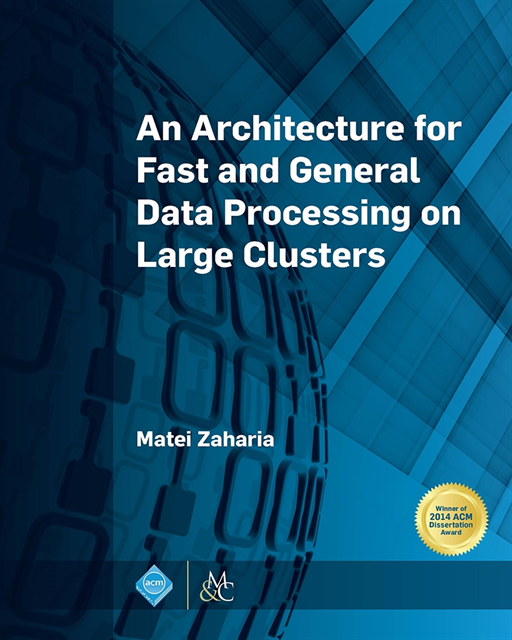
This book, a revised version of the 2014 ACM Dissertation Award winning dissertation, proposes an architecture for cluster computing systems that can tackle emerging data processing workloads at scale. Whereas early cluster computing systems, like MapReduce, handled batch processing, our architecture also enables streaming and interactive queries, while keeping MapReduce''s scalability and fault tolerance. And whereas most deployed systems only support simple one-pass computations (e.g., SQL queries), ours also extends to the multi-pass algorithms required for complex analytics like machine learning. Finally, unlike the specialized systems proposed for some of these workloads, our architecture allows these computations to be combined, enabling rich new applications that intermix, for example, streaming and batch processing.
We achieve these results through a simple extension to MapReduce that adds primitives for data sharing, called Resilient Distributed Datasets (RDDs). We show that this is enough to capture a wide range of workloads. We implement RDDs in the open source Spark system, which we evaluate using synthetic and real workloads. Spark matches or exceeds the performance of specialized systems in many domains, while offering stronger fault tolerance properties and allowing these workloads to be combined. Finally, we examine the generality of RDDs from both a theoretical modeling perspective and a systems perspective.
This version of the dissertation makes corrections throughout the text and adds a new section on the evolution of Apache Spark in industry since 2014. In addition, editing, formatting, and links for the references have been added.
569 kr
Läs direkt efter köp
The past few years have seen a major change in computing systems, as growing data volumes and stalling processor speeds require more and more applications to scale out to clusters. Today, a myriad data sources, from the Internet to business operations to scientific instruments, produce large and valuable data streams. However, the processing capabilities of single machines have not kept up with the size of data. As a result, organizations increasingly need to scale out their computations over clusters.
At the same time, the speed and sophistication required of data processing have grown. In addition to simple queries, complex algorithms like machine learning and graph analysis are becoming common. And in addition to batch processing, streaming analysis of real-time data is required to let organizations take timely action. Future computing platforms will need to not only scale out traditional workloads, but support these new applications too.
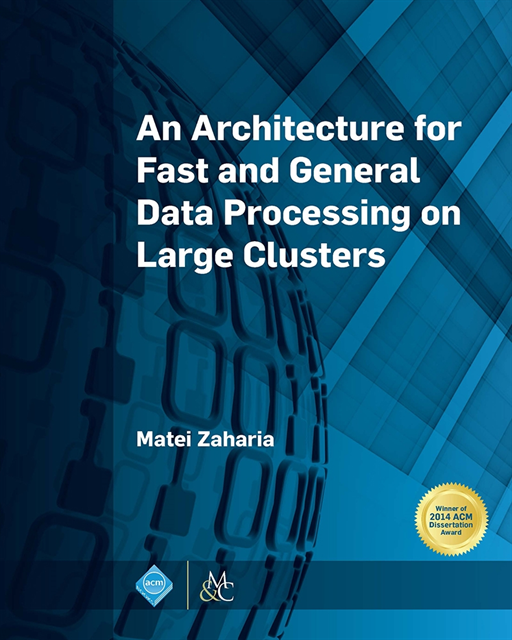
This book, a revised version of the 2014 ACM Dissertation Award winning dissertation, proposes an architecture for cluster computing systems that can tackle emerging data processing workloads at scale. Whereas early cluster computing systems, like MapReduce, handled batch processing, our architecture also enables streaming and interactive queries, while keeping MapReduce''s scalability and fault tolerance. And whereas most deployed systems only support simple one-pass computations (e.g., SQL queries), ours also extends to the multi-pass algorithms required for complex analytics like machine learning. Finally, unlike the specialized systems proposed for some of these workloads, our architecture allows these computations to be combined, enabling rich new applications that intermix, for example, streaming and batch processing.
We achieve these results through a simple extension to MapReduce that adds primitives for data sharing, called Resilient Distributed Datasets (RDDs). We show that this is enough to capture a wide range of workloads. We implement RDDs in the open source Spark system, which we evaluate using synthetic and real workloads. Spark matches or exceeds the performance of specialized systems in many domains, while offering stronger fault tolerance properties and allowing these workloads to be combined. Finally, we examine the generality of RDDs from both a theoretical modeling perspective and a systems perspective.
This version of the dissertation makes corrections throughout the text and adds a new section on the evolution of Apache Spark in industry since 2014. In addition, editing, formatting, and links for the references have been added.
853 kr
Skickas inom 5-8 vardagar