Mathew Thomson – författare
Visar alla böcker från författaren . Handla med fri frakt och snabb leverans.
5 produkter
5 produkter
E-bok
PDF, Engelska, 20062 291 kr
Läs direkt efter köp
This is a history of how twentieth-century Britons came to view themselves and their world in psychological terms, and how this changed over time. It examines the extent to which psychological thought and practice could mediate, not just understanding of the self, but also a wide range of social and economic, political, and ethical issues that rested on assumptions about human nature. In doing so, it brings together high and low psychological cultures; it focuses notjust on health, but also on education, economic life, and politics; and it reaches from the start of the century right up to the 1970s.Mathew Thomson highlights the intense excitement surrounding psychology at the start of the century, and its often highly unorthodox expression in thought and practice. He argues that the appeal of psychological thinking has been underestimated in the British context, partly because its character has been misconstrued. Psychology found a role because, rather than shattering values, it offered them new life. The book considers the extent to which such an ethical and social psychologicalsubjectivity survived the challenges of an industrial civilization, a crisis in confidence regarding human nature wrought by war and political extremism, and finally the emergence of a permissive society. It concludes that many of our own assumptions about the route to psychological modernity - centred onthe rise of individualism and interiority, and focusing on the liberation of emotion, and on talk, relationships, and sex - need substantial revision, or at least setting alongside a rather different path when it comes to the Britain of 1900-70.
E-bok
PDF, Engelska, 20131 760 kr
Läs direkt efter köp
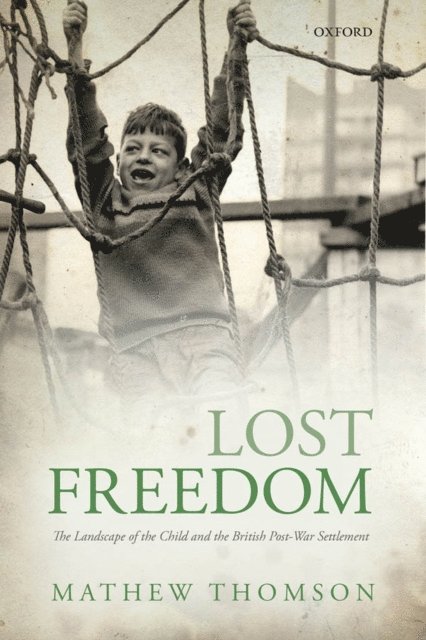
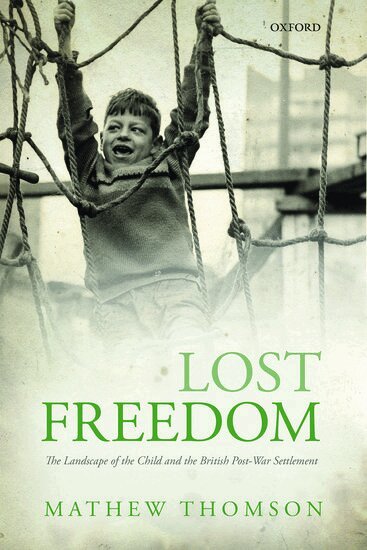
Lost Freedom addresses the widespread feeling that there has been a fundamental change in the social life of children in recent decades: the loss of childhood freedom, and in particular, the loss of freedom to roam beyond the safety of home. Mathew Thomson explores this phenomenon, concentrating on the period from the Second World War until the 1970s, and considering the roles of psychological theory, traffic, safety consciousness, anxiety about sexualdanger, and television in the erosion of freedom.Thomson argues that the Second World War has an important place in this story, with war-borne anxieties encouraging an emphasis on the central importance of a landscape of home. War also encouraged the development of specially designed spaces for the cultivation of the child, including the adventure playground, and the virtual landscape of children''s television. However, before the 1970s, British children still had much more physical freedom than they do today. Lost Freedom exploreswhy this situation has changed. The volume pays particular attention to the 1970s as a period of transition, and one which saw radical visions of child liberation, but with anxieties about child protection also escalating in response. This is strikingly demonstrated in the story of how the paedophile emerged asa figure of major public concern. Thomson argues that this crisis of concern over child freedom is indicative of some of the broader problems of the social settlements that had been forged out of the Second World War.
Inbunden, Engelska, 1998
3 819 kr
Skickas inom 5-8 vardagar
This is the first detailed assessment of the development and implementation of social policy to deal with the problem of the `mentally deficient' in Britain between 1870 and 1959. Mathew Thomson analyses all the factors involved in the policy-making process, beginning with the politics of the legislature and showing how the demands of central government were interpreted by local authorities, resulting in a wide and varied distribution of medical, institutional, and community care in different parts of the country. The efforts of health professionals, voluntary organizations and the families themselves are considered, alongside questions about the influence of changing concepts of class, gender, and citizenship. The author queries the belief that the policy of segregation was largely unsuccessful, and reveals a hitherto unrecognized system of care in the community. He reframes our understanding of the campaign for sterilization and examines why British policy-makers avoided extremist measures such as the compulsory sterilization introduced in Germany and parts of the US during this period. Thomson shows that the problem of mental deficiency cannot be understood simply in terms of eugenics but must also be considered as part of the process of adjusting to democracy in the twentieth century.
Inbunden, Engelska, 2006
4 037 kr
Skickas inom 5-8 vardagar
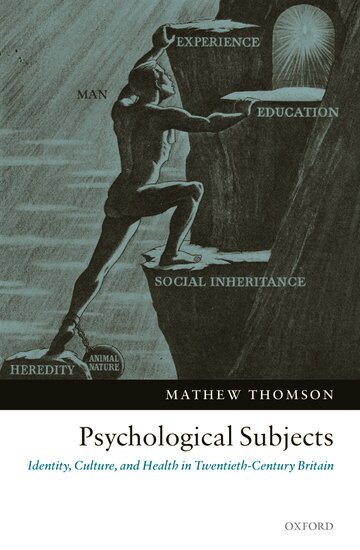
This is a history of how twentieth-century Britons came to view themselves and their world in psychological terms, and how this changed over time. It examines the extent to which psychological thought and practice could mediate, not just understanding of the self, but also a wide range of social and economic, political, and ethical issues that rested on assumptions about human nature. In doing so, it brings together high and low psychological cultures; it focuses not just on health, but also on education, economic life, and politics; and it reaches from the start of the century right up to the 1970s. Mathew Thomson highlights the intense excitement surrounding psychology at the start of the century, and its often highly unorthodox expression in thought and practice. He argues that the appeal of psychological thinking has been underestimated in the British context, partly because its character has been misconstrued. Psychology found a role because, rather than shattering values, it offered them new life. The book considers the extent to which such an ethical and social psychological subjectivity survived the challenges of an industrial civilization, a crisis in confidence regarding human nature wrought by war and political extremism, and finally the emergence of a permissive society. It concludes that many of our own assumptions about the route to psychological modernity - centred on the rise of individualism and interiority, and focusing on the liberation of emotion, and on talk, relationships, and sex - need substantial revision, or at least setting alongside a rather different path when it comes to the Britain of 1900-70.
Inbunden, Engelska, 2013
2 140 kr
Skickas inom 7-10 vardagar
Lost Freedom addresses the widespread feeling that there has been a fundamental change in the social life of children in recent decades: the loss of childhood freedom, and in particular, the loss of freedom to roam beyond the safety of home. Mathew Thomson explores this phenomenon, concentrating on the period from the Second World War until the 1970s, and considering the roles of psychological theory, traffic, safety consciousness, anxiety about sexual danger, and television in the erosion of freedom.Thomson argues that the Second World War has an important place in this story, with war-borne anxieties encouraging an emphasis on the central importance of a landscape of home. War also encouraged the development of specially designed spaces for the cultivation of the child, including the adventure playground, and the virtual landscape of children's television. However, before the 1970s, British children still had much more physical freedom than they do today. Lost Freedom explores why this situation has changed. The volume pays particular attention to the 1970s as a period of transition, and one which saw radical visions of child liberation, but with anxieties about child protection also escalating in response. This is strikingly demonstrated in the story of how the paedophile emerged as a figure of major public concern. Thomson argues that this crisis of concern over child freedom is indicative of some of the broader problems of the social settlements that had been forged out of the Second World War.