Mathias Döpfner - Böcker
Visar alla böcker från författaren Mathias Döpfner. Handla med fri frakt och snabb leverans.
4 produkter
4 produkter
221 kr
Tillfälligt slut
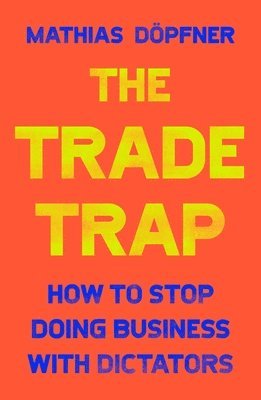
Global business leader Mathias Döpfner offers a revolutionary roadmap to reshape global trade, strengthen our democracy, and safeguard our freedoms.Freedom is on the decline around the world. Autocrats in Europe, Asia, and the Mideast are undermining our open societies, human rights, and the rule of law. The Russian invasion in Ukraine was a wake-up call for the West, but the biggest threat remains China. For two generations, Americans and Europeans have believed that change will come through trade, but instead of dictatorships becoming more like Western democracies, unfettered free trade has strengthened our enemies and undermined our countries. We are caught in a trade trap, faced with the decision to choose either opportunism and submission or opposition and emancipation. In The Trade Trap, one of the world’s most powerful business leaders traces the rise and costs of Western dependency on China and Russia. And he suggests a radical new approach to free trade: The establishment of a new values-based alliance of democracies. Membership is based on the adherence of three very simple criteria: the rule of law, human rights, and sustainability targets. Countries that comply with these criteria can engage in tariff-free trade with others. Those who don’t will pay prohibitive tariffs. Sharing the author’s encounters with major global figures including Vladimir Putin, Recep Tayyip Erdogan, George W. Bush, Angela Merkel, Jack Ma, and more, The Trade Trap offers personal insight into the dangerous consequences of doing business with autocrats along with a bold proposal for a values-based trade policy.
111 kr
Skickas
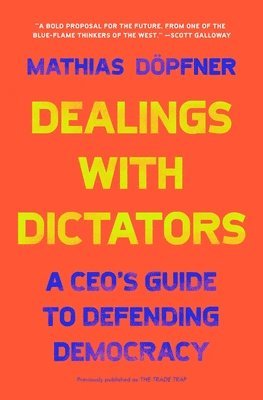
Global business leader Mathias Döpfner offers a “compelling” (Gideon Rachman, chief foreign affairs columnist for Financial Times) and revolutionary road map to reshape global trade, strengthen our democracy, and safeguard our freedoms.Freedom is on the decline around the world. Autocrats in Europe, Asia, and the Middle East are undermining our open societies, human rights, and the rule of law. The Russian invasion of Ukraine was a wake-up call for the West, but the biggest threat remains China. For two generations, Americans and Europeans have believed that change will come through trade, but instead of dictatorships becoming more like Western democracies, unfettered free trade has strengthened our enemies and undermined our countries. We are caught in a trade trap, faced with the decision to choose either opportunism and submission or opposition and emancipation. In Dealing with Dictators, one of the world’s most powerful business leaders traces the rise and costs of Western dependency on China and Russia. And he suggests a radical new approach to free trade: The establishment of a new values-based alliance of democracies. Membership is based on the adherence to three very simple criteria: the rule of law, human rights, and sustainability targets. Countries that comply with these criteria can engage in tariff-free trade with others. Those who don’t will pay prohibitive tariffs. Sharing the author’s encounters with major global figures including Vladimir Putin, Recep Tayyip Erdogan, George W. Bush, Angela Merkel, Jack Ma, and more, Dealing with Dictators offers personal insight into the dangerous consequences of doing business with autocrats along with a bold proposal for a values-based trade policy.

465 kr
Skickas inom 10-15 vardagar
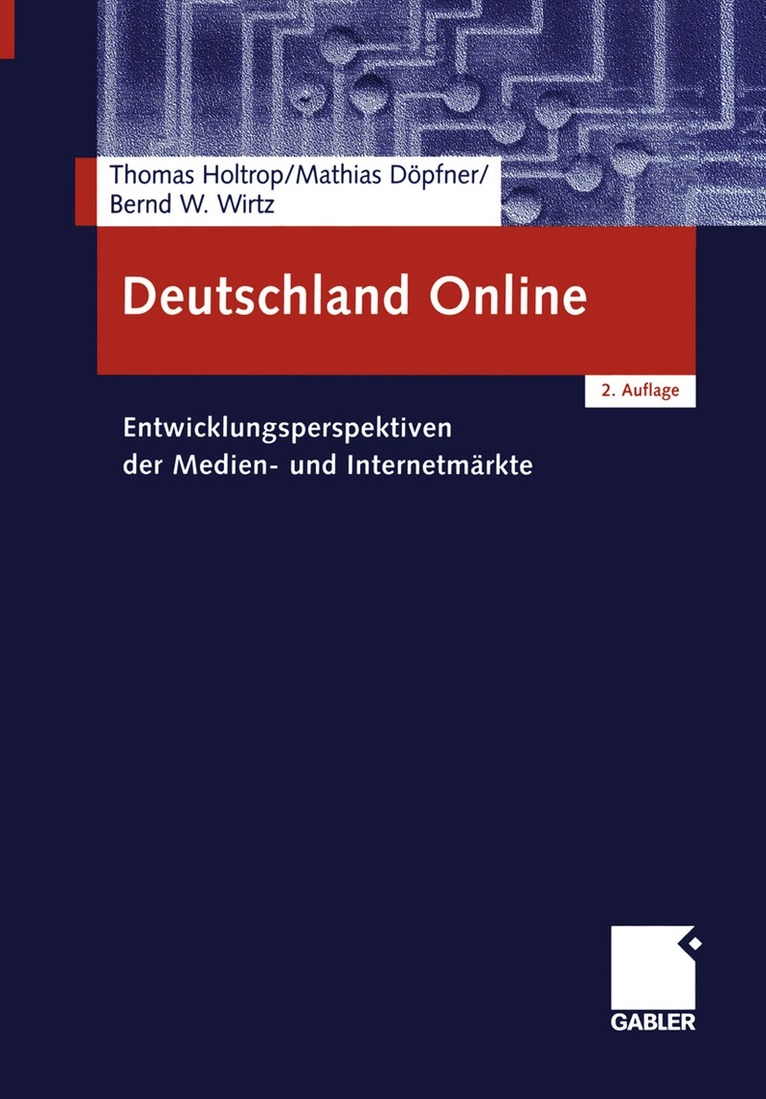
Die vorliegende Studie zeigt: Der Wandel von der Industrie- zur Informationsgesell schaft findet in rasanter Geschwindigkeit statt. Das Internet hat einen festen Platz in un serer Gesellschaft eingenommen und wird in seiner Bedeutung auf allen Ebenen, sei es geschäftlich für den Kontakt mit Geschäftspartnern aus aller Welt, sei es im Rahmen der Ausbildung durch den Zugang zu Wissen und Informationen über den Schulbetrieb hin aus oder auch im ganz privaten Bereich, weiter anwachsen. Die zunehmende Bedeutung des Internets und die Möglichkeit, Informationen aus einer bisher ungekannten Vielfalt von Quellen zu erschließen, erfordert auch die Fähigkeit, digitale Inhalte in sozial und wirtschaftlich wertvolles Wissen umzuwandeln. Es besteht daher für diejenigen, die keinen Zugang zum Medium Internet haben, die Gefahr, dass sie den Anschluss verlieren und sich mittelfristig Ausgrenzungseffekten gegenübersehen - z. B. bei der Erlangung von Ausbildungs- und Arbeitsplätzen oder beim Bezug staatli cher und privater Dienstleistungen. Es bedarf daher eines engen Schulterschlusses zwischen Politik und Wirtschaft, wenn es darum geht, alle Bürger in Deutschland an den ökonomischen und sozialen Vorteilen des Internets teilhaben zu lassen. Wie bereits im eEurope-Aktionsplan der Europäischen Union für die Entwicklung des Breitbandmarktes ausgeführt, kommt den staatlichen Stellen eine besondere Vorreiterrolle bei der Einführung der neuen Technologien zu. Dieser können sie beispielsweise durch die Onlinebereitstellung öffentlicher Dienstleis tungen oder die Einrichtung und Förderung öffentlicher Zugänge zum Internet gerecht werden.
199 kr
Skickas inom 3-6 vardagar