Mathias Wouters – författare
1 348 kr
Skickas inom 5-8 vardagar
1 641 kr
Skickas inom 5-8 vardagar
395 kr
Läs direkt efter köp
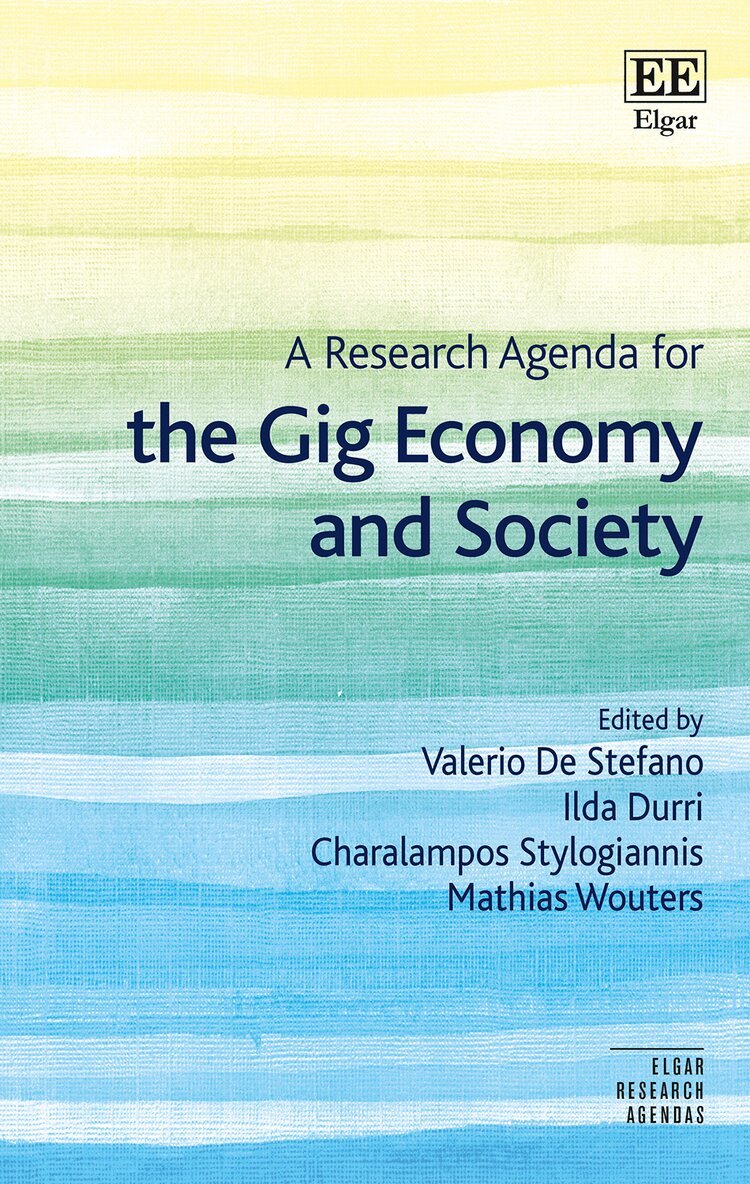
Providing a comprehensive, interdisciplinary overview of the gig economy from both a labour and employment perspective, this Research Agenda goes beyond the question of the employment status of platform workers. It investigates how the gig economy is changing the way people work, how the platforms’ business models are spreading in our economies, and what labour and social institutions are needed to respond to the challenges that platform work raises.
Covering key issues such as algorithmic management, discrimination, occupational health and safety, casual work and collective labour rights, the authors challenge the narrative that the gig economy is a set of work arrangements that cannot be regulated through existing labour legislation and governance forms. The impact of the gig economy in developing countries and the regulation of global supply changes in platform work are also addressed.
With contributions from world-leading authors, this Research Agenda will be crucial reading for scholars of labour and employment law, sociologists, economists and industrial relations specialists.
1 689 kr
Skickas inom 5-8 vardagar
1 473 kr
Läs direkt efter köp
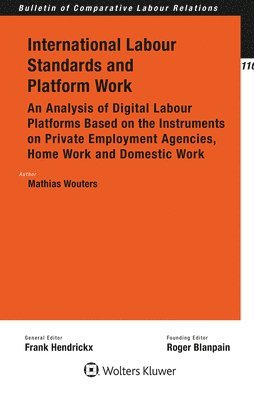
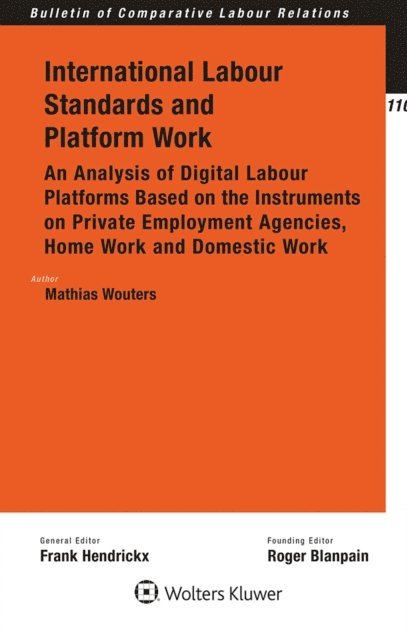
Platform work – the matching of the supply of and demand for paid labour through an online platform – often depends on workers who operate in a “grey area” between the archetype of an employee and a self-employed worker. This important book explores the utility of the International Labour Organization’s existing standards in governing this phenomenon. It indicates that despite their relevance, many standards have little or no impact. The standards apply to the issue but they fail to connect with it.
The author shows how three ILO conventions – the Home Work Convention, 1996 (No. 177), the Private Employment Agencies Convention, 1997 (No. 181), and the Domestic Workers Convention, 2011 (No. 189) – can be revitalised to have an impact on the platform work debate. In the course of the analysis he responds in depth to such questions as the following:
What are digital labour platforms? What does decent work mean? Did the ILO centenary fundamentally change anything? What is the link between private employment services and platform work? How do crowdworkers relate to homeworkers and teleworkers? Are platform workers engaged in domestic work? What form could a future ILO standard on platform work take?Given that the ILO plans to start discussions on a potential future standard for platform work in 2022, this book will prove very useful in highlighting the issues and standards that such discussions should consider.
Research has shown that the techniques and tools of the platform economy have spread far beyond gig work, resulting in widespread “gigification” and restructuring of workplace behaviours and relationships, jobs, and communities across the world. For this and other reasons, including the book’s detailed analysis of issues not addressed elsewhere, labour lawyers, in-house counsel, researchers, and policymakers will gain valuable insight into what decent work in the platform economy would require, thus greatly broadening the discussion on this difficult-to-regulate phenomenon.
1 473 kr
Läs direkt efter köp
Platform work – the matching of the supply of and demand for paid labour through an online platform – often depends on workers who operate in a “grey area” between the archetype of an employee and a self-employed worker. This important book explores the utility of the International Labour Organization’s existing standards in governing this phenomenon. It indicates that despite their relevance, many standards have little or no impact. The standards apply to the issue but they fail to connect with it.
The author shows how three ILO conventions – the Home Work Convention, 1996 (No. 177), the Private Employment Agencies Convention, 1997 (No. 181), and the Domestic Workers Convention, 2011 (No. 189) – can be revitalised to have an impact on the platform work debate. In the course of the analysis he responds in depth to such questions as the following:
What are digital labour platforms? What does decent work mean? Did the ILO centenary fundamentally change anything? What is the link between private employment services and platform work? How do crowdworkers relate to homeworkers and teleworkers? Are platform workers engaged in domestic work? What form could a future ILO standard on platform work take?Given that the ILO plans to start discussions on a potential future standard for platform work in 2022, this book will prove very useful in highlighting the issues and standards that such discussions should consider.
Research has shown that the techniques and tools of the platform economy have spread far beyond gig work, resulting in widespread “gigification” and restructuring of workplace behaviours and relationships, jobs, and communities across the world. For this and other reasons, including the book’s detailed analysis of issues not addressed elsewhere, labour lawyers, in-house counsel, researchers, and policymakers will gain valuable insight into what decent work in the platform economy would require, thus greatly broadening the discussion on this difficult-to-regulate phenomenon.