Matt Erlin - Böcker
Visar alla böcker från författaren Matt Erlin. Handla med fri frakt och snabb leverans.
5 produkter
5 produkter
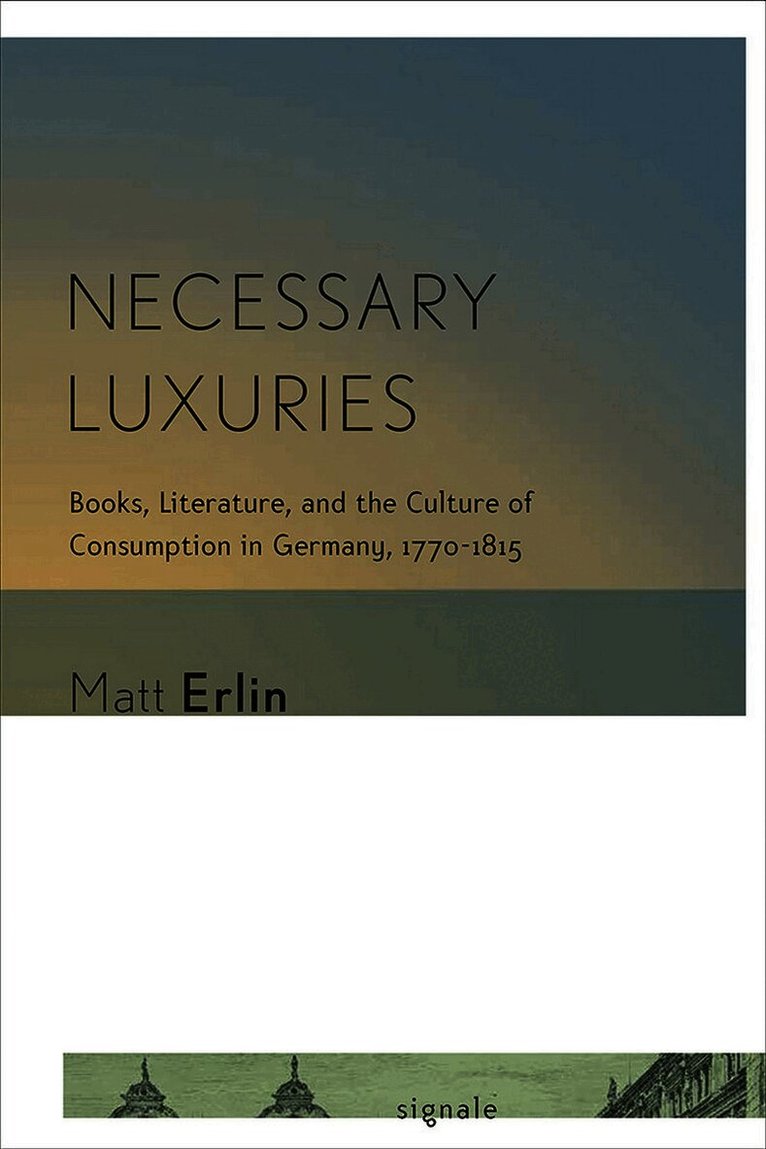
Necessary Luxuries
Books, Literature, and the Culture of Consumption in Germany, 1770–1815
Inbunden, Engelska, 2014
1 758 kr
Skickas inom 10-15 vardagar
The consumer revolution of the eighteenth century brought new and exotic commodities to Europe from abroad—coffee, tea, spices, and new textiles to name a few. Yet one of the most widely distributed luxury commodities in the period was not new at all, and was produced locally—the book. In Necessary Luxuries Matt Erlin considers books and the culture around books during this period, focusing specifically on Germany where literature, and the fine arts in general, were the subject of soul-searching debates over the legitimacy of luxury in the modern world. Building on recent work done in the fields of consumption studies as well as the New Economic Criticism, Erlin combines intellectual-historical chapters (on luxury as a concept, luxury editions, and concerns about addictive reading) with contextualized close readings of novels by Campe, Wieland, Moritz, Novalis, and Goethe. As he demonstrates, artists in this period were deeply concerned with their status as luxury producers. The rhetorical strategies they developed to justify their activities evolved in dialogue with more general discussions regarding new forms of discretionary consumption. By emphasizing the fragile legitimacy of the fine arts in the period, Necessary Luxuries offers a fresh perspective on the broader trajectory of German literature in the late eighteenth and early nineteenth century, one that allows us to view the entire period in terms of a dynamic unity, rather than simply as a series of literary trends and countertrends.
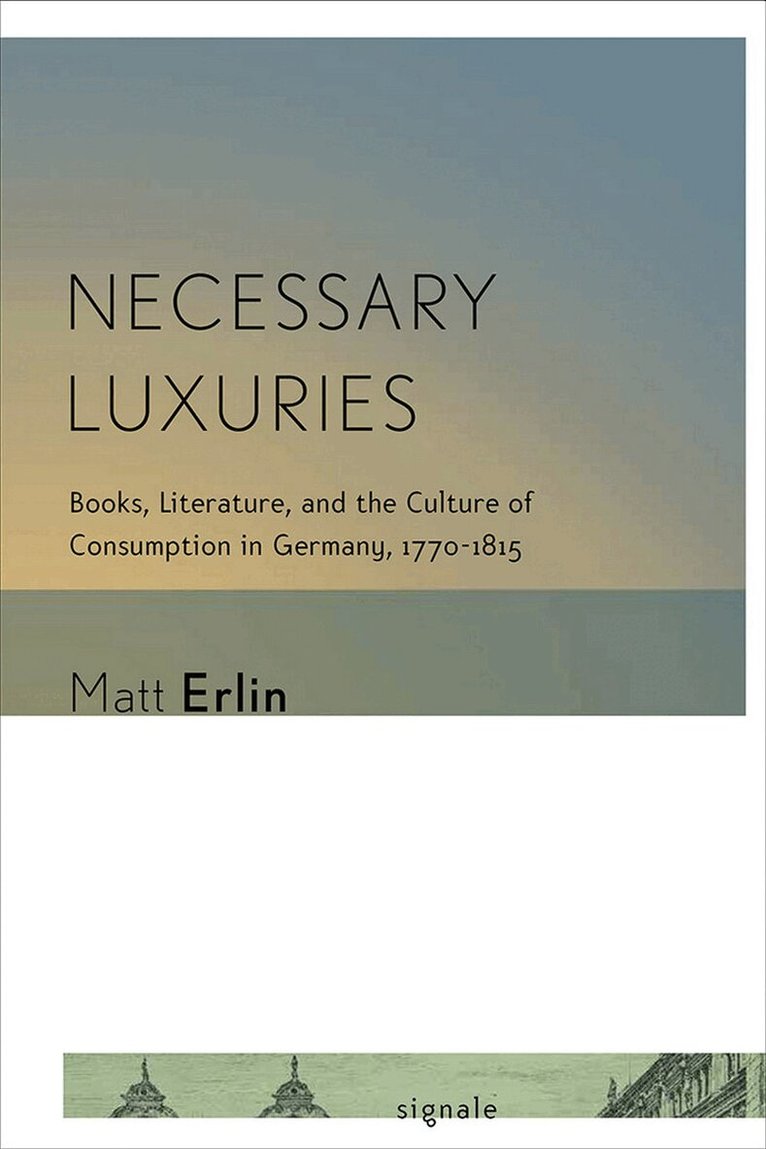
Necessary Luxuries
Books, Literature, and the Culture of Consumption in Germany, 1770–1815
Häftad, Engelska, 2014
471 kr
Skickas inom 10-15 vardagar
The consumer revolution of the eighteenth century brought new and exotic commodities to Europe from abroad—coffee, tea, spices, and new textiles to name a few. Yet one of the most widely distributed luxury commodities in the period was not new at all, and was produced locally—the book. In Necessary Luxuries Matt Erlin considers books and the culture around books during this period, focusing specifically on Germany where literature, and the fine arts in general, were the subject of soul-searching debates over the legitimacy of luxury in the modern world. Building on recent work done in the fields of consumption studies as well as the New Economic Criticism, Erlin combines intellectual-historical chapters (on luxury as a concept, luxury editions, and concerns about addictive reading) with contextualized close readings of novels by Campe, Wieland, Moritz, Novalis, and Goethe. As he demonstrates, artists in this period were deeply concerned with their status as luxury producers. The rhetorical strategies they developed to justify their activities evolved in dialogue with more general discussions regarding new forms of discretionary consumption. By emphasizing the fragile legitimacy of the fine arts in the period, Necessary Luxuries offers a fresh perspective on the broader trajectory of German literature in the late eighteenth and early nineteenth century, one that allows us to view the entire period in terms of a dynamic unity, rather than simply as a series of literary trends and countertrends.
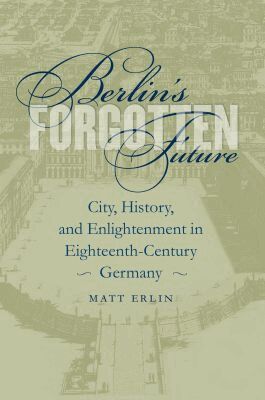
Berlin's Forgotten Future
City, History, and Enlightenment in Eighteenth-Century Germany
Häftad, Engelska, 2014
315 kr
Skickas inom 10-15 vardagar
Through an analysis of the works of the Berlin Aufklarer Friedrich Gedike, Friedrich Nicolai, G. E. Lessing, and Moses Mendelssohn, Matt Erlin shows how the rapid changes occurring in Prussia's newly minted metropolis challenged these intellectuals to engage in precisely the kind of nuanced thinking about history that has come to be seen as characteristic of the German Enlightenment. The author's demonstration of Berlin's historical-theoretical significance also provides a fresh perspective on the larger question of the city's impact on eighteenth-century German culture. Challenging the widespread idea that German intellectuals were antiurban, the study reveals the extent to which urban sociability came to be seen by some as a problematic but crucial factor in the realization of their Enlightenment aims.
Del 1 - Studies in German Literature Linguistics and Culture
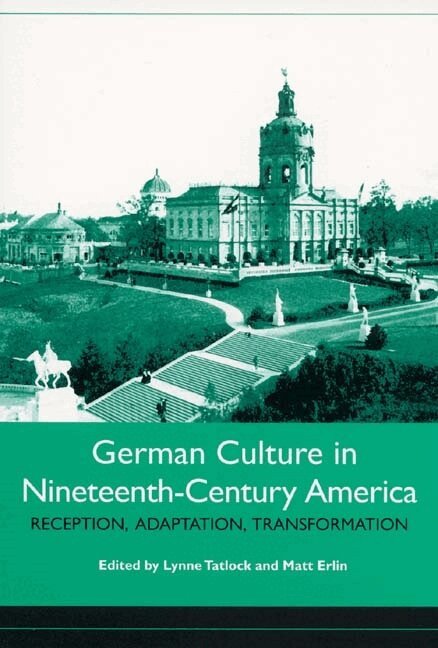
German Culture in Nineteenth-Century America
Reception, Adaptation, Transformation
Inbunden, Engelska, 2005
930 kr
Tillfälligt slut
Essays examining the circulation and adaptation of German culture in the United States during the long 19th century.Building on recent trends in the humanities and especially on scholarship done under the rubric of cultural transfer, this volume emphasizes the processes by which Americans took up, responded to, and transformed German cultural material for their own purposes. The fourteen essays by scholars from the US and Germany treat such topics as translation, the reading of German literature in America, the adaptation of German ideas and educational ideals, the reception and transformation of European genres of writing, and the status of the "German" and the "European" in celebrations of American culture and criticisms of American racism. The volume contributes to the ongoing re-conception of American culture as significantly informed by non-English-speaking European cultures. It also participates in the efforts of historians and literary scholars to re-theorize the construction of national cultures. Questions regarding hybridity, cultural agency, and strategies of acculturation have long been at the center of postcolonial studies, but as this volume demonstrates, these phenomena are not merely operative in encounters between colonizers and colonized: they are also fundamental to the early American reception and appropriation of German cultural materials. Contributors: Hinrich C. Seeba, Eric Ames, Claudia Liebrand, Paul Michael Lützeler, Kirsten Belgum, Robert C. Holub, Jeffrey Grossman, Jeffrey L. Sammons, Linda Rugg, Gerhild Scholz Williams, Gerhard Weiss, Lorie Vanchena.Lynne Tatlock is Hortense and Tobias Lewin Distinguished Professor in the Humanities and Matt Erlin is Assistant Professor in the Department of Germanic Languages and Literatures, both at Washington University in St. Louis.
Del 146 - Studies in German Literature Linguistics and Culture
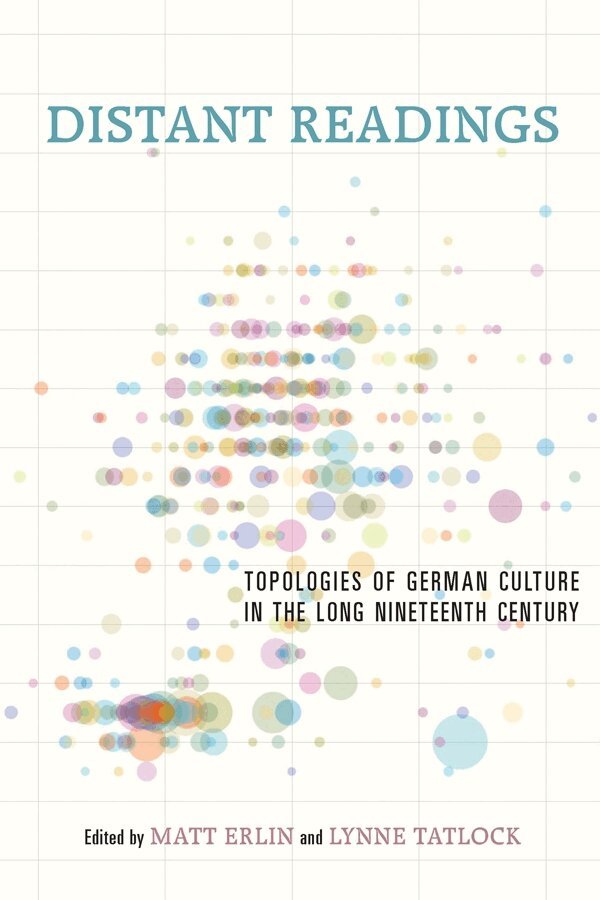
Distant Readings
Topologies of German Culture in the Long Nineteenth Century
Inbunden, Engelska, 2014
1 128 kr
Tillfälligt slut
Explores the concept of "distant reading" and its application to the analysis of nineteenth-century German literature and culture, drawing on a range of approaches from the emerging digital humanities field.In nineteenth-century Germany, breakthroughs in printing technology and an increasingly literate populace led to an unprecedented print production boom that has long presented scholars with a challenge: how to read it all? This anthology seeks new answers to the scholarly quandary of the abundance of text. Responding to Franco Moretti's call for "distant reading" and modeling a range of innovative approaches to literary-historical analysis informed by theburgeoning field of digital humanities, it asks what happens when we shift our focus from the one to the many, from the work to the network.The thirteen essays in this volume explore the evolving concept of "distant reading"and its application to the analysis of German literature and culture in the long nineteenth century. The contributors consider how new digital technologies enable both the testing of hypotheses and the discovery of patterns and trends, as well as how "distant" and traditional "close" reading can complement each another in hybrid models of analysis that maintain careful attention to detail, but also make calculation, enumeration, and empirical descriptioncritical elements of interpretation.Contributors: Kirsten Belgum, Tobias Boes, Matt Erlin, Fotis Jannidis and Gerhard Lauer, Lutz Koepnick, Todd Kontje, Peter M. McIsaac, Katja Mellmann, Nicolas Pethes, Andrew Piper and Mark Algee-Hewitt, Allen Beye Riddell, Lynne Tatlock, Paul A. Youngman and Ted Carmichael. Matt Erlin is Professor of German and Chair of the Department of Germanic Languages and Literatures, and Lynne Tatlock is Hortense and Tobias Lewin Distinguished Professor in the Humanities, both at Washington University in St. Louis.