Matt Harrison – författare
Visar alla böcker från författaren Matt Harrison. Handla med fri frakt och snabb leverans.
11 produkter
Treading on Python Volume 1: Foundations of Python
Av Matt Harrison, Shannon -Jj Behrens
Häftad
272 kr
Lägg i varukorg
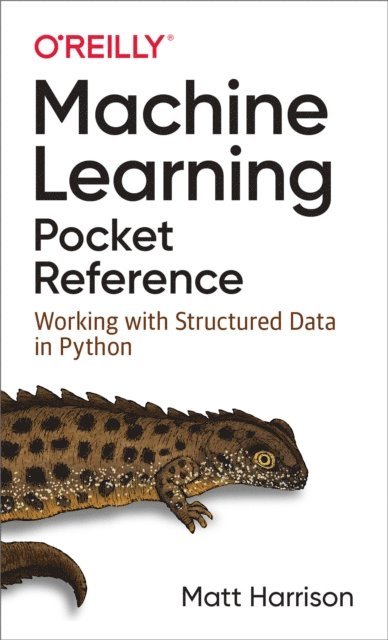
Machine Learning Pocket Reference
Working with Structured Data in Python
E-bok, 2019
276 kr
Lägg i varukorg
With detailed notes, tables, and examples, this handy reference will help you navigate the basics of structured machine learning. Author Matt Harrison delivers a valuable guide that you can use for additional support during training and as a convenient resource when you dive into your next machine …
Machine Learning Pocket Reference
Working with Structured Data in Python
E-bok, 2019
276 kr
Lägg i varukorg
With detailed notes, tables, and examples, this handy reference will help you navigate the basics of structured machine learning. Author Matt Harrison delivers a valuable guide that you can use for additional support during training and as a convenient resource when you dive into your next machine …
Machine Learning Pocket Reference
Working with Structured Data in Python
Häftad, 2019
238 kr
Lägg i varukorg
With detailed notes, tables, and examples, this handy reference will help you navigate the basics of structured machine learning. Author Matt Harrison delivers a valuable guide that you can use for additional support during training and as a convenient resource when you dive into your next machine …
Learning the Pandas Library: Python Tools for Data Munging, Analysis, and Visual
Av Matt Harrison, Michael Prentiss
Häftad
2,0 utav 5 stjärnor. Totalt antal röster: (1)
310 kr
Lägg i varukorg
hapi.js in Action
E-bok, 2016
652 kr
Lägg i varukorg
Summary Hapi.js in Action teaches you how to build modern Node-driven applications using hapi.js. Packed with examples, this book takes you from your first simple server through the skills you''ll need to build a complete application. Foreword by Eran Hammer. Purchase of the print book includes a …
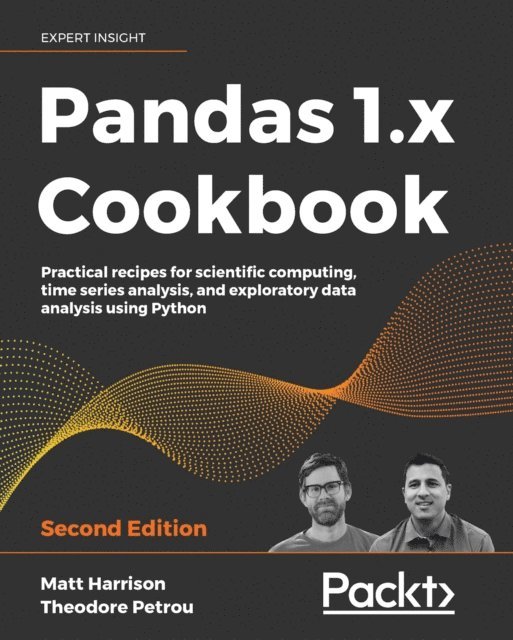
Pandas 1.x Cookbook
Practical recipes for scientific computing, time series analysis, and exploratory data analysis using Python
Av Theodore Petrou, Matt Harrison
E-bok, 2020
755 kr
Lägg i varukorg
Use the power of pandas to solve most complex scientific computing problems with ease. Revised for pandas 1.x. Key Features This is the first book on pandas 1.x Practical, easy to implement recipes for quick solutions to common problems in data using pandas Master the fundamentals of pandas to …
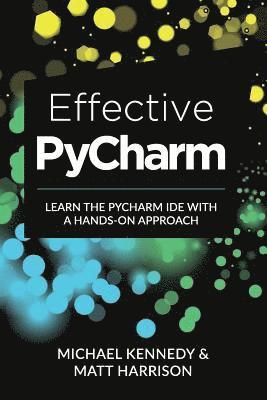
Effective PyCharm
Learn the PyCharm IDE with a Hands-on Approach
Av Matt Harrison, Michael Kennedy
Häftad, 2019
589 kr
Tillfälligt slut