Matteo Pellegrini – författare
Visar alla böcker från författaren Matteo Pellegrini. Handla med fri frakt och snabb leverans.
4 produkter
4 produkter
Inbunden, Engelska, 2023
1 235 kr
Skickas inom 10-15 vardagar
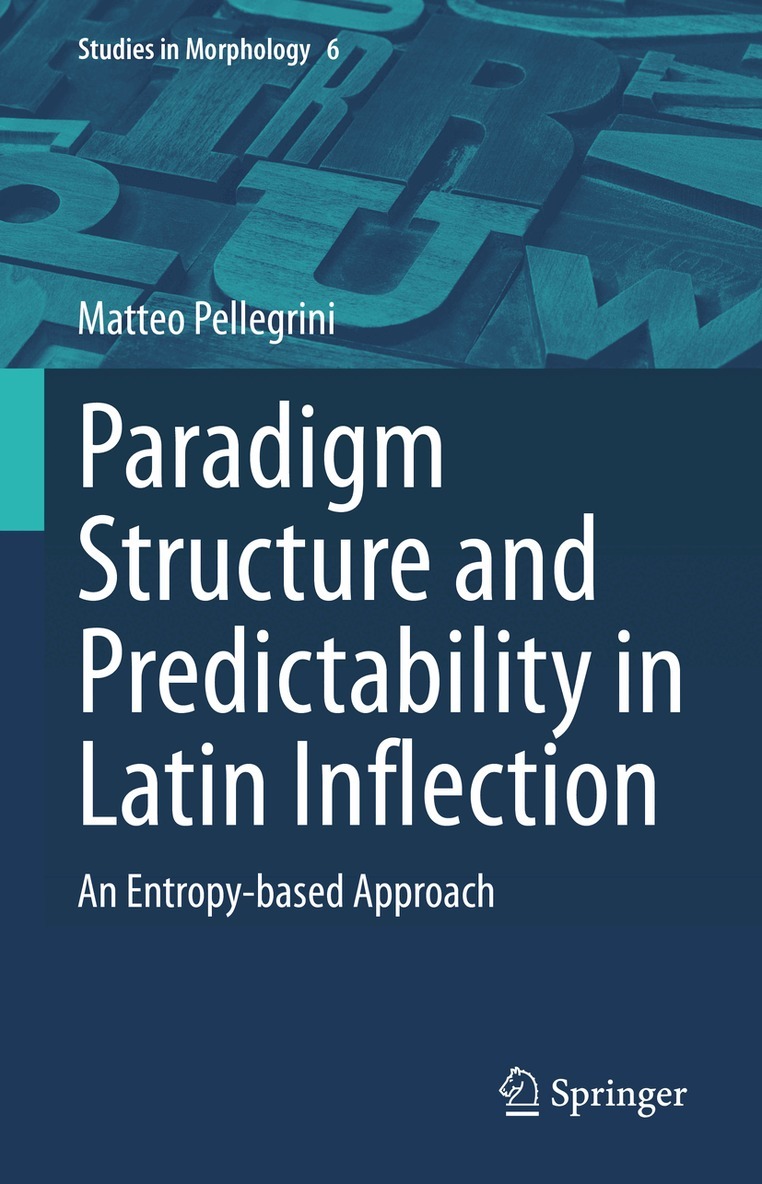
Latin paradigms are almost proverbially known, and they have often been used as a test case for different theoretical approaches to morphological complexity. This book analyses them in a completely word-based perspective, using a recently developed information-theoretic methodology, making entropy-based techniques of analysis available to a wider readership. By doing so, it shows the relevance of traditional notions like principal parts, giving them a more principled, data-driven formulation. Furthermore, it suggests enhancements to the standard information-theoretic methodology, allowing to account for the role of external factors – like gender and derivational information – in improving predictability between inflected word forms. This book is useful to morphologists, that will see ideas and techniques taken from the current debate on morphological theory tested on complex phenomena of a language as renowned as Latin. It is also helpful for scholars working in both Latin and Romance linguistics: the former will find a freely available lexical resource and a novel description of Latin paradigms, that can be exploited by the latter to draw a comparison with recent analyses of the inflectional morphology of several Romance languages.
E-bok
Engelska, 20231 572 kr
Läs direkt efter köp
Latin paradigms are almost proverbially known, and they have often been used as a test case for different theoretical approaches to morphological complexity. This book analyses them in a completely word-based perspective, using a recently developed information-theoretic methodology, making entropy-based techniques of analysis available to a wider readership. By doing so, it shows the relevance of traditional notions like principal parts, giving them a more principled, data-driven formulation. Furthermore, it suggests enhancements to the standard information-theoretic methodology, allowing to account for the role of external factors – like gender and derivational information – in improving predictability between inflected word forms. This book is useful to morphologists, that will see ideas and techniques taken from the current debate on morphological theory tested on complex phenomena of a language as renowned as Latin. It is also helpful for scholars working in both Latin and Romance linguistics: the former will find a freely available lexical resource and a novel description of Latin paradigms, that can be exploited by the latter to draw a comparison with recent analyses of the inflectional morphology of several Romance languages.
650 kr
Skickas inom 5-8 vardagar
Häftad, Engelska, 2024
1 235 kr
Skickas inom 10-15 vardagar
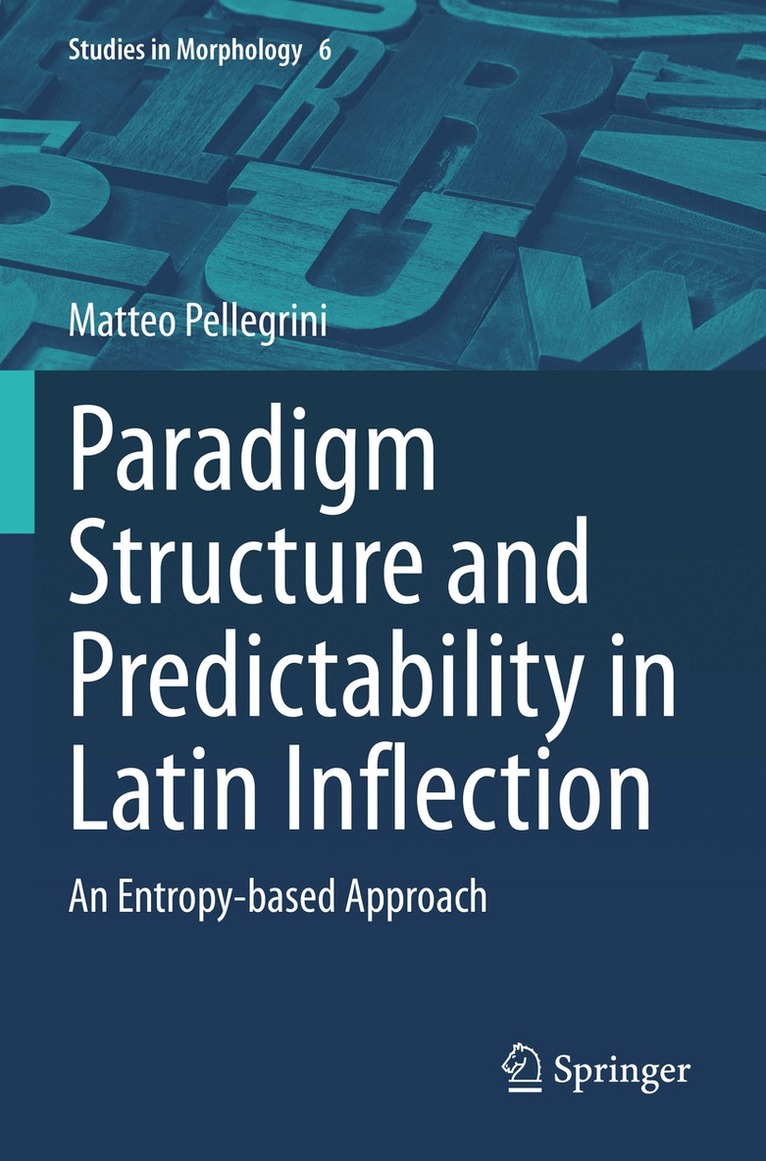
Latin paradigms are almost proverbially known, and they have often been used as a test case for different theoretical approaches to morphological complexity. This book analyses them in a completely word-based perspective, using a recently developed information-theoretic methodology, making entropy-based techniques of analysis available to a wider readership. By doing so, it shows the relevance of traditional notions like principal parts, giving them a more principled, data-driven formulation. Furthermore, it suggests enhancements to the standard information-theoretic methodology, allowing to account for the role of external factors – like gender and derivational information – in improving predictability between inflected word forms. This book is useful to morphologists, that will see ideas and techniques taken from the current debate on morphological theory tested on complex phenomena of a language as renowned as Latin. It is also helpful for scholars working in both Latin and Romance linguistics: the former will find a freely available lexical resource and a novel description of Latin paradigms, that can be exploited by the latter to draw a comparison with recent analyses of the inflectional morphology of several Romance languages.