Matteo Salvadore – författare
Visar alla böcker från författaren Matteo Salvadore. Handla med fri frakt och snabb leverans.
8 produkter
8 produkter
Häftad, Engelska, 2019
651 kr
Skickas inom 10-15 vardagar
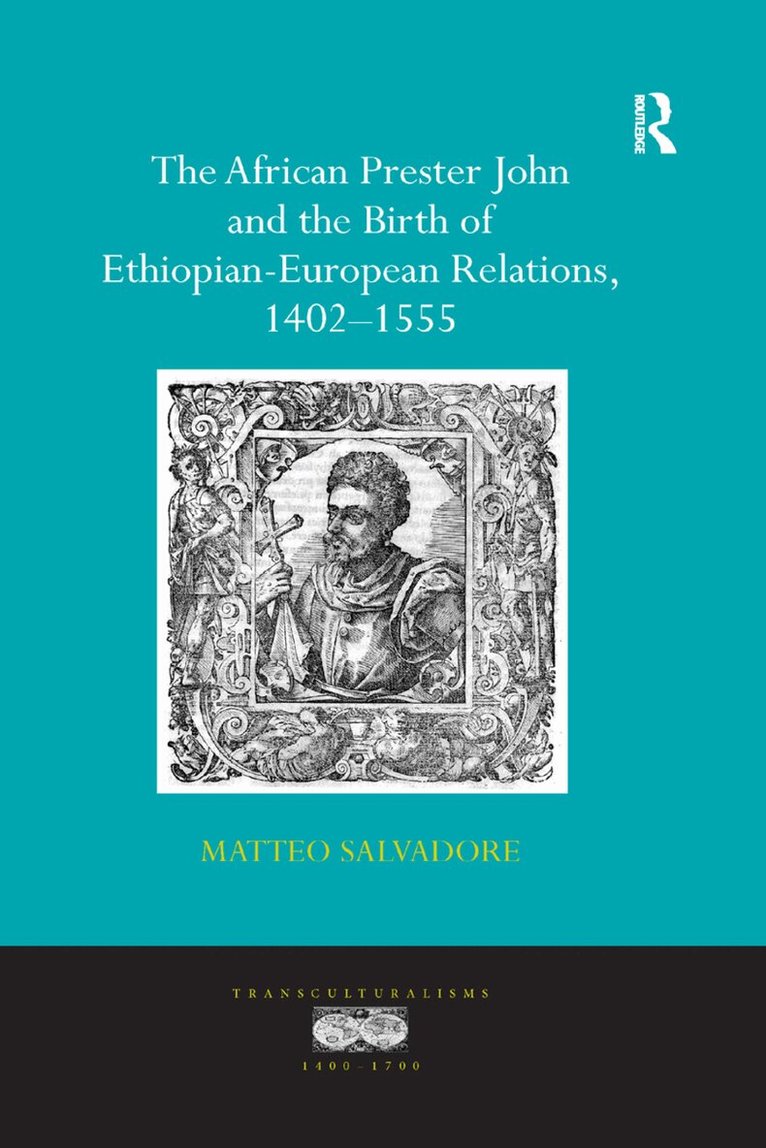
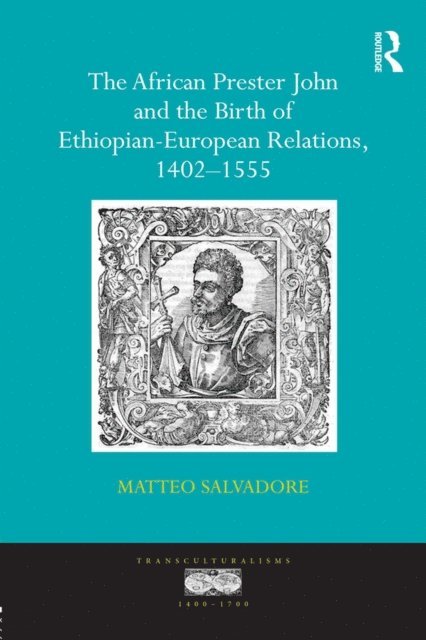
From the 14th century onward, political and religious motives led Ethiopian travelers to Mediterranean Europe. For two centuries, their ancient Christian heritage and the myth of a fabled eastern king named Prester John allowed the Ethiopians to engage the continent's secular and religious elites as peers. Meanwhile, back home the Ethiopian nobility came to welcome European visitors and at times even co-opted them by arranging mixed marriages and bestowing land rights. The protagonists of this encounter sought and discovered each other in royal palaces, monasteries, and markets throughout the Mediterranean basin, the Red Sea, and the Indian Ocean littoral, from Lisbon to Jerusalem and from Venice to Goa. Matteo Salvadore's narrative takes the reader on a voyage of reciprocal discovery that climaxed with the Portuguese intervention on the side of the Christian monarchy in the Ethiopian-Adali War. Thereafter, the arrival of the Jesuits at the Horn of Africa turned the mutually beneficial Ethiopian-European encounter into a bitter confrontation over the souls of Ethiopian Christians.
Inbunden, Engelska, 2025
748 kr
Skickas inom 7-10 vardagar
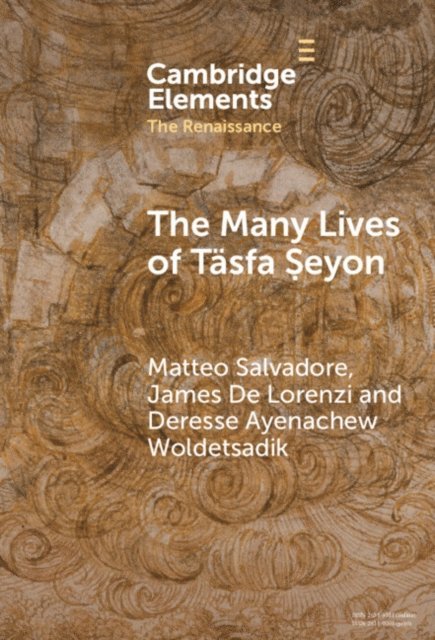
This Element examines the life and legacy of the sixteenth-century Ethiopian intellectual Täsfa Ṣeyon. It reconstructs his formative years in the Horn of Africa and his diasporic life in the Holy Land and Italian peninsula, where he emerged as a prominent intermediary figure at Santo Stefano degli Abissini, an Ethiopian monastery within the Vatican. He became a librarian, copyist, teacher, translator, author, and community leader, as well as a prominent advisor to European humanist scholars and Tridentine Church authorities concerned with the emerging field of philologia sacra as it pertained to Ethiopian Orthodox (täwaḥedo) Christianity. The Element reconstructs his wide-ranging contacts with the Roman Curia and emerging orientalist academy, and then scrutinizes his editio princeps of the Ge'ez Gospels. A final section traces his modern influence, erasure, and rediscovery by later generations of European, Ethiopian, and Eritrean intellectuals.
E-bok
Engelska, 2025275 kr
Läs direkt efter köp
Häftad, Engelska, 2025
232 kr
Skickas inom 7-10 vardagar
This Element examines the life and legacy of the sixteenth-century Ethiopian intellectual Täsfa Ṣeyon. It reconstructs his formative years in the Horn of Africa and his diasporic life in the Holy Land and Italian peninsula, where he emerged as a prominent intermediary figure at Santo Stefano degli Abissini, an Ethiopian monastery within the Vatican. He became a librarian, copyist, teacher, translator, author, and community leader, as well as a prominent advisor to European humanist scholars and Tridentine Church authorities concerned with the emerging field of philologia sacra as it pertained to Ethiopian Orthodox (täwaḥedo) Christianity. The Element reconstructs his wide-ranging contacts with the Roman Curia and emerging orientalist academy, and then scrutinizes his editio princeps of the Ge'ez Gospels. A final section traces his modern influence, erasure, and rediscovery by later generations of European, Ethiopian, and Eritrean intellectuals.
E-bok
PDF, Engelska, 2025275 kr
Läs direkt efter köp
746 kr
Läs direkt efter köp
From the 14th century onward, political and religious motives led Ethiopian travelers to Mediterranean Europe. For two centuries, their ancient Christian heritage and the myth of a fabled eastern king named Prester John allowed the Ethiopians to engage the continent''s secular and religious elites as peers. Meanwhile, back home the Ethiopian nobility came to welcome European visitors and at times even co-opted them by arranging mixed marriages and bestowing land rights. The protagonists of this encounter sought and discovered each other in royal palaces, monasteries, and markets throughout the Mediterranean basin, the Red Sea, and the Indian Ocean littoral, from Lisbon to Jerusalem and from Venice to Goa. Matteo Salvadore''s narrative takes the reader on a voyage of reciprocal discovery that climaxed with the Portuguese intervention on the side of the Christian monarchy in the Ethiopian-Adali War. Thereafter, the arrival of the Jesuits at the Horn of Africa turned the mutually beneficial Ethiopian-European encounter into a bitter confrontation over the souls of Ethiopian Christians.
E-bok
PDF, Engelska, 2016746 kr
Läs direkt efter köp
From the 14th century onward, political and religious motives led Ethiopian travelers to Mediterranean Europe. For two centuries, their ancient Christian heritage and the myth of a fabled eastern king named Prester John allowed the Ethiopians to engage the continent''s secular and religious elites as peers. Meanwhile, back home the Ethiopian nobility came to welcome European visitors and at times even co-opted them by arranging mixed marriages and bestowing land rights. The protagonists of this encounter sought and discovered each other in royal palaces, monasteries, and markets throughout the Mediterranean basin, the Red Sea, and the Indian Ocean littoral, from Lisbon to Jerusalem and from Venice to Goa. Matteo Salvadore''s narrative takes the reader on a voyage of reciprocal discovery that climaxed with the Portuguese intervention on the side of the Christian monarchy in the Ethiopian-Adali War. Thereafter, the arrival of the Jesuits at the Horn of Africa turned the mutually beneficial Ethiopian-European encounter into a bitter confrontation over the souls of Ethiopian Christians.
Inbunden, Engelska, 2016
2 463 kr
Skickas inom 10-15 vardagar
From the 14th century onward, political and religious motives led Ethiopian travelers to Mediterranean Europe. For two centuries, their ancient Christian heritage and the myth of a fabled eastern king named Prester John allowed the Ethiopians to engage the continent's secular and religious elites as peers. Meanwhile, back home the Ethiopian nobility came to welcome European visitors and at times even co-opted them by arranging mixed marriages and bestowing land rights. The protagonists of this encounter sought and discovered each other in royal palaces, monasteries, and markets throughout the Mediterranean basin, the Red Sea, and the Indian Ocean littoral, from Lisbon to Jerusalem and from Venice to Goa. Matteo Salvadore's narrative takes the reader on a voyage of reciprocal discovery that climaxed with the Portuguese intervention on the side of the Christian monarchy in the Ethiopian-Adali War. Thereafter, the arrival of the Jesuits at the Horn of Africa turned the mutually beneficial Ethiopian-European encounter into a bitter confrontation over the souls of Ethiopian Christians.