Matthew David Simonson – författare
Visar alla böcker från författaren Matthew David Simonson. Handla med fri frakt och snabb leverans.
4 produkter
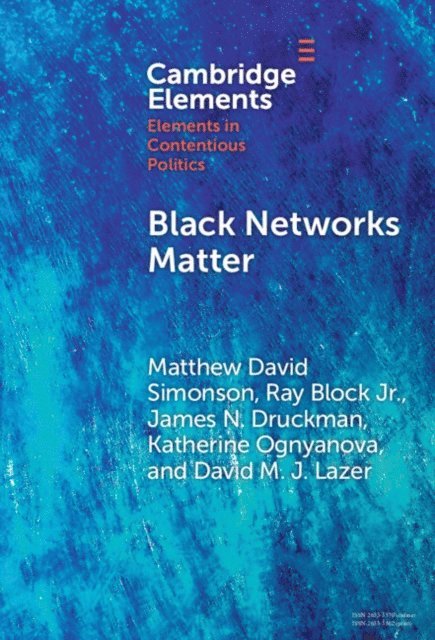
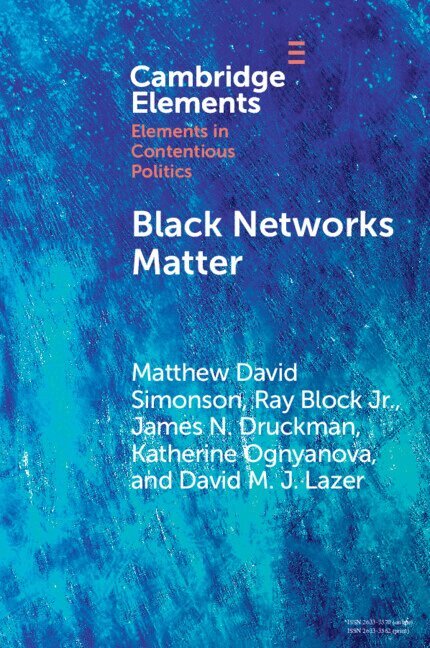
Black Networks Matter
The Role of Interracial Contact and Social Media in the 2020 Black Lives Matter Protests
Av David M. J. Lazer, Katherine Ognyanova m. fl.
E-bok, 2024
294 kr
Lägg i varukorg
Black Networks Matter
The Role of Interracial Contact and Social Media in the 2020 Black Lives Matter Protests
Av Matthew David Simonson, Ray Block Jr m. fl.
Häftad, 2024
302 kr
Lägg i varukorg
Scholars have long recognized that interpersonal networks play a role in mobilizing social movements. Yet, many questions remain. This Element addresses these questions by theorizing about three dimensions of ties: emotionally strong or weak, movement insider or outsider, and ingroup or …
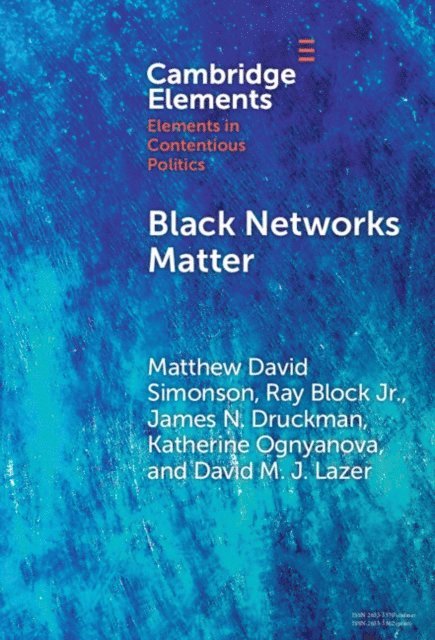
Black Networks Matter
The Role of Interracial Contact and Social Media in the 2020 Black Lives Matter Protests
Av David M. J. Lazer, Katherine Ognyanova m. fl.
E-bok, 2024
294 kr
Lägg i varukorg
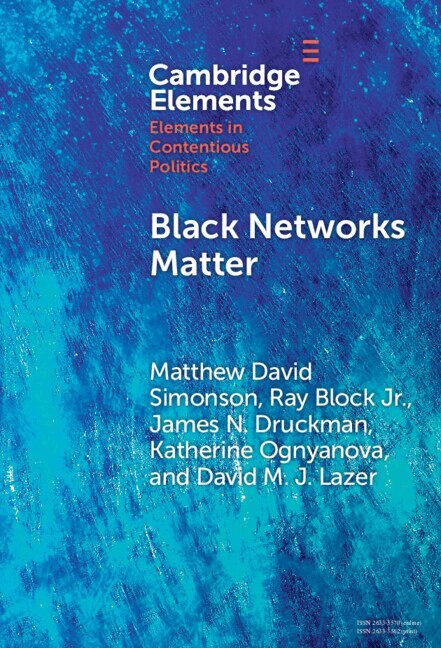
Black Networks Matter
The Role of Interracial Contact and Social Media in the 2020 Black Lives Matter Protests
Av Matthew David Simonson, Ray Block Jr m. fl.
Inbunden, 2024
911 kr
Lägg i varukorg
Scholars have long recognized that interpersonal networks play a role in mobilizing social movements. Yet, many questions remain. This Element addresses these questions by theorizing about three dimensions of ties: emotionally strong or weak, movement insider or outsider, and ingroup or …