Matthew Soberg Shugart - Böcker
Visar alla böcker från författaren Matthew Soberg Shugart. Handla med fri frakt och snabb leverans.
7 produkter
7 produkter
250 kr
Skickas inom 7-10 vardagar
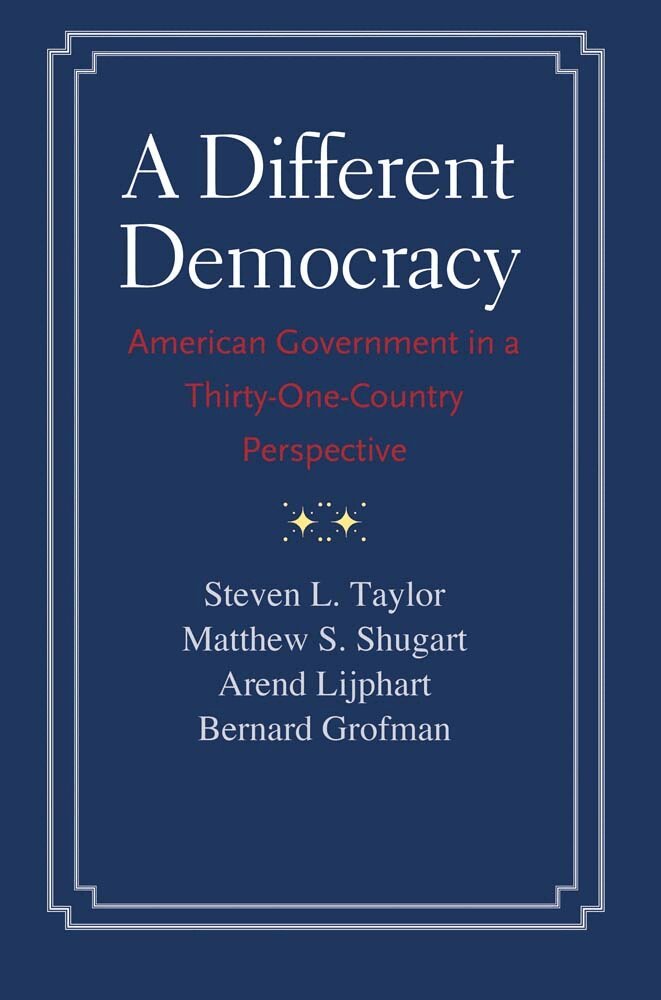
American democracy differs greatly from other democracies around the world. But is the American way more or less efficacious than comparable democracies in Asia, Latin America, or Europe? What if the United States had a prime minister instead of (or in addition to) a president, or if it had three or more parties in Congress instead of two? Would there be more partisan animosity and legislative gridlock or less? These are the kinds of questions that thinking about U.S. government in comparative perspective helps us to analyze. This valuable contribution to political studies takes a unique approach to a much-studied subject, looking at the U.S. government from a comparative point of view. Four distinguished scholars in the field examine the Constitution, the two-party system, the division of power between state and federal governments, and other major features of the American political system in terms of how they differ from other democracies, and they explore what those differences ultimately mean for democratic performance. By merging two important fields of study, American government and comparative political systems, this essential text offers a new and refreshingly insightful view of American exceptionalism.
1 179 kr
Skickas inom 7-10 vardagar
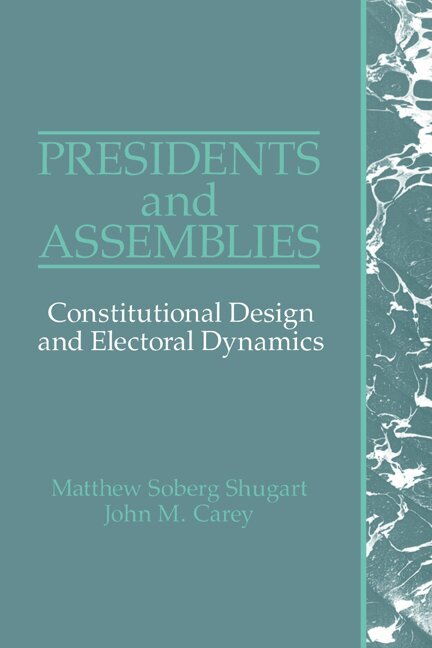
In recent years renewed attention has been directed to the importance of the role of institutional design in democratic politics. Particular interest has concerned constitutional design and the relative merits of parliamentary versus presidential systems. In this book, the authors systematically assess the strengths and weaknesses of various forms of presidential systems, drawing on recent developments in the theoretical literature about institutional design and electoral rules. They develop a typology of democratic regimes structured around the separation of powers principle, including two hybrid forms, the premier-presidential and president-parliamentary systems, and they evaluate a number of alternative ways of balancing powers between the branches within these basic frameworks. They also demonstrate that electoral rules are critically important in determining how political authority is exercised.
410 kr
Skickas inom 7-10 vardagar
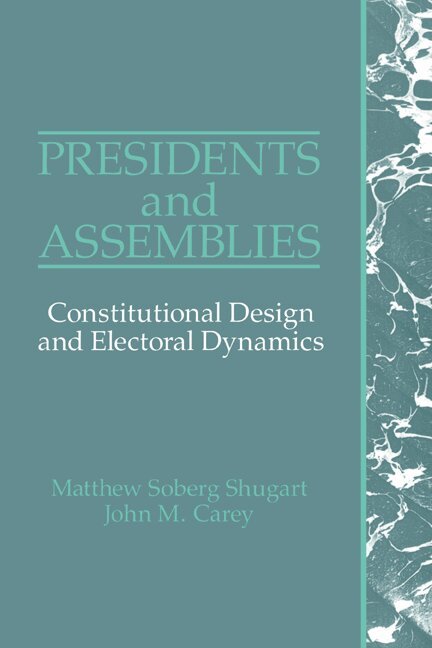
In recent years renewed attention has been directed to the importance of the role of institutional design in democratic politics. Particular interest has concerned constitutional design and the relative merits of parliamentary versus presidential systems. In this book, the authors systematically assess the strengths and weaknesses of various forms of presidential systems, drawing on recent developments in the theoretical literature about institutional design and electoral rules. They develop a typology of democratic regimes structured around the separation of powers principle, including two hybrid forms, the premier-presidential and president-parliamentary systems, and they evaluate a number of alternative ways of balancing powers between the branches within these basic frameworks. They also demonstrate that electoral rules are critically important in determining how political authority is exercised.
1 311 kr
Skickas inom 7-10 vardagar
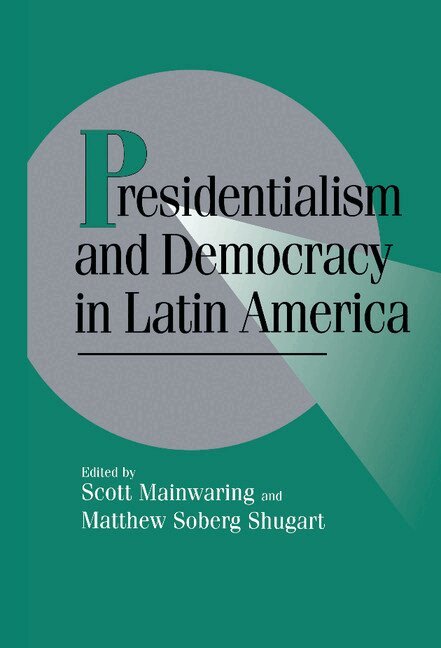
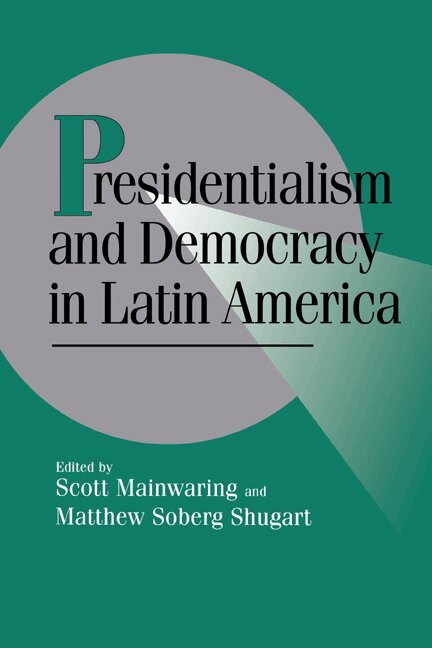
This 1997 book addresses the current debate regarding the liabilities and merits of presidential government. Does presidentialism make it less likely that democratic governments will be able to manage political conflict? With the unprecedented wave of transitions to democracy since the 1970s, this question has been hotly contested in political and intellectual circles all over the globe. The contributors to this volume examine variations among different presidential systems and skeptically view claims that presidentialism has added significantly to the problems of democratic governance and stability.
561 kr
Skickas inom 7-10 vardagar
This 1997 book addresses the current debate regarding the liabilities and merits of presidential government. Does presidentialism make it less likely that democratic governments will be able to manage political conflict? With the unprecedented wave of transitions to democracy since the 1970s, this question has been hotly contested in political and intellectual circles all over the globe. The contributors to this volume examine variations among different presidential systems and skeptically view claims that presidentialism has added significantly to the problems of democratic governance and stability.
995 kr
Skickas inom 7-10 vardagar
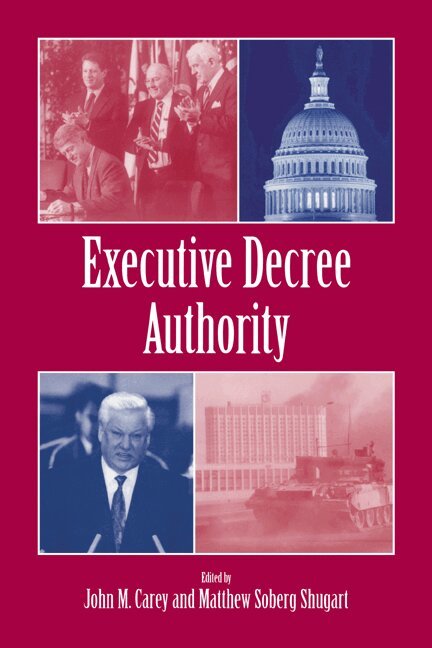
When presidents or prime ministers make law by decree, are we witnessing the usurpation of legislative authority? The increased frequency of policy-making by decree, in older democracies as well as in the newer regimes of Latin America and the post-communist world, has generated concern that legislatures are being marginalized and thus that democratic institutions are not functioning. Professors Carey and Shugart suggest which elements of constitutional design should (and should not) foster reliance on decree authority. Individual chapters then bring the experiences of Argentina, Brazil, France, Italy, Peru, Russia, the United States, and Venezuela to bear on the theory. The book combines broadly comparative analysis with intensive case studies to provide a more thorough understanding of the scope of executive authority across countries.
410 kr
Skickas inom 7-10 vardagar
When presidents or prime ministers make law by decree, are we witnessing the usurpation of legislative authority? The increased frequency of policy-making by decree, in older democracies as well as in the newer regimes of Latin America and the post-communist world, has generated concern that legislatures are being marginalized and thus that democratic institutions are not functioning. Professors Carey and Shugart suggest which elements of constitutional design should (and should not) foster reliance on decree authority. Individual chapters then bring the experiences of Argentina, Brazil, France, Italy, Peru, Russia, the United States, and Venezuela to bear on the theory. The book combines broadly comparative analysis with intensive case studies to provide a more thorough understanding of the scope of executive authority across countries.