Matthias Harders – författare
Visar alla böcker från författaren Matthias Harders. Handla med fri frakt och snabb leverans.
8 produkter
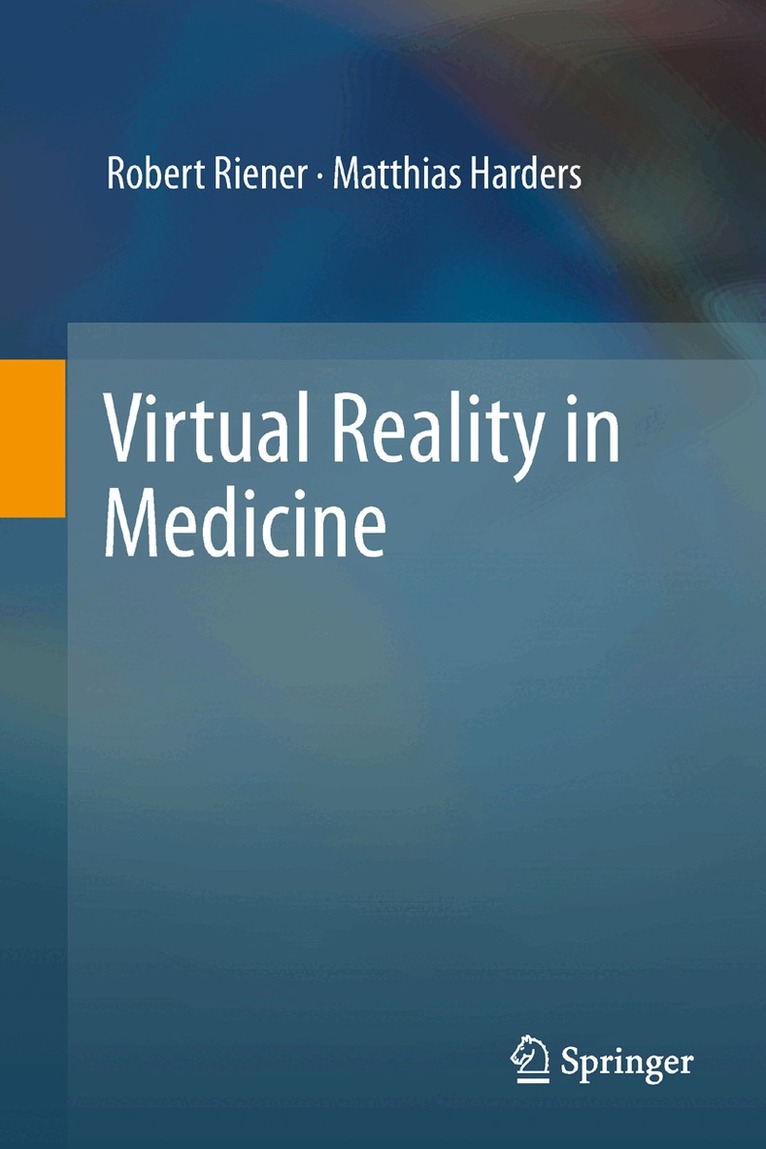
Virtual Reality in Medicine
Av Robert Riener, Matthias Harders
Inbunden, 2012
568 kr
Lägg i varukorg
Virtual Reality has the potential to provide descriptive and practical information for medical training and therapy while relieving the patient or the physician. Multimodal interactions between the user and the virtual environment facilitate the generation of high-fidelity sensory impressions, by …
Virtual Reality in Medicine
Av Matthias Harders, Robert Riener
E-bok, 2012
755 kr
Lägg i varukorg
Virtual Reality has the potential to provide descriptive and practical information for medical training and therapy while relieving the patient or the physician. Multimodal interactions between the user and the virtual environment facilitate the generation of high-fidelity sensory impressions, by …
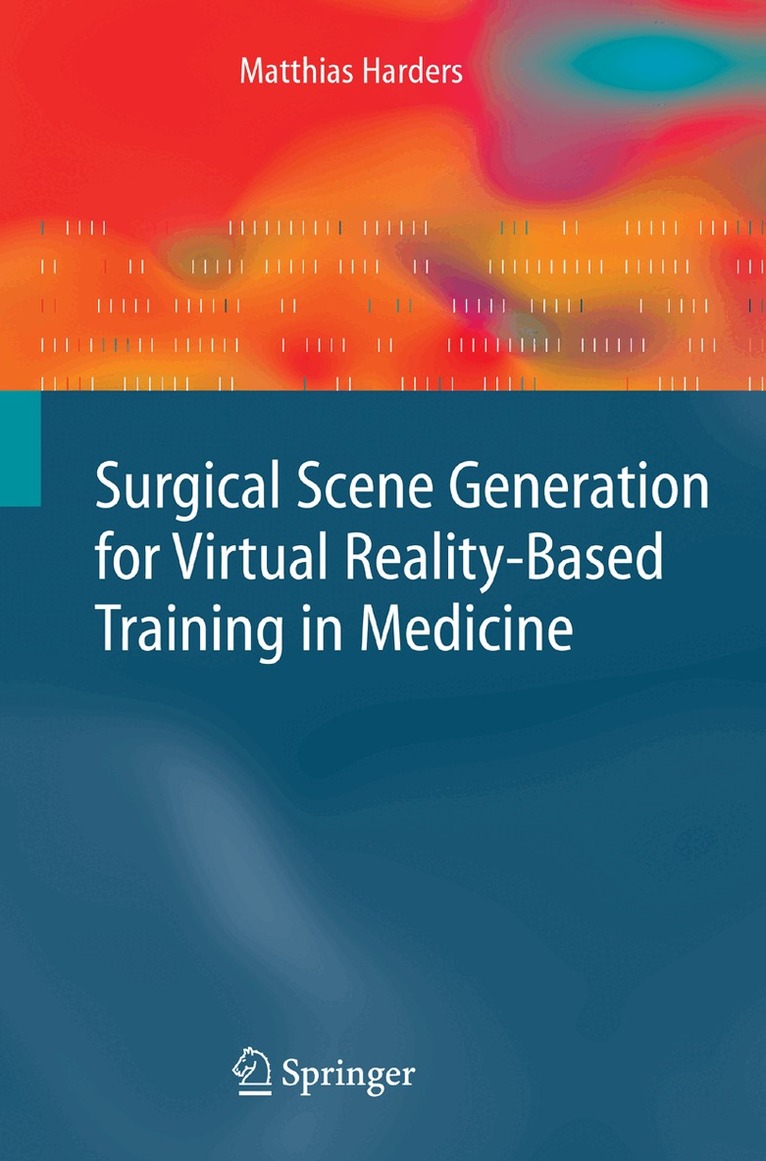
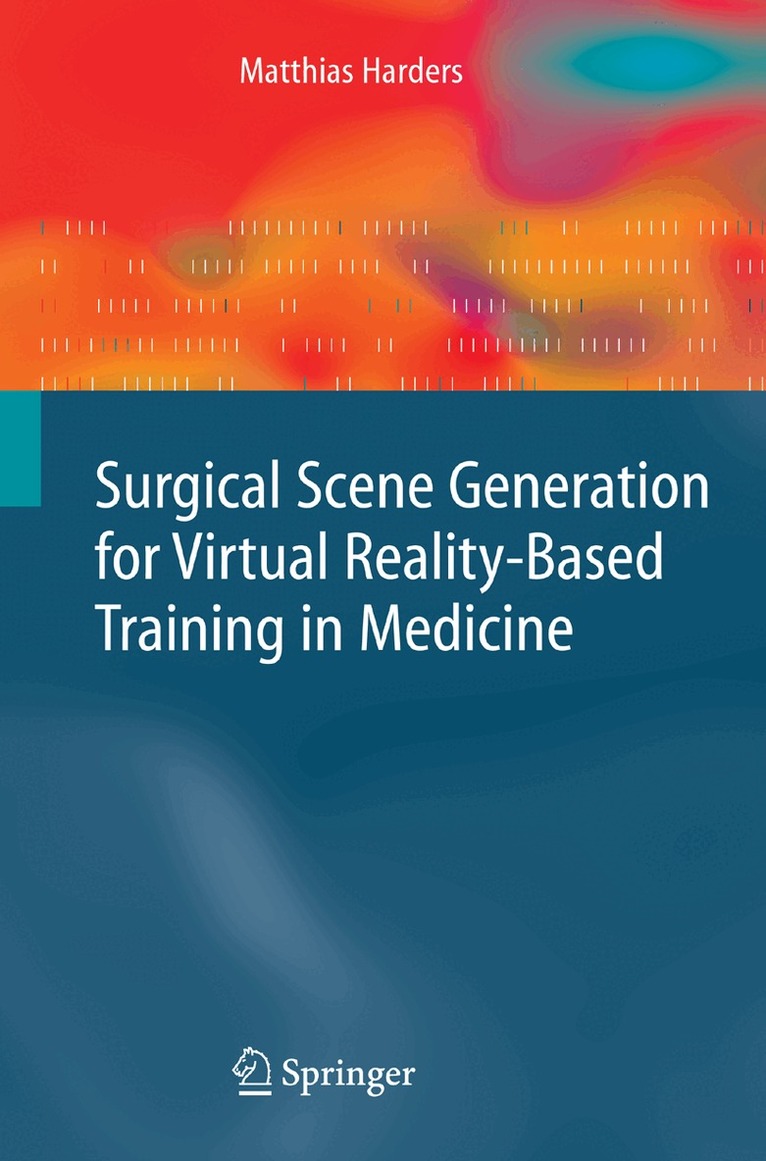
Surgical Scene Generation for Virtual Reality-Based Training in Medicine
Häftad, 2016
1129 kr
Lägg i varukorg
One of the most important elements needed for effective training in Virtual Reality (VR) is the generation of variable scenarios. Without this, trainees quickly become familiar with a scene and the natural variations encountered in real-life situations cannot be reproduced. Generating such models …
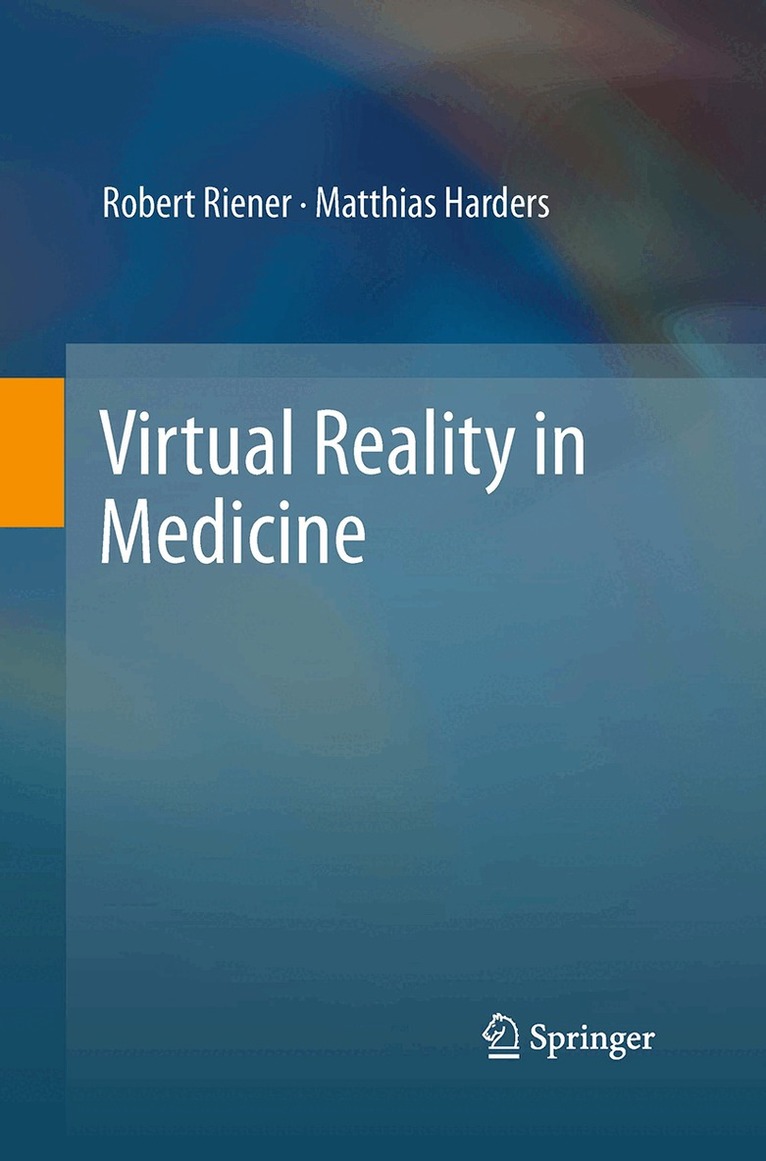
Virtual Reality in Medicine
Av Robert Riener, Matthias Harders
Häftad, 2016
568 kr
Lägg i varukorg
Virtual Reality has the potential to provide descriptive and practical information for medical training and therapy while relieving the patient or the physician. Multimodal interactions between the user and the virtual environment facilitate the generation of high-fidelity sensory impressions, by …
Surgical Scene Generation for Virtual Reality-Based Training in Medicine
Inbunden, 2008
1129 kr
Lägg i varukorg
One of the most important elements needed for effective training in Virtual Reality (VR) is the generation of variable scenarios. Without this, trainees quickly become familiar with a scene and the natural variations encountered in real-life situations cannot be reproduced. Generating such models …
Surgical Scene Generation for Virtual Reality-Based Training in Medicine
E-bok, 2008
1502 kr
Lägg i varukorg
One of the most important elements needed for effective training in Virtual Reality (VR) is the generation of variable scenarios. Without this, trainees quickly become familiar with a scene and the natural variations encountered in real-life situations cannot be reproduced. Generating such models …
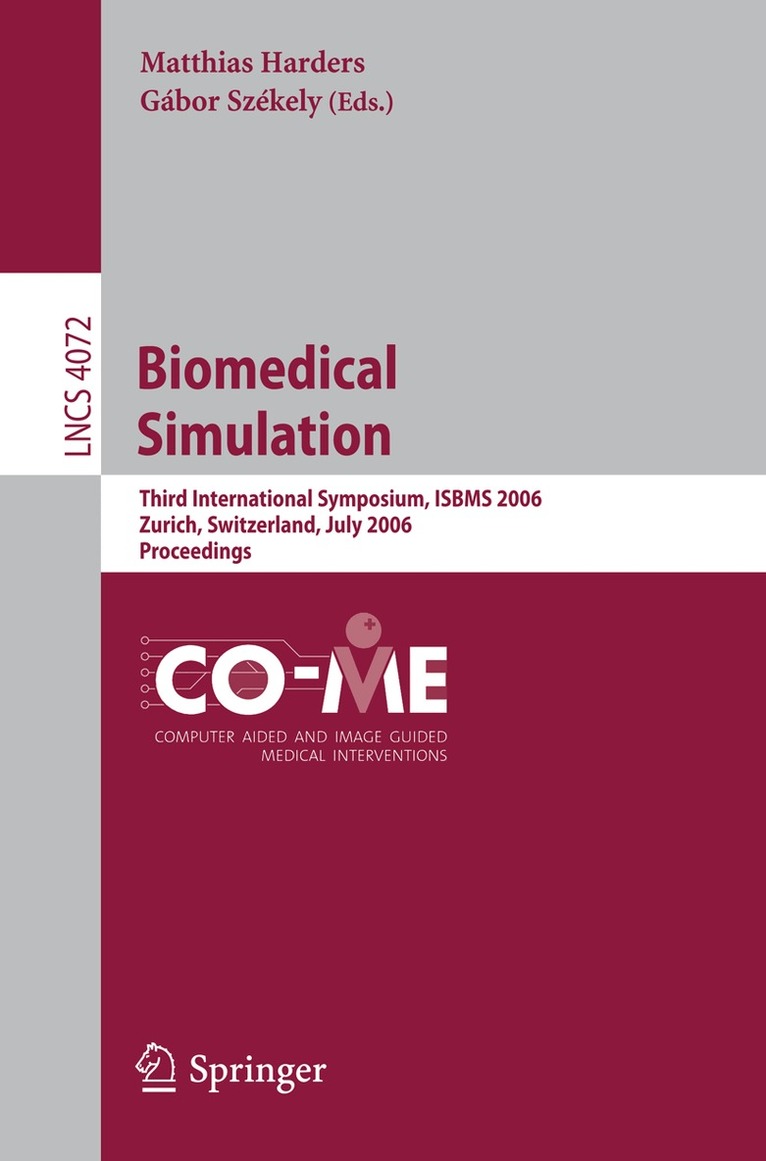
Biomedical Simulation
Third International Symposium, ISBMS 2006, Zurich, Switzerland, July 10-11, 2006, Proceedings
Av Matthias Harders, Gábor Székely
Häftad, 2006
566 kr
Lägg i varukorg
This book contains the written contributions to the Third International Sym- sium on Biomedical Simulation (ISBMS), which was held in Zurich, Switzerland, on July 10-11, 2006. The manuscripts are organized around three thematic sections which cover several of the major aspects of our rapidly …
Biomedical Simulation
Third International Symposium, ISBMS 2006, Zurich, Switzerland, July 10-11, 2006, Proceedings
Av Gabor Szekely, Matthias Harders
E-bok, 2006
755 kr
Lägg i varukorg
This book contains the written contributions to the Third International Sym- sium on Biomedical Simulation (ISBMS), which was held in Zurich, Switzerland, on July 10-11, 2006. The manuscripts are organized around three thematic sections which cover several of the major aspects of our rapidly …