Mattias Ulbrich – författare
Visar alla böcker från författaren Mattias Ulbrich. Handla med fri frakt och snabb leverans.
4 produkter
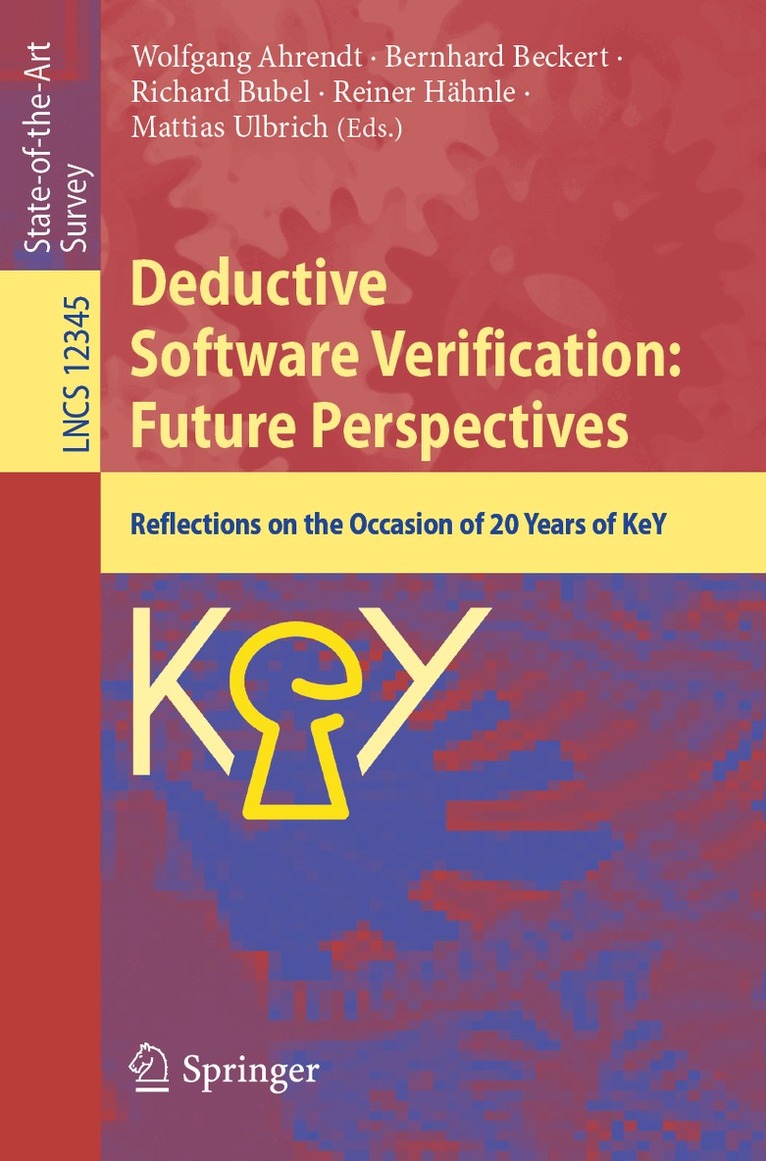
Deductive Software Verification: Future Perspectives
Reflections on the Occasion of 20 Years of KeY
Av Wolfgang Ahrendt, Bernhard Beckert m. fl.
Häftad, 2020
566 kr
Lägg i varukorg
This book presents reflections on the occasion of 20 years on the KeY project that focuses on deductive software verification.Since the inception of the KeY project two decades ago, the area of deductive verification has evolved considerably. Support for real world programming languages by …
Deductive Software Verification: Future Perspectives
Reflections on the Occasion of 20 Years of KeY
Av Mattias Ulbrich, Reiner Hahnle m. fl.
E-bok, 2020
739 kr
Lägg i varukorg
This book presents reflections on the occasion of 20 years on the KeY project that focuses on deductive software verification. Since the inception of the KeY project two decades ago, the area of deductive verification has evolved considerably. Support for real world programming languages by …
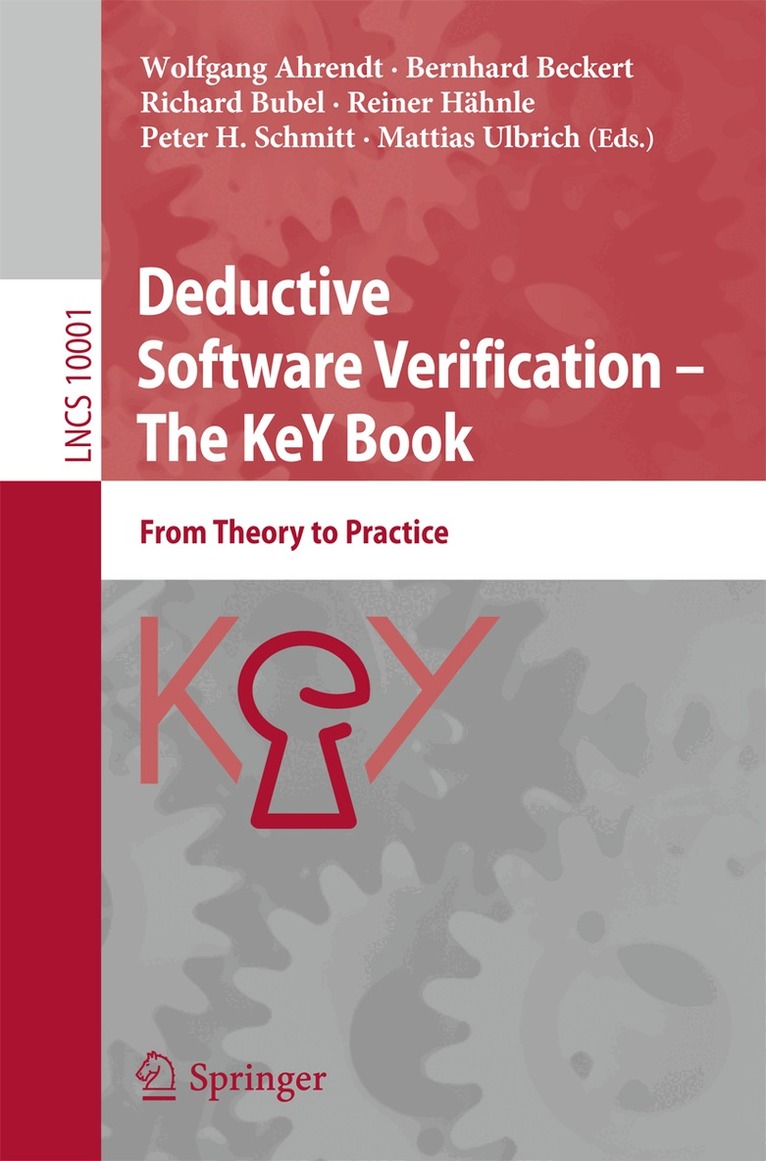
Deductive Software Verification – The KeY Book
From Theory to Practice
Av Wolfgang Ahrendt, Bernhard Beckert m. fl.
Häftad, 2016
1349 kr
Lägg i varukorg
Static analysis of software with deductive methods is a highly dynamic field of research on the verge of becoming a mainstream technology in software engineering. It consists of a large portfolio of - mostly fully automated - analyses: formal verification, test generation, security analysis, …
Deductive Software Verification - The KeY Book
From Theory to Practice
Av Mattias Ulbrich, Peter H. Schmitt m. fl.
E-bok, 2016
1798 kr
Lägg i varukorg
Static analysis of software with deductive methods is a highly dynamic field of research on the verge of becoming a mainstream technology in software engineering. It consists of a large portfolio of - mostly fully automated - analyses: formal verification, test generation, security analysis, …