Matúš Šucha - Böcker
Visar alla böcker från författaren Matúš Šucha. Handla med fri frakt och snabb leverans.
4 produkter
4 produkter
511 kr
Skickas inom 10-15 vardagar
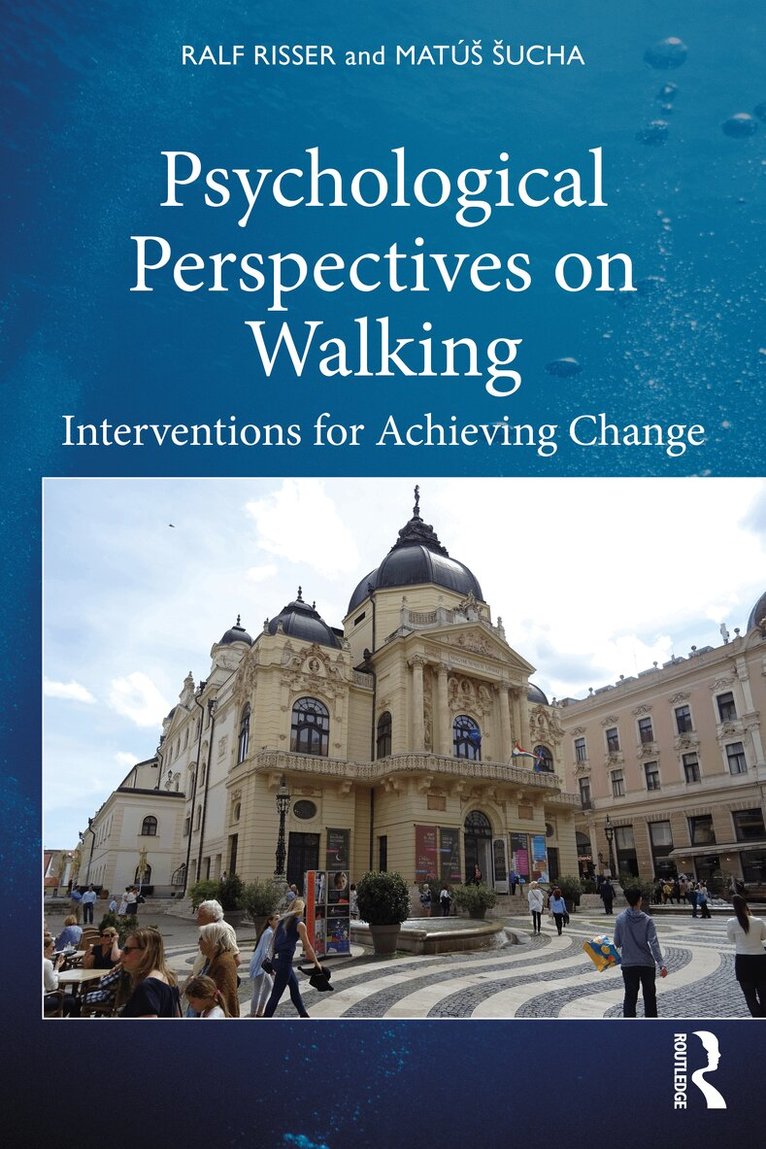
Psychological Perspectives on Walking provides a comprehensive overview of the benefits of walking and shows how we can encourage people to walk more based on psychological principles. It examines how walking significantly improves health, positively impacts the environment, contributes to resolving social issues, and boosts the local micro-economy. This pioneering book discusses psychological motivations for walking versus not walking and asserts research-based arguments in favour of walking, including both theoretical considerations and everyday concerns.The book investigates the motivations that can lead to increased walking, advises on how to build walking-conducive habits, and recommends strategies for decision makers for promoting changes that will allow walking to thrive more easily. The authors include success stories and lessons learned from what have become known as 'walkable' cities to show how interventions and initiatives can succeed on a practical basis. This accessible, practical book is essential for urban planners; health specialists; policy makers; traffic experts; psychology, civil engineering, and social sciences students; and experts in the field of sustainable mobility. Psychological Perspectives on Walking will appeal to anyone in the general population in favour of a sustainable and healthy lifestyle.
1 966 kr
Skickas inom 10-15 vardagar
Psychological Perspectives on Walking provides a comprehensive overview of the benefits of walking and shows how we can encourage people to walk more based on psychological principles. It examines how walking significantly improves health, positively impacts the environment, contributes to resolving social issues, and boosts the local micro-economy. This pioneering book discusses psychological motivations for walking versus not walking and asserts research-based arguments in favour of walking, including both theoretical considerations and everyday concerns.The book investigates the motivations that can lead to increased walking, advises on how to build walking-conducive habits, and recommends strategies for decision makers for promoting changes that will allow walking to thrive more easily. The authors include success stories and lessons learned from what have become known as 'walkable' cities to show how interventions and initiatives can succeed on a practical basis. This accessible, practical book is essential for urban planners; health specialists; policy makers; traffic experts; psychology, civil engineering, and social sciences students; and experts in the field of sustainable mobility. Psychological Perspectives on Walking will appeal to anyone in the general population in favour of a sustainable and healthy lifestyle.
2 113 kr
Skickas inom 10-15 vardagar
This book offers a comprehensive exploration of the intricate relationship between human behaviour and transportation systems. It examines how individual psychology intersects with mobility patterns, revealing the complex factors that drive our daily travel decisions and interactions on the road.The authors explore key topics like the multidimensional nature of quality of life in relation to transportation, the psychological impact of driving fear and active transport benefits, the symbolic meaning of vehicles, and the influence of both formal regulations and informal social rules. It examines communication patterns among road users, decision-making processes, and how policy interventions and infrastructure design can psychologically influence behaviour towards more sustainable and safer mobility choices.The Psychology of Traffic is primarily aimed at academic scholars and advanced students in transport studies and applied psychology. It can be useful for policymakers and practitioners seeking to understand and influence road user behaviour to create more sustainable, safe, and socially beneficial transportation systems that enhance overall quality of life.
1 667 kr
Skickas inom 3-6 vardagar
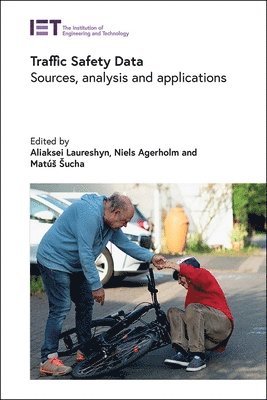
Traffic fatalities decrease in most high-income countries, though it is still a long journey to reach the Vision Zero target. The trend is quite the opposite in low- and middle-income countries, where road casualty numbers stagnate at best. In both contexts, however, access to meaningful and reliable data is crucial for developing efficient traffic safety policies and, ultimately, saving lives on streets and roads.There can be significant limitations with available accident data, meaning finding alternative sources of relevant information is increasingly important. Besides the traditional police records, there are many other data sources that can be used as a complement or an alternative. 'Triangulation' of different data types usually leads to important insights, both related to the traffic safety problems at hands, and to how much trust we can put into a single data source.This book covers the different data types that can be collected and used for monitoring, analysing, and improving road safety, including chapters on police records and accident modelling, healthcare system records, self-reporting of accidents, data from insurance companies, and more. Not the least, significant space is given to the pro-active methods for traffic safety assessment. The book also looks at the legal and ethical issues around collecting and using road safety data.This book provides a wide and up-to-date perspective on relevant traffic safety data, helping to broaden the horizons for safety experts and also to promote a more knowledge- and data-based approach to traffic safety management.