Maudemarie Clark – författare
Visar alla böcker från författaren Maudemarie Clark. Handla med fri frakt och snabb leverans.
10 produkter
Nietzsche on Truth and Philosophy
Av Maudemarie Clark, Robert B. Pippin
Häftad, 1991
455 kr
Lägg i varukorg
Friedrich Nietzsche haunts the modern world. His elusive writings with their characteristic combination of trenchant analysis of the modern predicament and suggestive but ambiguous proposals for dealing with it have fascinated generations of artists, scholars, critics, philosophers, and ordinary …
Nietzsche: Daybreak
Thoughts on the Prejudices of Morality
Av Friedrich Nietzsche, Maudemarie Clark m. fl.
Häftad, 1997
498 kr
Lägg i varukorg
Daybreak marks the arrival of Nietzsche's 'mature' philosophy and is indispensable for an understanding of his critique of morality and 'revaluation of all values'. This volume presents the distinguished translation by R. J. Hollingdale, with a new introduction that argues for a dramatic change in …
Nietzsche on Ethics and Politics
Häftad, 2019
660 kr
Lägg i varukorg
This volume brings together fourteen mostly previously published articles by the prominent Nietzsche scholar Maudemarie Clark. Clark's previous two books on Nietzsche focused on his views on truth, metaphysics, and knowledge, but she has published a great deal on Nietzsche's views on ethics and …
Nietzsche on Ethics and Politics
E-bok, 2015
459 kr
Lägg i varukorg
This volume brings together fourteen mostly previously published articles by the prominent Nietzsche scholar Maudemarie Clark. Clark''s previous two books on Nietzsche focused on his views on truth, metaphysics, and knowledge, but she has published a great deal on Nietzsche''s views on ethics and …
Nietzsche on Ethics and Politics
Inbunden, 2015
1811 kr
Lägg i varukorg
This volume brings together fourteen mostly previously published articles by the prominent Nietzsche scholar Maudemarie Clark. Clark's previous two books on Nietzsche focused on his views on truth, metaphysics, and knowledge, but she has published a great deal on Nietzsche's views on ethics and …
Nietzsche on Ethics and Politics
E-bok, 2015
459 kr
Lägg i varukorg
This volume brings together fourteen mostly previously published articles by the prominent Nietzsche scholar Maudemarie Clark. Clark''s previous two books on Nietzsche focused on his views on truth, metaphysics, and knowledge, but she has published a great deal on Nietzsche''s views on ethics and …
Nietzsche on Truth and Philosophy
Av Maudemarie Clark, Robert B. Pippin
Inbunden, 1991
1987 kr
Lägg i varukorg
Friedrich Nietzsche haunts the modern world. His elusive writings with their characteristic combination of trenchant analysis of the modern predicament and suggestive but ambiguous proposals for dealing with it have fascinated generations of artists, scholars, critics, philosophers, and ordinary …
Nietzsche: Daybreak
Thoughts on the Prejudices of Morality
Av Friedrich Nietzsche, Maudemarie Clark m. fl.
Inbunden, 1997
1188 kr
Lägg i varukorg
Daybreak marks the arrival of Nietzsche's 'mature' philosophy and is indispensable for an understanding of his critique of morality and 'revaluation of all values'. This volume presents the distinguished translation by R. J. Hollingdale, with a new introduction that argues for a dramatic change in …
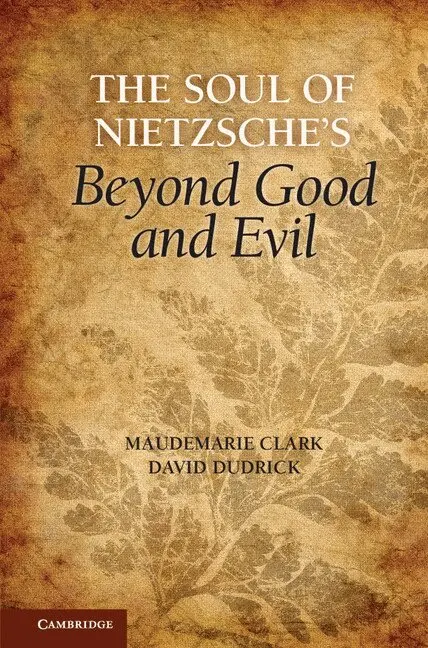
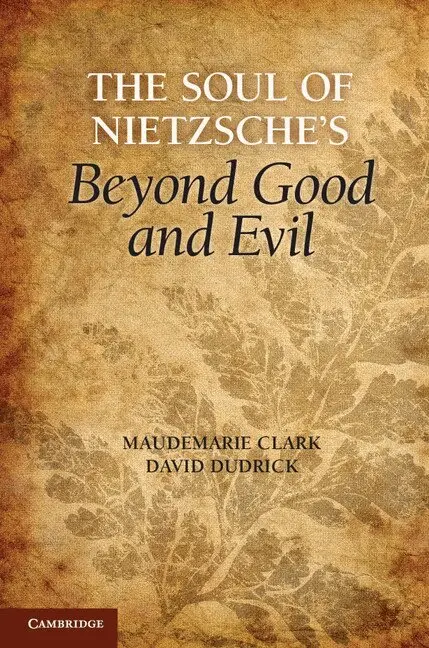
The Soul of Nietzsche's Beyond Good and Evil
Av Maudemarie Clark, David Dudrick
Inbunden, 2012
1481 kr
Lägg i varukorg
This book presents a provocative new interpretation of Beyond Good and Evil, arguably Nietzsche's most important work. The problem is that it appears to express merely a loosely connected set of often questionable opinions. Can Nietzsche really be an important philosopher if this is his most …
The Soul of Nietzsche's Beyond Good and Evil
Av Maudemarie Clark, David Dudrick
Häftad, 2012
471 kr
Lägg i varukorg
This book presents a provocative new interpretation of Beyond Good and Evil, arguably Nietzsche's most important work. The problem is that it appears to express merely a loosely connected set of often questionable opinions. Can Nietzsche really be an important philosopher if this is his most …