Maureen C. Miller - Böcker
Visar alla böcker från författaren Maureen C. Miller. Handla med fri frakt och snabb leverans.
6 produkter
6 produkter
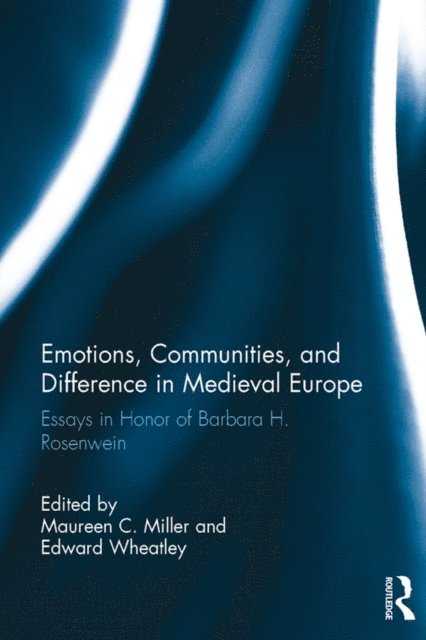
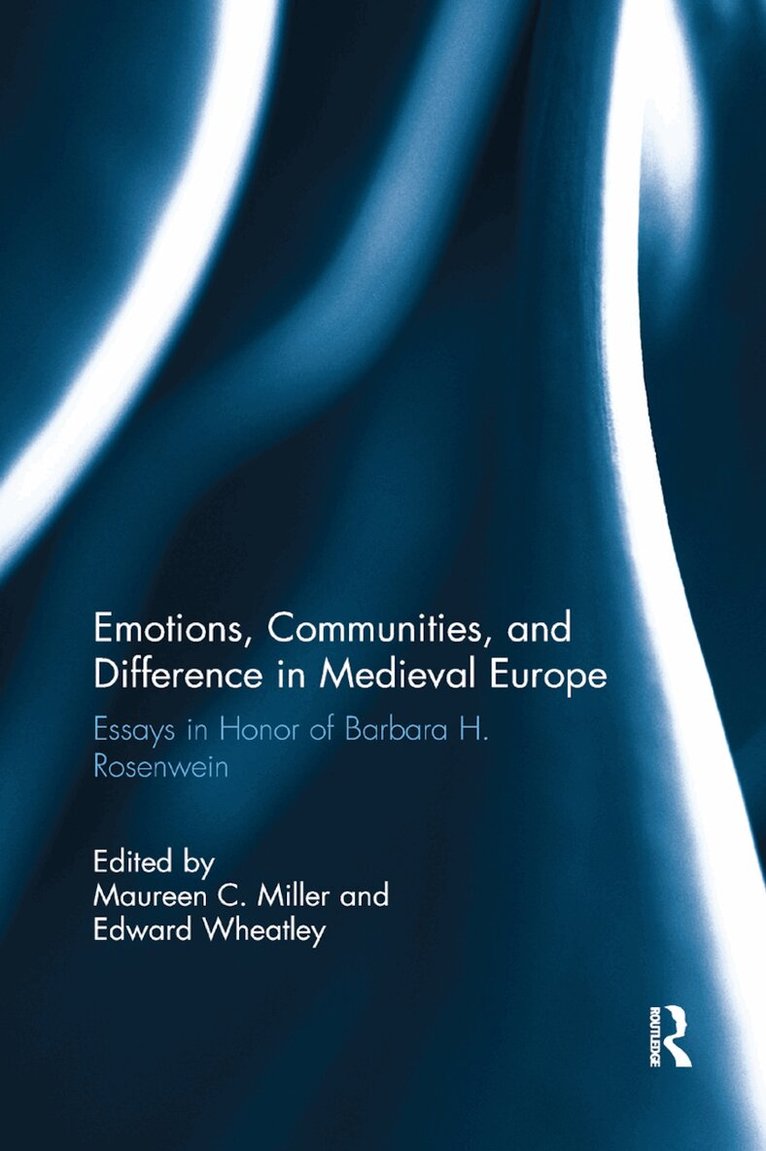
Emotions, Communities, and Difference in Medieval Europe
Essays in Honor of Barbara H. Rosenwein
Häftad, Engelska, 2020
652 kr
Skickas inom 10-15 vardagar
This book of eleven essays by an international group of scholars in medieval studies honors the work of Barbara H. Rosenwein, Professor emerita of History at Loyola University Chicago. Part I, “Emotions and Communities,” comprises six essays that make use of Rosenwein’s well-known and widely influential work on the history of emotions and what Rosenwein has called “emotional communities.” These essays employ a wide variety of source material such as chronicles, monastic records, painting, music theory, and religious practice to elucidate emotional commonalities among the medieval people who experienced them. The five essays in Part II, “Communities and Difference,” explore different kinds of communities and have difference as their primary theme: difference between the poor and the unfree, between power as wielded by rulers or the clergy, between the western Mediterranean region and the rest of Europe, and between a supposedly great king and lesser ones.
1 101 kr
Skickas inom 10-15 vardagar
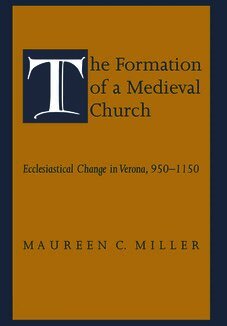
In this provocative account, Maureen Miller challenges traditional explanations of the process that changed the nature of religious institutions—and religious life itself—in the diocese of Verona during the early and central Middle Ages. Building on substantial archival research, she shows how demographic expansion, economic development, and political change helped transform religious ideals and ecclesiastical institutions into a recognizably "medieval" church.
982 kr
Skickas inom 3-6 vardagar
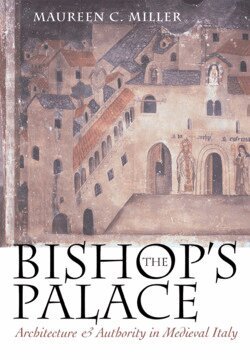
This lavishly illustrated book looks at the art and architecture of episcopal palaces as expressions of power and ideology. Tracing the history of the bishop's residence in the urban centers of northern Italy over the Middle Ages, Maureen C. Miller asks why this once rudimentary and highly fortified structure called a domus became a complex and elegant "palace" (palatium) by the late twelfth century. Miller argues that the change reflects both the emergence of a distinct clerical culture and the attempts of bishops to maintain authority in public life. She relates both to the Gregorian reform movement, which set new standards for clerical deportment and at the same time undercut episcopal claims to secular power. As bishops lost temporal authority in their cities to emerging communal governments, they compensated architecturally and competed with the communes for visual and spatial dominance in the urban center. This rivalry left indelible marks on the layout and character of Italian cities.Moreover, Miller contends, this struggle for power had highly significant, but mixed, results for western Christianity. On the one hand, as bishops lost direct governing authority in their cities, they devised ways to retain status, influence, and power through cultural practices. This response to loss was highly creative. On the other hand, their loss of secular control led bishops to emphasize their spiritual powers and to use them to obtain temporal ends. The coercive use of spiritual authority contributed to the emergence of a "persecuting society" in the central Middle Ages.
542 kr
Skickas
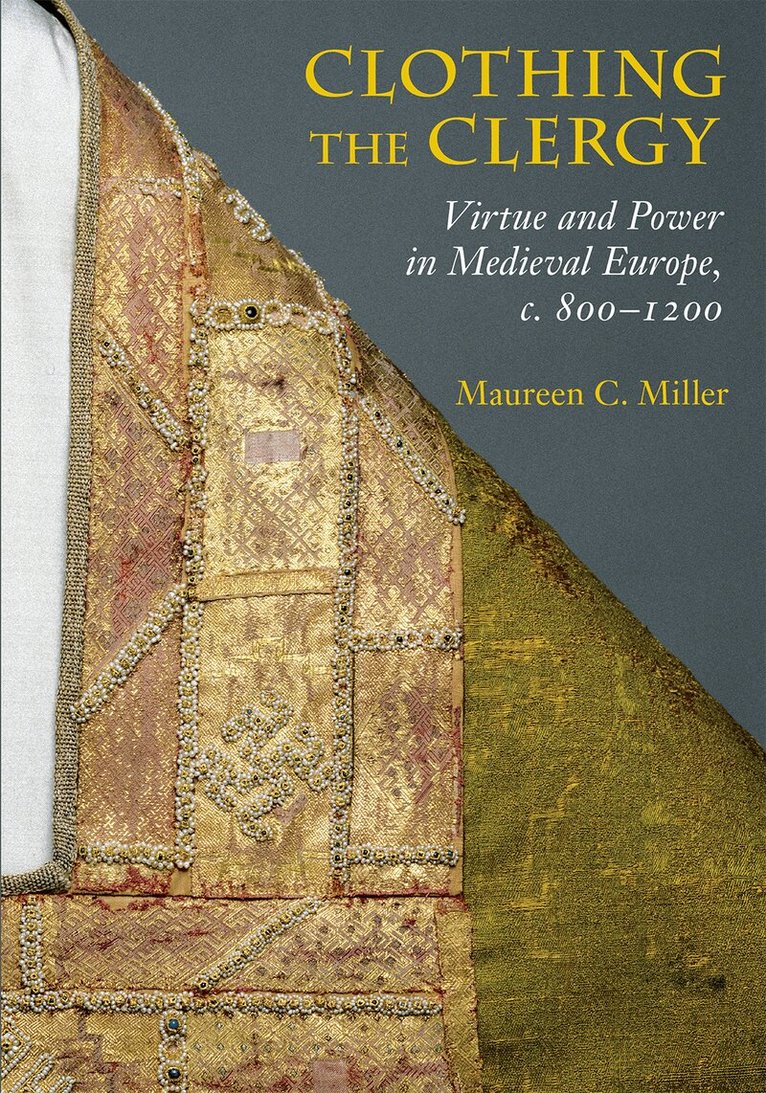
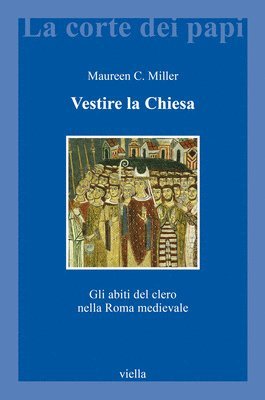
After initial ambivalence about distinctive garb for its ministers, early Christianity developed both liturgical garments and visible markers of clerical status outside church. From the ninth century, moreover, new converts to the faith beyond the Alps developed a highly ornate style of liturgical attire; church vestments were made of precious silks and decorated with embroidered and woven ornament, often incorporating gold and jewels. Making use of surviving medieval textiles and garments; mosaics, frescoes, and manuscript illuminations; canon law; liturgical sources; literary works; hagiography; theological tracts; chronicles, letters, inventories of ecclesiastical treasuries, and wills, Maureen C. Miller in Clothing the Clergy traces the ways in which clerical garb changed over the Middle Ages. Miller's in-depth study of the material culture of church vestments not only goes into detail about craft, artistry, and textiles but also contributes in groundbreaking ways to our understanding of the religious, social, and political meanings of clothing, past and present. As a language of power, clerical clothing was used extensively by eleventh-century reformers to mark hierarchies, to cultivate female patrons, and to make radical new claims for the status of the clergy. The medieval clerical culture of clothing had enduring significance: its cultivation continued within Catholicism and even some Protestant denominations and it influenced the visual communication of respectability and power in the modern Western world. Clothing the Clergy features seventy-nine illustrations, including forty color photographs that put the rich variety of church vestments on display.
392 kr
Skickas inom 10-15 vardagar
This lavishly illustrated book looks at the art and architecture of episcopal palaces as expressions of power and ideology. Tracing the history of the bishop's residence in the urban centers of northern Italy over the Middle Ages, Maureen C. Miller asks why this once rudimentary and highly fortified structure called a domus became a complex and elegant "palace" (palatium) by the late twelfth century. Miller argues that the change reflects both the emergence of a distinct clerical culture and the attempts of bishops to maintain authority in public life. She relates both to the Gregorian reform movement, which set new standards for clerical deportment and at the same time undercut episcopal claims to secular power. As bishops lost temporal authority in their cities to emerging communal governments, they compensated architecturally and competed with the communes for visual and spatial dominance in the urban center. This rivalry left indelible marks on the layout and character of Italian cities.Moreover, Miller contends, this struggle for power had highly significant, but mixed, results for western Christianity. On the one hand, as bishops lost direct governing authority in their cities, they devised ways to retain status, influence, and power through cultural practices. This response to loss was highly creative. On the other hand, their loss of secular control led bishops to emphasize their spiritual powers and to use them to obtain temporal ends. The coercive use of spiritual authority contributed to the emergence of a "persecuting society" in the central Middle Ages.
Emotions, Communities, and Difference in Medieval Europe
Essays in Honor of Barbara H. Rosenwein
Inbunden, Engelska, 2017
2 160 kr
Skickas inom 10-15 vardagar
This book of eleven essays by an international group of scholars in medieval studies honors the work of Barbara H. Rosenwein, Professor emerita of History at Loyola University Chicago. Part I, “Emotions and Communities,” comprises six essays that make use of Rosenwein’s well-known and widely influential work on the history of emotions and what Rosenwein has called “emotional communities.” These essays employ a wide variety of source material such as chronicles, monastic records, painting, music theory, and religious practice to elucidate emotional commonalities among the medieval people who experienced them. The five essays in Part II, “Communities and Difference,” explore different kinds of communities and have difference as their primary theme: difference between the poor and the unfree, between power as wielded by rulers or the clergy, between the western Mediterranean region and the rest of Europe, and between a supposedly great king and lesser ones.