Mauro Bonazzi – författare
Visar alla böcker från författaren Mauro Bonazzi. Handla med fri frakt och snabb leverans.
12 produkter
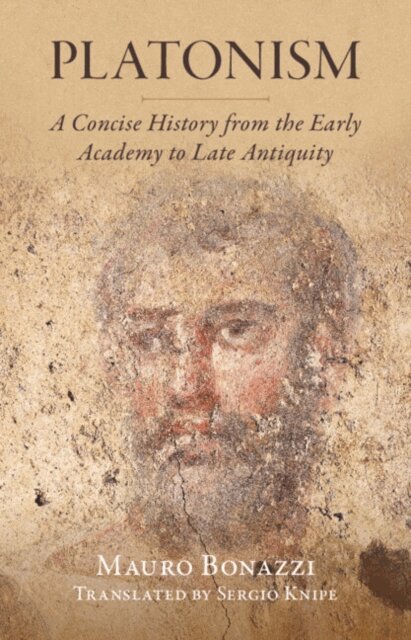
Platonism
A Concise History from the Early Academy to Late Antiquity
Inbunden, 2023
511 kr
Lägg i varukorg
The task of philosophy, the French philosopher Gilles Deleuze once wrote, is to 'overturn Platonism'. This might be true, if only we could define what Platonism is. In this clear and accessible book Mauro Bonazzi provides the first comprehensive introduction to ancient Platonism. He begins his …
The Sophists
Häftad, 2021
318 kr
Lägg i varukorg
From Socrates and Plato onwards, the Sophists were often targeted by the authoritative philosophical tradition as being mere charlatans and poor teachers. This book, translated and significantly updated from its most recent Italian version (2nd edition, 2013), challenges these criticisms by …
Theoria, Praxis, and the Contemplative Life after Plato and Aristotle
Av Thomas Bénatouïl, Mauro Bonazzi
Inbunden, 2012
2782 kr
Lägg i varukorg
Studies of the notion of theoria and of the contemplative life have often been restricted to Plato and Aristotle. This volume shows that aspirations to contemplation and the life of the intellect survived long after the classical period, turning into topics of heated debates, powerful arguments and …
Commentary and Tradition
Aristotelianism, Platonism, and Post-Hellenistic Philosophy
Av Pierluigi Donini, Mauro Bonazzi
Inbunden, 2010
3124 kr
Lägg i varukorg
The volume collects the most important papers Pierluigi Donini wrote in the last three decades with the aim of promoting a better assessment of post-hellenistic philosophy. The philosophical relevance of post-hellenistic philosophy is now widely (though not yet universally) recognized. Yet much …
Commentary and Tradition
Aristotelianism, Platonism, and Post-Hellenistic Philosophy
Av Pierluigi Donini, Mauro Bonazzi
E-bok, 2010
3461 kr
Lägg i varukorg
The volume collects the most important papers Pierluigi Donini wrote in the last three decades with the aim of promoting a better assessment of post-hellenistic philosophy. The philosophical relevance of post-hellenistic philosophy is now widely (though not yet universally) recognized. Yet much …
Criaturas efímeras
Los griegos y el misterio de la existencia
E-bok, 2024
83 kr
Lägg i varukorg
En esta obra sugerente y luminosa cuyo título toma Mauro Bonazzi de unos versos de Píndaro, se acomete a través de un recorrido a lo largo del pensamiento griego antiguo -desde Homero hasta Platón y Aristóteles, pasando por los grandes dramaturgos y los poetas- una reflexión y un análisis del hecho …
El pasado
Entre la nostalgia y la cancelación
E-bok, 2025
91 kr
Lägg i varukorg
«Nadie es una hoja en blanco»: cómo instaurar un diálogo crítico con nuestra historia.En un mundo caracterizado por la aceleración constante y el culto al presente, este libro examina nuestra problemática relación con el pasado, atrapada entre dos extremos igualmente distorsionadores: la "cultura …
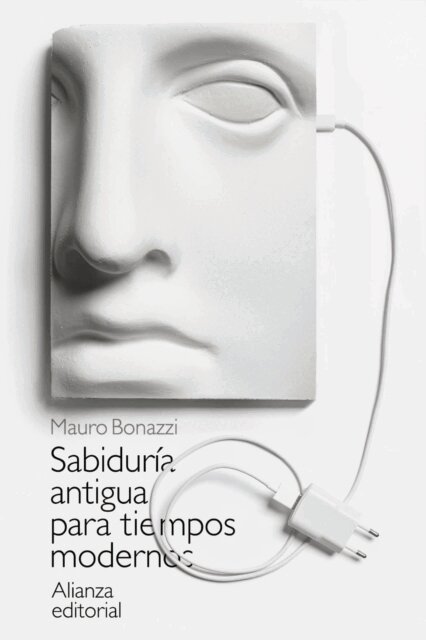
Sabiduria antigua para tiempos modernos
E-bok, 2021
64 kr
Lägg i varukorg
Nada nuevo bajo el sol. Parece que este antiguo aforismo habria de permitirnos despachar con facilidad la descripcion del contenido de este libro, pues en sus breves textos, que aunan profundidad con concision, comprobamos como, en efecto, muchos de los problemas actuales, si no todos, se …
Platonic Stoicism
The Dialogue between Platonism and Stoicism in Antiquity
Av Christoph Helmig, Mauro Bonazzi
Inbunden, 2008
1292 kr
Lägg i varukorg
This book examines the important but largely neglected issue of the interrelation between Platonism and Stoicism in Ancient Philosophy. Several renowned specialists in the fields of Stoic and Platonic analyse the intricate mutual influences between Stoic and Platonic philosophers in the Hellenistic …