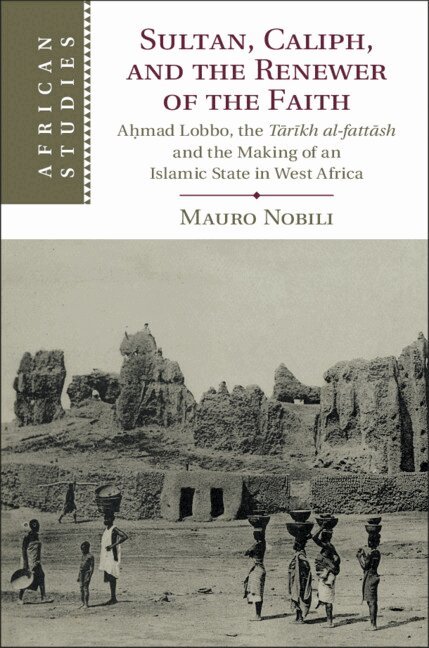
Mauro Nobili – författare
Visar alla böcker från författaren Mauro Nobili. Handla med fri frakt och snabb leverans.
6 produkter
Sultan, Caliph, and the Renewer of the Faith
Aḥmad Lobbo, the Tārīkh al-fattāsh and the Making of an Islamic State in West Africa
Av Mauro Nobili
Inbunden, 2020
1677 kr
Lägg i varukorg
The Tārīkh al-fattāsh is one of the most important and celebrated sources for the history of pre-colonial West Africa, yet it has confounded scholars for decades with its inconsistences and questions surrounding its authorship. In this study, Mauro Nobili examines and challenges existing theories …
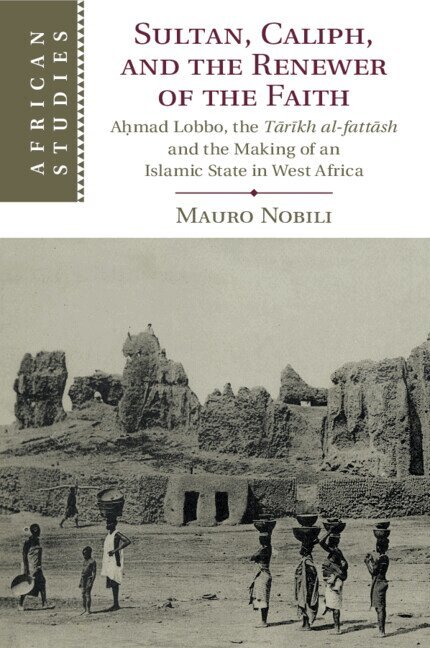
Sultan, Caliph, and the Renewer of the Faith
Aḥmad Lobbo, the Tārīkh al-fattāsh and the Making of an Islamic State in West Africa
Av Mauro Nobili
Häftad, 2022
452 kr
Lägg i varukorg
The Tārīkh al-fattāsh is one of the most important and celebrated sources for the history of pre-colonial West Africa, yet it has confounded scholars for decades with its inconsistences and questions surrounding its authorship. In this study, Mauro Nobili examines and challenges existing theories …
Sultan, Caliph, and the Renewer of the Faith
Aḥmad Lobbo, the Tārīkh al-fattāsh and the Making of an Islamic State in West Africa
Av Mauro Nobili
E-bok, 2020
437 kr
Lägg i varukorg
The Tārīkh al-fattāsh is one of the most important and celebrated sources for the history of pre-colonial West Africa, yet it has confounded scholars for decades with its inconsistences and questions surrounding its authorship. In this study, Mauro Nobili examines and challenges existing theories …
Sultan, Caliph, and the Renewer of the Faith
Aḥmad Lobbo, the Tārīkh al-fattāsh and the Making of an Islamic State in West Africa
Av Mauro Nobili
E-bok, 2020
427 kr
Lägg i varukorg
The Tārīkh al-fattāsh is one of the most important and celebrated sources for the history of pre-colonial West Africa, yet it has confounded scholars for decades with its inconsistences and questions surrounding its authorship. In this study, Mauro Nobili examines and challenges existing theories …
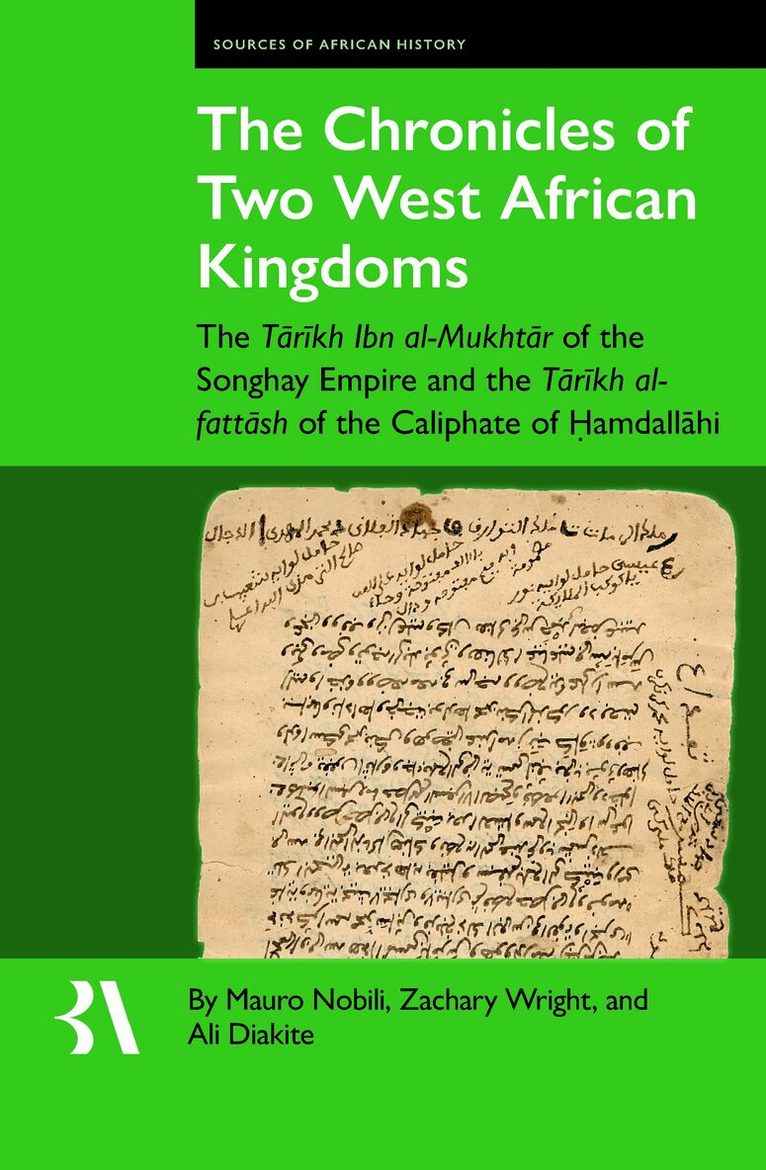
The Chronicles of Two West African Kingdoms
The Tārīkh Ibn Al-Mukhtār of the Songhay Empire and the Tārīkh Al-Fattāsh of the Caliphate of Ḥamdallāhi
Av Mauro Nobili, Zachary V. Wright m. fl.
Inbunden, 2025
2394 kr
Lägg i varukorg
The Chronicles of Two West African Kingdoms presents a new reading of West African history from the fifteenth to the nineteenth centuries. Based on close analysis of Arabic manuscripts from Timbuktu and other regions, this volume provides key historical context from the Songhay Empire through the …
Arts and Crafts of Literacy
Islamic Manuscript Cultures in Sub-Saharan Africa
Av Andrea Brigaglia, Mauro Nobili
Inbunden, 2017
2149 kr
Lägg i varukorg
During the last two decades, the (re-)discovery of thousands of manuscripts in different regions of sub-Saharan Africa has questioned the long-standing approach of Africa as a continent only characterized by orality and legitimately assigned to the continent the status of a civilization of written …