Mavis E. Mate – författare
Visar alla böcker från författaren Mavis E. Mate. Handla med fri frakt och snabb leverans.
4 produkter
4 produkter
Del 39 - New Studies in Economic and Social History
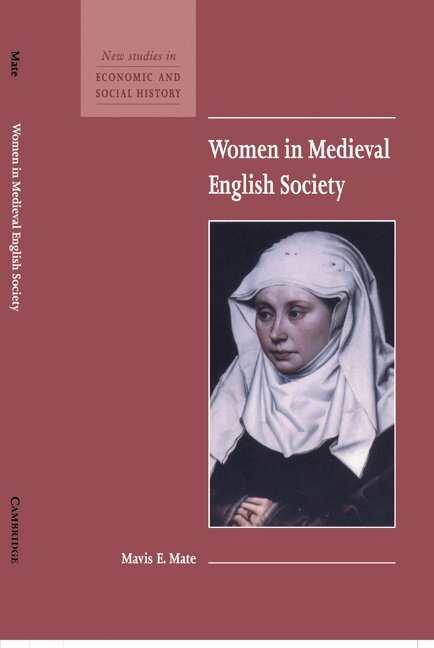
Women in Medieval English Society
Inbunden, Engelska, 1999
569 kr
Skickas inom 7-10 vardagar
Written primarily for undergraduates, this book weighs the evidence for and against the various theories relating to the position of women at different time periods. Professor Mate examines the major issues deciding the position of women in medieval English society, asking questions such as, did women enjoy a rough equality in the Anglo-Saxon period that they subsequently lost? Did queens at certain periods exercise real political clout or was their power limited to questions of patronage? Did women's participation in the economy grant them considerable independence and allow them to postpone or delay marriage? Professor Mate also demonstrates that class, as well as gender, was very important in determining age at marriage and opportunities for power and influence. Although some women at certain times did make short-term gains, Professor Mate challenges the dominant view that major transformations in women's position occurred in the century after the Black Death.
Inbunden, Engelska, 1998
1 129 kr
Skickas inom 10-15 vardagar
Did the expanding economic life of England after the Black Death improve the lot of women, as is commonly thought? This study argues not.It has long been thought that the post Black Death period offered unparallelled opportunities for women. However, through a careful consideration of economic and legal changes affecting women of all social classes and conditions,the author shows that this was not the case, taking issue with orthodox opinion. She argues that marriage at a late age was not customary for women, and that the ability of wives to supplement their income with intermittent paid labour (at harvest time, for example) was not so great as has been supposed: rather, most married women spent more time on unpaid agricultural labour on their own land than their peers had done in the pre-plague economy. ProfessorMate also demonstrates that there is little evidence to support the current belief that widowhood was the period in a woman's life when she enjoyed most power, freedom, and independence; moreover, legal changes were a mixed blessing for women, leaving some widows with a larger portion and a more secure title to land, but totally depriving others. Throughout, the book pays much attention to class as well as gender, showing how many things were determined byit, from what a woman wore or ate to the age at which she married, her power within the household, and even her vulnerability to rape.The late MAVIS E. MATE was Professor of History Emerita, University of Oregon.
E-bok
Engelska, 2021122 kr
Läs direkt efter köp
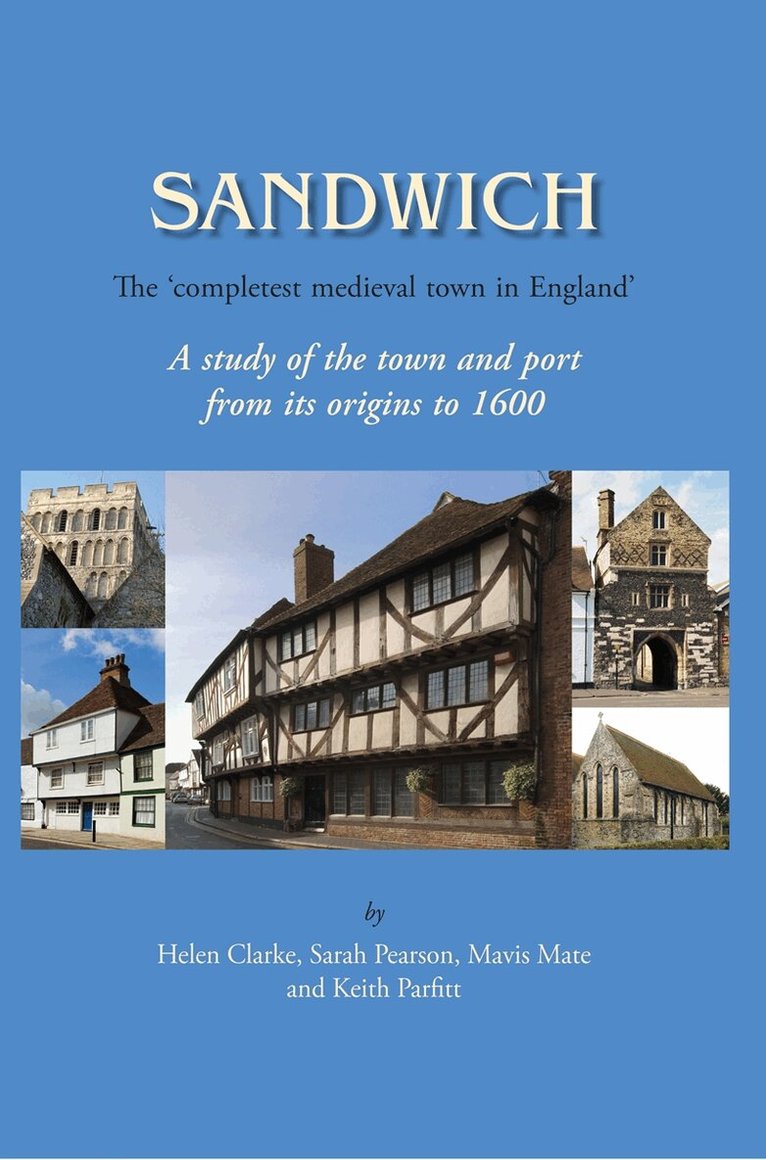
To the casual visitor of today, Sandwich appears as simply a small inland market town on the bank of a modest river. But locals and historians have long known that in the Middle Ages it was a strategic and commercial seaport of great significance, trading with northern Europe and the Mediterranean and growing prosperous on this business. The medieval fabric of the town has been preserved to a remarkable extent, but historians and archaeologists have never agreed on quite where the first settlement was located. Nor has there been close study of what the surviving medieval buildings can tell us about Sandwich's development. It is the physical development of Sandwich that forms the focus of this volume, providing new theories on how, when and why the town came to take its present form. As well as providing a great amount of detail on the houses, churches and defences of medieval Sandwich, the authors apply the material evidence in order to draw out important social, economic and cultural facets in the evolution of the town. The study of Sandwich also has much wider implications, as despite being largely affected by its location, it also shared much with other English medieval towns in terms of its physical growth and the role of its major institutions. The story of the town, therefore, is both particular and general, and this detailed study gives new insights into the influences affecting urban development, both in the formative period of growth and in later periods in which towns adapted to new circumstances. The method presented here could therefore, be equally applicable to studies of other medieval towns. Maps, plans and photographs, all in full colour, supplement the text and graphically underline many of the conclusions.
Häftad, Engelska, 1999
288 kr
Tillfälligt slut
Written primarily for undergraduates, this book weighs the evidence for and against the various theories relating to the position of women at different time periods. Professor Mate examines the major issues deciding the position of women in medieval English society, asking questions such as, did women enjoy a rough equality in the Anglo-Saxon period that they subsequently lost? Did queens at certain periods exercise real political clout or was their power limited to questions of patronage? Did women's participation in the economy grant them considerable independence and allow them to postpone or delay marriage? Professor Mate also demonstrates that class, as well as gender, was very important in determining age at marriage and opportunities for power and influence. Although some women at certain times did make short-term gains, Professor Mate challenges the dominant view that major transformations in women's position occurred in the century after the Black Death.