Max Ryynanen – författare
Visar alla böcker från författaren Max Ryynanen. Handla med fri frakt och snabb leverans.
8 produkter
Bodily Engagements with Film, Images, and Technology
Somavision
Av Max Ryynanen
E-bok, 2022
381 kr
Lägg i varukorg
This book builds a new understanding of the body and its relationship to images and technology, using a framework where novel writings of pragmatist somaesthetics and phenomenology meet new research on bodily reactions. Max Ryynänen gives an overview of the topic by collecting the existing …
Bodily Engagements with Film, Images, and Technology
Somavision
Av Max Ryynanen
E-bok, 2022
381 kr
Lägg i varukorg
This book builds a new understanding of the body and its relationship to images and technology, using a framework where novel writings of pragmatist somaesthetics and phenomenology meet new research on bodily reactions. Max Ryynänen gives an overview of the topic by collecting the existing …
Philosophy of Cultural Scenes in Art and Popular Culture
Av Jozef Kovalcik, Max Ryynanen
E-bok, 2023
424 kr
Lägg i varukorg
This book seeks to understand culture through the lens of scenes, analyzing them aesthetically and culturally as well as understanding them through the frameworks of gender, social networks, and artworlds. It is common to talk about the cultural and intellectual scenes of early twentieth-century …
Philosophy of Cultural Scenes in Art and Popular Culture
Av Jozef Kovalcik, Max Ryynanen
E-bok, 2023
433 kr
Lägg i varukorg
This book seeks to understand culture through the lens of scenes, analyzing them aesthetically and culturally as well as understanding them through the frameworks of gender, social networks, and artworlds. It is common to talk about the cultural and intellectual scenes of early twentieth-century …
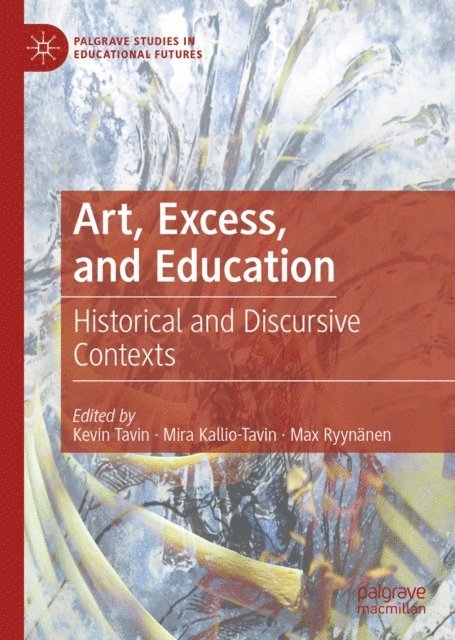
Art, Excess, and Education
Historical and Discursive Contexts
Av Max Ryynanen, Mira Kallio-Tavin m. fl.
E-bok, 2019
1224 kr
Lägg i varukorg
This book concentrates on the deep historical, political, and institutional relationships between art, education, and excess. Going beyond field specific discourses of art history, art criticism, philosophy, and aesthetics, it explores how the concept of excess has been important and enduring from …
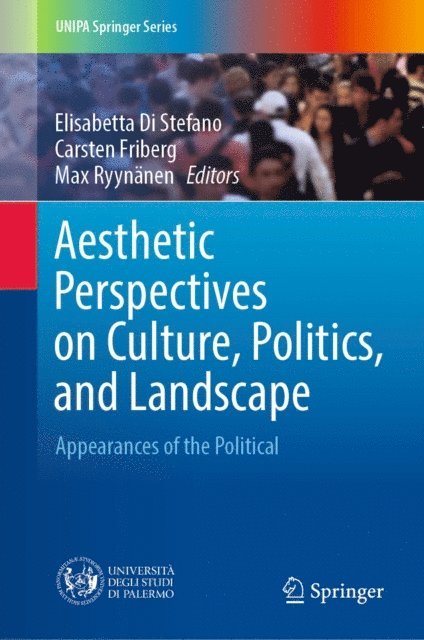
Aesthetic Perspectives on Culture, Politics, and Landscape
Appearances of the Political
Av Max Ryynanen, Carsten Friberg m. fl.
E-bok, 2022
442 kr
Lägg i varukorg
This book investigates how we are involved in politically informed structures and how they appear to us. Following different approaches in contemporary aesthetics and cultural philosophy, such as everyday aesthetics, atmosphere and aestheticization, the contributions explore how embedded powers in …
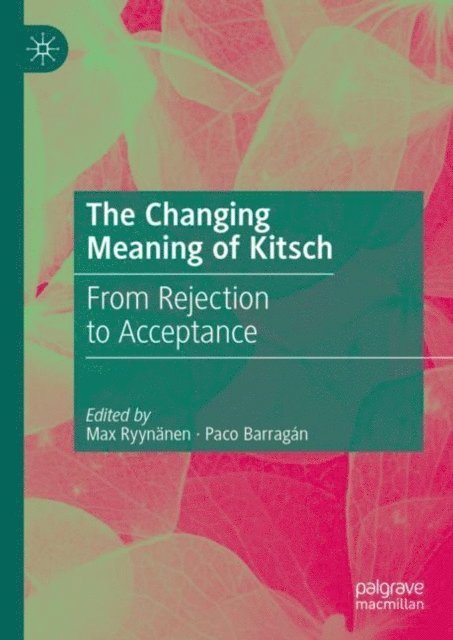
Changing Meaning of Kitsch
From Rejection to Acceptance
Av Paco Barragan, Max Ryynanen
E-bok, 2023
2224 kr
Lägg i varukorg
This book inaugurates a new phase in kitsch studies. Kitsch, an aesthetic slur of the 19th and the 20th century, is increasingly considered a positive term and at the heart of today’s society. Eleven distinguished authors from philosophy, cultural studies and the arts discuss a wide range of topics …
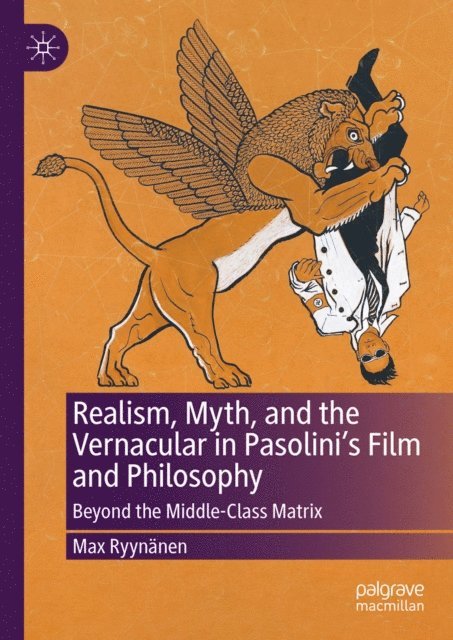
Realism, Myth, and the Vernacular in Pasolini's Film and Philosophy
Beyond the Middle-Class Matrix
Av Max Ryynanen
E-bok, 2024
1793 kr
Lägg i varukorg
Pier Paolo Pasolini’s lifework has been studied through the lens of queer studies, film studies, poetry, and many other angles, but there are themes that one could still study. This book aims to bring forth a new understanding of Pasolini as someone who worked in various arts, and through …