Max Skjonsberg – författare
Visar alla böcker från författaren . Handla med fri frakt och snabb leverans.
7 produkter
7 produkter
E-bok
PDF, Engelska, 2026393 kr
Läs direkt efter köp
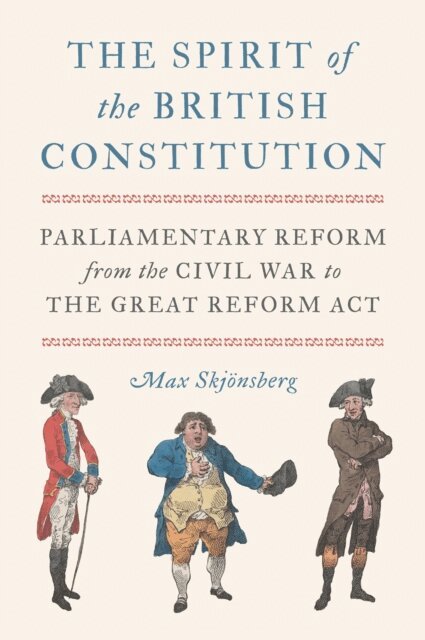
How ideas of parliamentary reform aiming to restore the spirit of the constitution defined political debate at a pivotal moment in British historyEighteenth-century Britain was ruled by landed Protestant gentlemen who were united in their embrace of the country's constitution, common law, and system of rights that had been confirmed by milestones such as Magna Carta in 1215, the Petition of Right in 1628, and the Glorious Revolution in 1688. Yet the British elite and the public at large were divided on fundamental political questions, such as how the constitution should work in practice and what reforms, if any, were needed to make reality cohere with theory.In this panoramic book, Max Skjonsberg provides the most comprehensive study to date of the history of parliamentary reform in Britain from the seventeenth century to the First Reform Act in 1832. At the heart of the book is the idea of the spirit of the British constitution, which was invoked by widely different political actors and thinkers throughout this period to argue for an array of reforms for the security of liberty. What this precisely entailed was deeply contested, with key figures such as Bolingbroke, Edmund Burke, Catharine Macaulay, William Pitt the Younger, and William Cobbett interpreting the spirit of the constitution in diverse ways, all the while seeking to remain within a constitutional framework.A landmark account of the English political and constitutional tradition, The Spirit of the British Constitution challenges us to rethink eighteenth-century history as well as the relationship between tradition, history, and freedom.
E-bok
Engelska, 2026507 kr
Läs direkt efter köp
How ideas of parliamentary reform aiming to restore the spirit of the constitution defined political debate at a pivotal moment in British historyEighteenth-century Britain was ruled by landed Protestant gentlemen who were united in their embrace of the country's constitution, common law, and system of rights that had been confirmed by milestones such as Magna Carta in 1215, the Petition of Right in 1628, and the Glorious Revolution in 1688. Yet the British elite and the public at large were divided on fundamental political questions, such as how the constitution should work in practice and what reforms, if any, were needed to make reality cohere with theory.In this panoramic book, Max Skjonsberg provides the most comprehensive study to date of the history of parliamentary reform in Britain from the seventeenth century to the First Reform Act in 1832. At the heart of the book is the idea of the spirit of the British constitution, which was invoked by widely different political actors and thinkers throughout this period to argue for an array of reforms for the security of liberty. What this precisely entailed was deeply contested, with key figures such as Bolingbroke, Edmund Burke, Catharine Macaulay, William Pitt the Younger, and William Cobbett interpreting the spirit of the constitution in diverse ways, all the while seeking to remain within a constitutional framework.A landmark account of the English political and constitutional tradition, The Spirit of the British Constitution challenges us to rethink eighteenth-century history as well as the relationship between tradition, history, and freedom.
E-bok
Engelska, 20251 424 kr
Läs direkt efter köp
E-bok
PDF, Engelska, 20251 420 kr
Läs direkt efter köp
E-bok
PDF, Engelska, 2023426 kr
Läs direkt efter köp
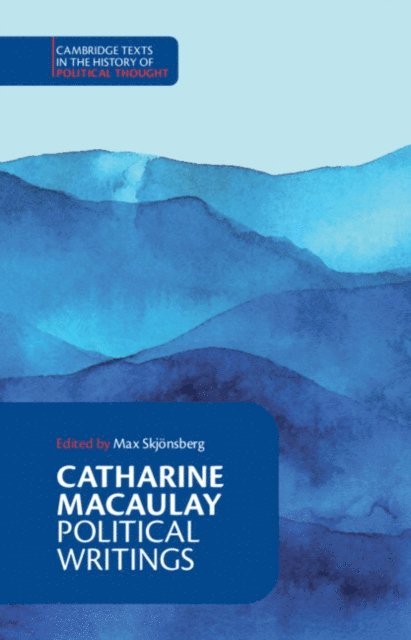
The writings of republican historian and political pamphleteer Catharine Macaulay (1731–91) played a central role in debates about political reform in the Age of Enlightenment and Revolution. A critical reader of Hume''s bestselling History of England, she broke new ground in historiography by defending the regicide of Charles I and became an inspiration for many luminaries of the American and French revolutions. While her historical and political works engaged with thinkers from Hobbes and Locke to Bolingbroke and Burke, she also wrote about religion, philosophy, education and animal rights. Influencing Wollstonecraft and proto-feminism, she argued that there were no moral differences between men and women and that boys and girls should receive the same education. This book is the first scholarly edition of Catharine Macaulay''s published writings and includes all her known pamphlets along with extensive selections from her longer historical and political works.
E-bok
PDF, Engelska, 2021408 kr
Läs direkt efter köp
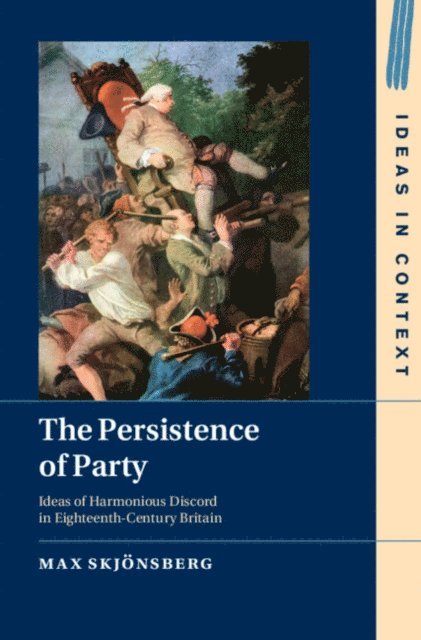
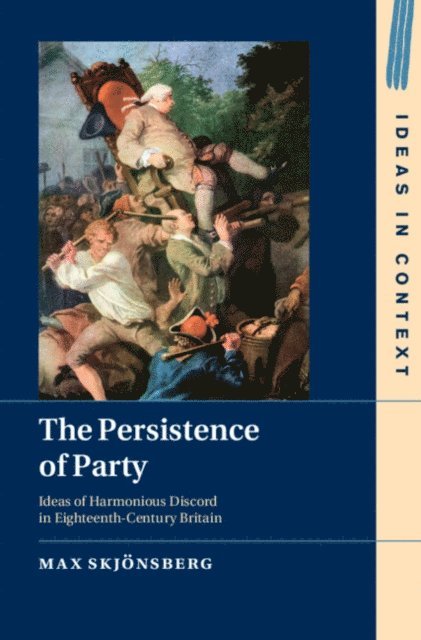
Political parties are taken for granted today, but how was the idea of party viewed in the eighteenth century, when core components of modern, representative politics were trialled? From Bolingbroke to Burke, political thinkers regarded party as a fundamental concept of politics, especially in the parliamentary system of Great Britain. The paradox of party was best formulated by David Hume: while parties often threatened the total dissolution of the government, they were also the source of life and vigour in modern politics. In the eighteenth century, party was usually understood as a set of flexible and evolving principles, associated with names and traditions, which categorised and managed political actors, voters, and commentators. Max Skjönsberg thus demonstrates that the idea of party as ideological unity is not purely a nineteenth- or twentieth-century phenomenon but can be traced to the eighteenth century.
407 kr
Läs direkt efter köp
Political parties are taken for granted today, but how was the idea of party viewed in the eighteenth century, when core components of modern, representative politics were trialled? From Bolingbroke to Burke, political thinkers regarded party as a fundamental concept of politics, especially in the parliamentary system of Great Britain. The paradox of party was best formulated by David Hume: while parties often threatened the total dissolution of the government, they were also the source of life and vigour in modern politics. In the eighteenth century, party was usually understood as a set of flexible and evolving principles, associated with names and traditions, which categorised and managed political actors, voters, and commentators. Max Skjönsberg thus demonstrates that the idea of party as ideological unity is not purely a nineteenth- or twentieth-century phenomenon but can be traced to the eighteenth century.