Maxat Kassen - Böcker
Visar alla böcker från författaren Maxat Kassen. Handla med fri frakt och snabb leverans.
6 produkter
6 produkter
355 kr
Skickas inom 10-15 vardagar
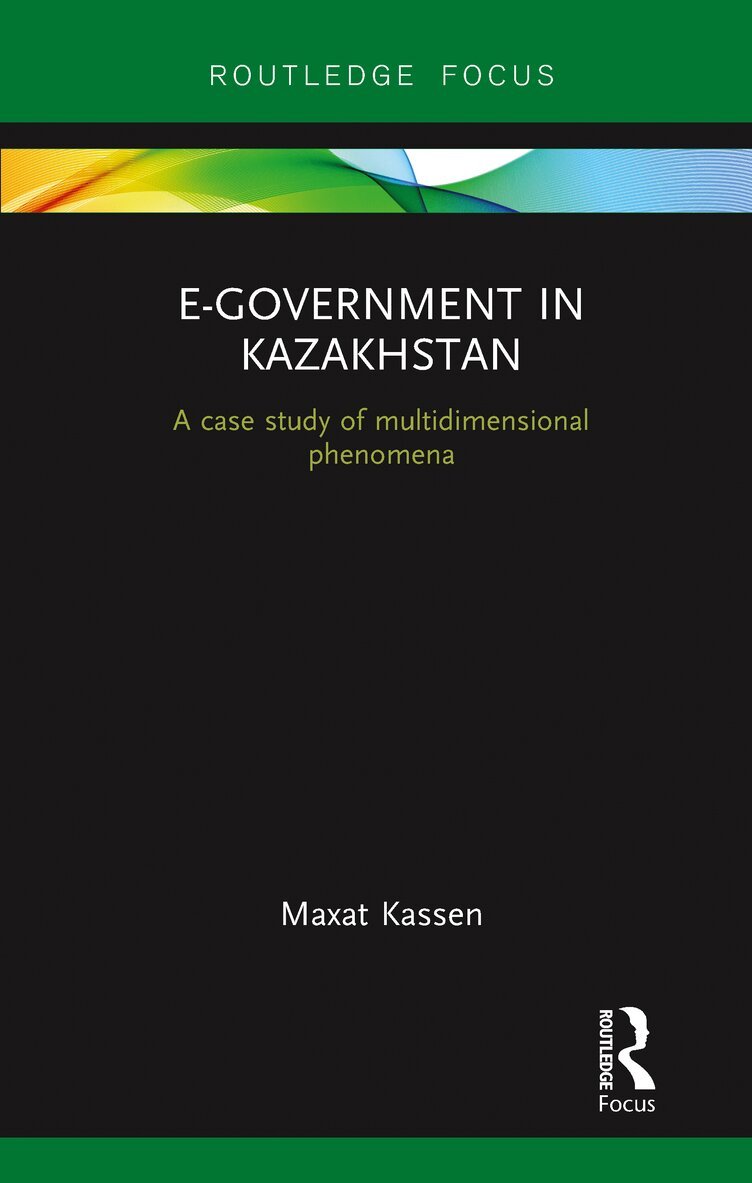
When it comes to analyzing the phenomenon of digital government, the overwhelming focus is on the most developed nations in the world, and Western countries in particular. However, Kazakhstan, a post-totalitarian country, has also proved to be successful in the development of e-government.This book analyzes e-government development in Kazakhstan from a multitude of dimensions, including, but not limited to, political, social, economic and technological platforms. It examines the adoption of a wide range of technology-driven public sector projects and identifies the key drivers, challenges, regulation policies and stakeholders of e-government reforms in this transitional society. Taking into account recent changes in governance, such as the development of mobile government, the rise of civic engagement and the open data-driven movement, and the overall formal progress of the e-government project, this book addresses the emergence of new challenges and concerns associated with the advancement of the e-government concept. Furthermore, it suggests that a universal framework can be applied when investigating e-government projects in the developing world.Offering a wide range of practical recommendations on how to overcome the problems associated with e-government development, this book will be a valuable resource for anyone wishing to improve their understanding of the multidimensional nature of e-government. It will also be of key interest to academics studying Political Science, Development Studies, Public Policy and Central Asian Studies.
843 kr
Skickas inom 10-15 vardagar
When it comes to analyzing the phenomenon of digital government, the overwhelming focus is on the most developed nations in the world, and Western countries in particular. However, Kazakhstan, a post-totalitarian country, has also proved to be successful in the development of e-government.This book analyzes e-government development in Kazakhstan from a multitude of dimensions, including, but not limited to, political, social, economic and technological platforms. It examines the adoption of a wide range of technology-driven public sector projects and identifies the key drivers, challenges, regulation policies and stakeholders of e-government reforms in this transitional society. Taking into account recent changes in governance, such as the development of mobile government, the rise of civic engagement and the open data-driven movement, and the overall formal progress of the e-government project, this book addresses the emergence of new challenges and concerns associated with the advancement of the e-government concept. Furthermore, it suggests that a universal framework can be applied when investigating e-government projects in the developing world.Offering a wide range of practical recommendations on how to overcome the problems associated with e-government development, this book will be a valuable resource for anyone wishing to improve their understanding of the multidimensional nature of e-government. It will also be of key interest to academics studying Political Science, Development Studies, Public Policy and Central Asian Studies.
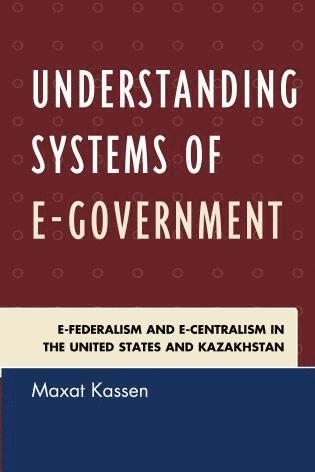
Understanding Systems of e-Government
e-Federalism and e-Centralism in the United States and Kazakhstan
Inbunden, Engelska, 2015
1 209 kr
Skickas inom 10-15 vardagar
The main purpose of the book was to analyze heterogeneous political and institutional aspects in the development of such an arguably universal tool of modern democracy as e-government from the perspectives of two nations with completely different systems of governance and traditions of public administration and provide generalizations on objective institutional limitations that indirectly affect the implementation of political and administrative decision-making in this area by governments of the United States and Kazakhstan, representing respectively the typical federal and unitary state.This book is both a policy review and agenda setting research. By applying case studies of e-government strategies in these two different countries both at the national and local levels and analyzing corresponding legal and institutional foundations, it offers ways forward for further hypothesis testing and proposes a road map for e-government practitioners to improve the strategic policy in this area in Kazakhstan and other developing nations. It provides recommendations on how to improve the regulatory and methodological basis for effective implementation of interactive and transactional services as well as how to solve challenges of an organizational character in realization of e-government projects at the national level, for example, by resorting to a promising phenomenon of civic engagement and citizen-sourcing, creation of open data-driven platforms and provision of information security measures, project outreach in social media, etc.
588 kr
Skickas inom 10-15 vardagar
This book offers a cross-national comparison of open data policies in Estonia and Kazakhstan. By analyzing a broad range of open data-driven projects and startups in both countries, it reveals the potential that open data phenomena hold with regard to promoting public sector innovations. The book addresses various political and socioeconomic contexts in these two transitional societies, and reviews the strategies and tactics adopted by policymakers and stakeholders to identify drivers of and obstacles to the implementation of open data innovations. Given its scope, the book will appeal to scholars, policymakers, e-government practitioners and open data entrepreneurs interested in implementing and evaluating open data-driven public sector projects.
800 kr
Skickas inom 10-15 vardagar
This book combines theoretical and practical knowledge about key actors and driving forces that help to initiate and advance open data governance. Using Finland and Sweden as case studies, it sheds light on the roles of key actors in the open data movement, enabling researchers to understand the key operational elements of data-driven governance. Examining the most salient manifestations of related networking activities, the motivations of stakeholders, and the political and socioeconomic readiness of the public, private and civic sectors to advance such policies, it will appeal to e-government experts, policymakers and political scientists, as well as academics and students of public administration, public policy, and open data governance.
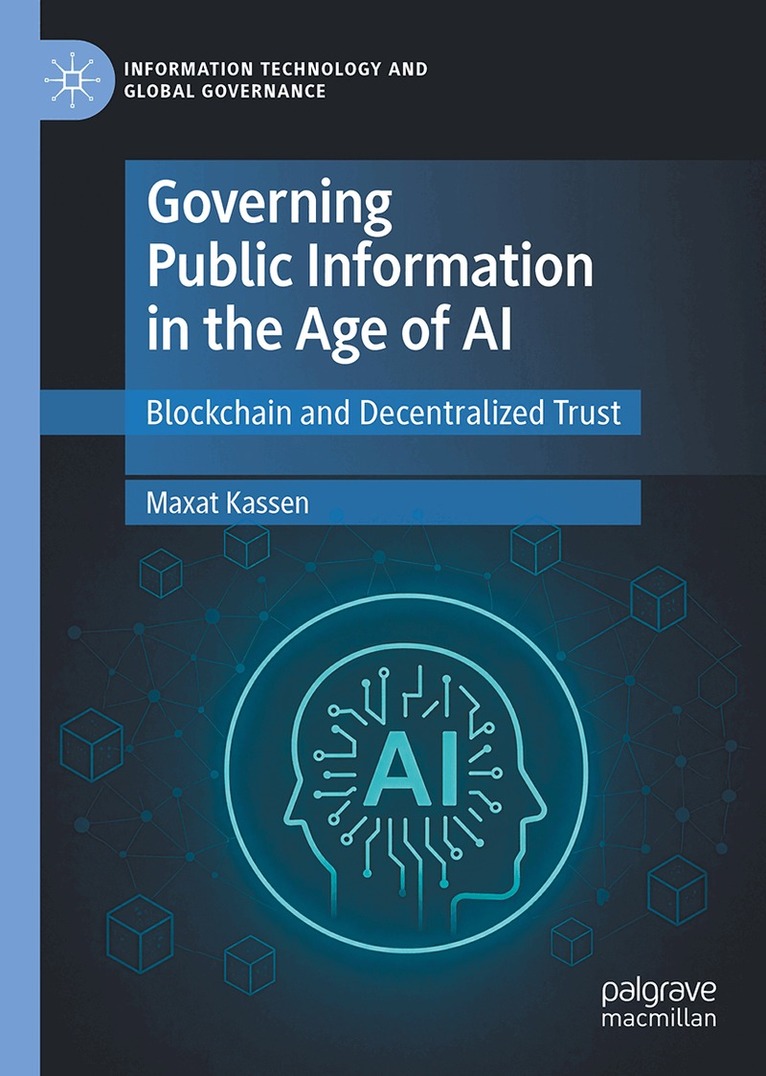
Governing Public Information in the Age of AI
Blockchain and Decentralized Trust
Inbunden, Engelska, 2026
2 186 kr
Kommande
In a digital world saturated with synthetic media and AI-shaped narratives, the quest for trustworthy public information has never been more urgent. Governing Public Information in the Age of AI explores how blockchain can strengthen the integrity of online communication at a moment when traditional platforms struggle to keep pace with algorithmic manipulation.Based on extensive field research, developer insights and real-world use cases, the book traces how distributed ledgers, tokenized incentives and decentralized identity tools can help verify content, track provenance and support more authentic exchanges across social networks. It unpacks both the promise and the limits of these systems, offering a clear look into emerging models that seek to counter deepfakes, misinformation and automated persuasion.Engaging and timely, the book will appeal to policymakers and scholars searching for practical ways to rebuild public confidence in information environments facing unprecedented disruption.