Maxine L. Margolis - Böcker
Visar alla böcker från författaren Maxine L. Margolis. Handla med fri frakt och snabb leverans.
7 produkter
7 produkter
322 kr
Skickas inom 10-15 vardagar
Brazil, a country that has always received immigrants, only rarely saw its own citizens move abroad. Beginning in the late 1980s, however, thousands of Brazilians left for the United States, Japan, Portugal, Italy, and other nations, propelled by a series of intense economic crises. By 2009 an estimated three million Brazilians were living abroad - about 40 percent of them in the United States.Goodbye, Brazil is the first book to provide a global perspective on Brazilian emigration. Drawing and synthesising data from a host of sociological and anthropological studies, preeminent Brazilian immigration scholar Maxine L. Margolis surveys and analyses this greatly expanded Brazilian diaspora, asking who these immigrants are, why they left home, how they travelled abroad, how the Brazilian government responded to their exodus, and how their host countries received them. Margolis shows how Brazilian immigrants, largely from the middle rungs of Brazilian society, have negotiated their ethnic identity outside Brazil, an issue with which they had no prior experience. She argues that Brazilian society outside Brazil is characterised by the absence of well-developed, community-based institutions - with the exception of thriving, largely evangelical Brazilian churches. Margolis looks to the future as well, asking what prospects at home and abroad await the new generation, children of Brazilian immigrants with little or no familiarity with their parents' country of origin. Do Brazilian immigrants develop such deep roots in their host societies that they hesitate to return home despite Brazil's recent economic boom - or have they become true transnationals, traveling between Brazil and their adopted lands but feeling not quite at home in either one?Goodbye, Brazil tells the expansive tale of Brazilians leaving their patria amada (beloved nation) for an uncertain future and, in the process, staking their claim as a presence on the global stage.

502 kr
Skickas inom 7-10 vardagar
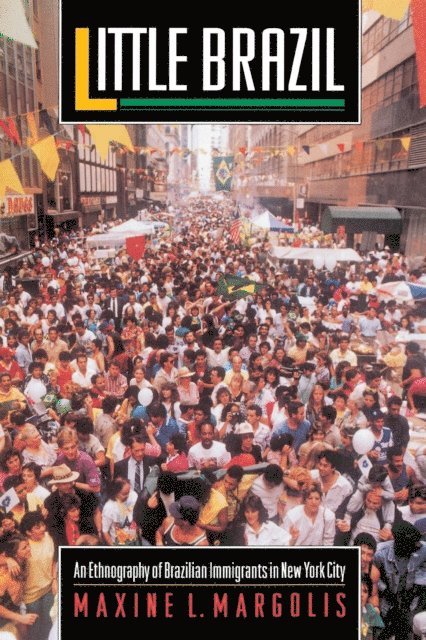
Walking west on 46th Street in Manhattan, just three blocks from Rockefeller Center, one passes Brazilian restaurants, the office of New York's Brazilian newspaper, a Brazilian travel agency, a business that sends remittances and wires flowers to Brazil, and a store that sells Brazilian food products, magazines, newspapers, videos, and tapes. These businesses are the tip of an ethnic iceberg, an unseen minority estimated to number some 80,000 to 100,000 Brazilians in the New York metropolitan area alone. Despite their numbers, the lives of these people remain largely hidden to scholars and the public alike. Now Maxine L. Margolis remedies this neglect with a fascinating and accessible account of the lives of New York's Brazilians. Showing that these immigrants belie American stereotypes, Margolis reveals that they are largely from the middle strata of Brazilian society: many, in fact, have university educations. Not driven by dire poverty or political repression, they are fleeing from chaotic economic conditions that prevent them from maintaining amiddle-class standard of living in Brazil.But despite their class origin and education, with little English and no work papers, many are forced to take menial jobs after their arrival in the United States. Little Brazil is not an insentient statistical portrait of this population writ large, but a nuanced account that captures what it is like to be a new immigrant in this most cosmopolitan of world cities.
795 kr
Skickas inom 3-6 vardagar
Translated into English terza rima verse with introduction and notes by Lacy Lockert. Originally published in 1931. The Princeton Legacy Library uses the latest print-on-demand technology to again make available previously out-of-print books from the distinguished backlist of Princeton University Press. These editions preserve the original texts of these important books while presenting them in durable paperback and hardcover editions. The goal of the Princeton Legacy Library is to vastly increase access to the rich scholarly heritage found in the thousands of books published by Princeton University Press since its founding in 1905.
2 009 kr
Skickas inom 3-6 vardagar
Translated into English terza rima verse with introduction and notes by Lacy Lockert. Originally published in 1931. The Princeton Legacy Library uses the latest print-on-demand technology to again make available previously out-of-print books from the distinguished backlist of Princeton University Press. These editions preserve the original texts of these important books while presenting them in durable paperback and hardcover editions. The goal of the Princeton Legacy Library is to vastly increase access to the rich scholarly heritage found in the thousands of books published by Princeton University Press since its founding in 1905.
259 kr
Skickas inom 10-15 vardagar
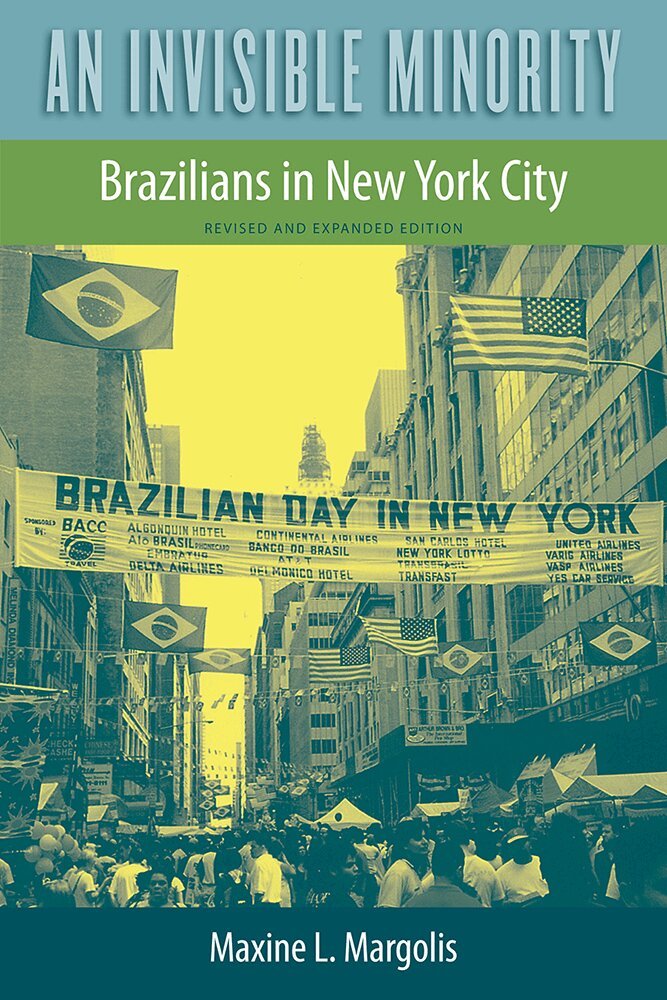
In the mid-1980s, a relatively new immigrant stream from Brazil began to arrive in New York City. Like other immigrant populations, many of the new arrivals were undocumented, but, unlike other groups, most were from middle-class backgrounds and few wished to extend their stay beyond a few years.Today, there are at least 150,000 Brazilians in the greater New York metropolitan area - many famously self-employed as the city's fleet of shoeshiners - and perhaps as many as one million throughout the United States.In this revised and expanded edition, Maxine Margolis addresses the dramatic changes and challenges that have affected this population since the events of September 11, 2001, and examines the roles that Brazilians have played in an increasingly turbulent U.S. economy.
942 kr
Skickas inom 10-15 vardagar
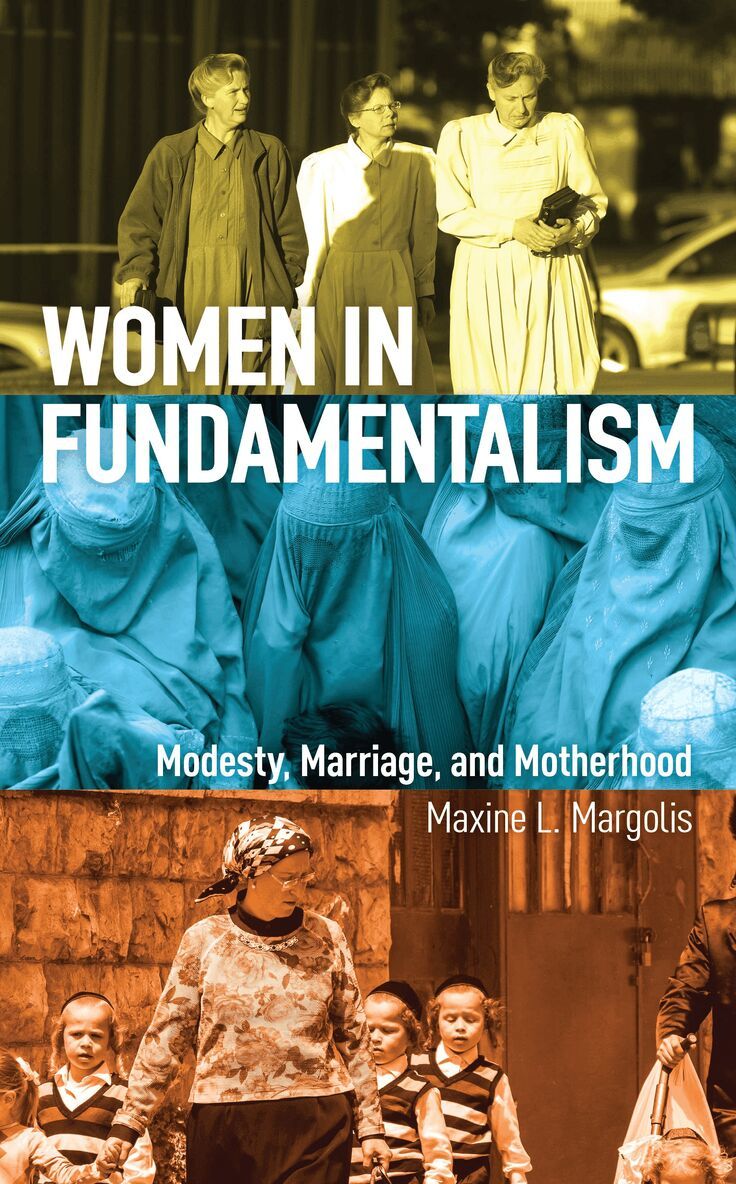
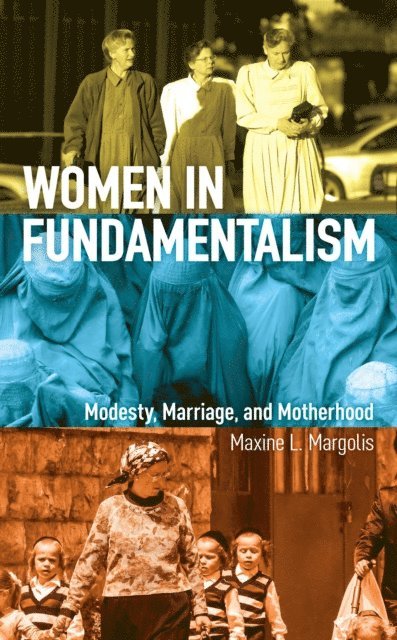
Women in Fundamentalism examines the striking similarities in three extreme fundamentalist religious communities in their views about and treatment of women. Whether Christian, Jewish or Muslim, the fundamentalist offshoots of these religions subject women to myriad restrictions in their daily lives. All three seek to maintain male control over women’s bodies, women’s activities, and the people with whom women associate. The three also share common ideologies about women's “true nature" and proper place. The specific cases covered in this text are (1) Mormon polygamists, specifically the Fundamentalist Church of Jesus Christ of Latter-Day Saints (FLDS), who live in Utah, Arizona, Texas, and isolated enclaves in Canada and Mexico; (2) the Satmar Hasidim of Williamsburg, Brooklyn, Kiryas Joel a town in Orange County, New York, and several settlements in Israel; and (3) an extreme brand of Islam practiced by the Pashtun ethnic group of Afghanistan and neighboring areas of Pakistan.This book effectively bridges the disciplines of women’s studies, religion, and anthropology, making it a valuable resource for professors and students seeking new qualitative and quantitative material on women’s positions in various religious traditions.
488 kr
Skickas inom 10-15 vardagar
Women in Fundamentalism examines the striking similarities in three extreme fundamentalist religious communities in their views about and treatment of women. Whether Christian, Jewish or Muslim, the fundamentalist offshoots of these religions subject women to myriad restrictions in their daily lives. All three seek to maintain male control over women’s bodies, women’s activities, and the people with whom women associate. The three also share common ideologies about women's “true nature" and proper place. The specific cases covered in this text are (1) Mormon polygamists, specifically the Fundamentalist Church of Jesus Christ of Latter-Day Saints (FLDS), who live in Utah, Arizona, Texas, and isolated enclaves in Canada and Mexico; (2) the Satmar Hasidim of Williamsburg, Brooklyn, Kiryas Joel a town in Orange County, New York, and several settlements in Israel; and (3) an extreme brand of Islam practiced by the Pashtun ethnic group of Afghanistan and neighboring areas of Pakistan.This book effectively bridges the disciplines of women’s studies, religion, and anthropology, making it a valuable resource for professors and students seeking new qualitative and quantitative material on women’s positions in various religious traditions.