
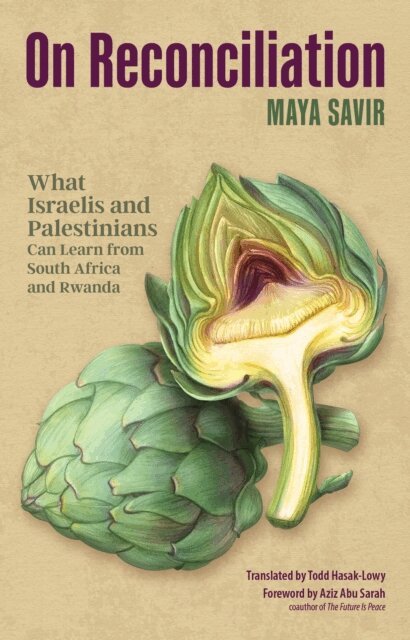
All conflicts end. Its in their nature. The only question is how much time and how many lives will be lost, and when the hard but necessary work of healing begins. Maya Savir, an Israeli professional in humanitarian and development work and peacebuilding, and a mother, spent years working in Rwanda and South Africa, countries that went through successful reconciliation processes many had thought impossible. In this book, she dares to ask whether what she observed and learned there can be applied to the Israeli-Palestinian conflict.Reconciliation is an artichoke. Its not an onion, made up of layer upon layer you peel away until nothing is left. It has layers, yes, but at its center is a heart. This book peels away those characteristics that are not essential for reconciliation until all that is left is the heart. But before examining this heart, we take a close look at the outer layers in specific conflicts, because although they vary with context and may not all be necessary to bring about reconciliation, they are among the most noble and inspiring human expressions and can be part of the dynamics of reconciliation.Savir invites readers to explore this process of reconciliation candidly and soberly, showing what it takes for peacemaking and restoration to unfold between peoples and within individuals after conflicts. She leads the reader on this journey with compassion, intellectual precision, literary skill, and conviction. Though healing is difficult to imagine in the wake of October 7 and the war in Gaza, On Reconciliation helps us to reconsider the limits of what is possible.
All conflicts end. It’s in their nature. The only question is how much time and how many lives will be lost, and when the hard but necessary work of healing begins. Maya Savir, an Israeli professional in humanitarian and development work and peacebuilding, and a mother, spent years working in Rwanda and South Africa, countries that went through successful reconciliation processes many had thought impossible. In this book, she dares to ask whether what she observed and learned there can be applied to the Israeli-Palestinian conflict. Reconciliation is an artichoke. It’s not an onion, made up of layer upon layer you peel away until nothing is left. It has layers, yes, but at its center is a heart. This book peels away those characteristics that are not essential for reconciliation until all that is left is the heart. But before examining this heart, we take a close look at the outer layers in specific conflicts, because although they vary with context and may not all be necessary to bring about reconciliation, they are among the most noble and inspiring human expressions and can be part of the dynamics of reconciliation. Savir invites readers to explore this process of reconciliation candidly and soberly, showing what it takes for peacemaking and restoration to unfold between peoples and within individuals after conflicts. She leads the reader on this journey with compassion, intellectual precision, literary skill, and conviction. Though healing is difficult to imagine in the wake of October 7 and the war in Gaza, On Reconciliation helps us to reconsider the limits of what is possible.
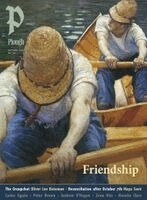
Friendship isn’t an optional add-on. It’s what makes life worth living.Without friends, says Aristotle, no one would choose to live. The greatest love a person can show another, says Jesus, is to choose to die for friend. Ancient and medieval writers extol ideal friendship as a path to virtue and a sign of new Christians’ total transformation. Headlines warn of a loneliness crisis. How can friendship be rediscovered as an important social good that brings meaning to life and cohesion to society? The authors in this issue tell of connections with peers and strangers, soulmates and political enemies, showing how in the Christian vision true friendship is a gift one can both die for and live for.On this theme: Oliver Lee Bateman explains the appeal of the guys’ group chat.Carlos Egaña remembers friends who fell victim to Maduro’s regime in Venezuela.Erik Van Aken was saved by his best friend – a dog named Sam.Alastair Roberts shows how Jesus redefined, and universalized, classical friendship ideals.Peter Brown and Margarita Mooney Clayton discuss Augustine’s vision of friendship.Maya Savir asserts that peace between Israelis and Palestinians is possible.For a picture of friendship with God, says Cambria Kaltwasser, look to Arnold Lobel’s Frog and Toad.John and Polly Snider recount their four decades of friendship with the man who became Pope Leo XIV.Emmarae R. Blum tells of the dying friend who led her to Christ.The Cappadoccian Fathers, says Oliver B. Langworthy, shared a friendship with space for disagreement.Joy Marie Clarkson interviews a professor and her formerly incarcerated student who have become good friends.Peter Mommsen tells how friendship with a Vietnam War veteran changed him and his family. Also in the Issue: Zena Hitz shows why Edith Stein should still be read today.Savor the poems that won Plough’s sixth Rhina P. Espaillat Poetry Award.Horatio Clare meets the intrepid volunteers of the Royal National Lifeboat Institution.Plough Quarterly features stories, ideas, and culture for people eager to apply their faith to the challenges we face. Each issue includes in-depth articles, interviews, poetry, book reviews, and art.
All conflicts end. Its in their nature. The only question is how much time and how many lives will be lost, and when the hard but necessary work of healing begins. Maya Savir, an Israeli professional in humanitarian and development work and peacebuilding, and a mother, spent years working in Rwanda and South Africa, countries that went through successful reconciliation processes many had thought impossible. In this book, she dares to ask whether what she observed and learned there can be applied to the Israeli-Palestinian conflict.Reconciliation is an artichoke. Its not an onion, made up of layer upon layer you peel away until nothing is left. It has layers, yes, but at its center is a heart. This book peels away those characteristics that are not essential for reconciliation until all that is left is the heart. But before examining this heart, we take a close look at the outer layers in specific conflicts, because although they vary with context and may not all be necessary to bring about reconciliation, they are among the most noble and inspiring human expressions and can be part of the dynamics of reconciliation.Savir invites readers to explore this process of reconciliation candidly and soberly, showing what it takes for peacemaking and restoration to unfold between peoples and within individuals after conflicts. She leads the reader on this journey with compassion, intellectual precision, literary skill, and conviction. Though healing is difficult to imagine in the wake of October 7 and the war in Gaza, On Reconciliation helps us to reconsider the limits of what is possible.
All conflicts end. It’s in their nature. The only question is how much time and how many lives will be lost, and when the hard but necessary work of healing begins. Maya Savir, an Israeli professional in humanitarian and development work and peacebuilding, and a mother, spent years working in Rwanda and South Africa, countries that went through successful reconciliation processes many had thought impossible. In this book, she dares to ask whether what she observed and learned there can be applied to the Israeli-Palestinian conflict. Reconciliation is an artichoke. It’s not an onion, made up of layer upon layer you peel away until nothing is left. It has layers, yes, but at its center is a heart. This book peels away those characteristics that are not essential for reconciliation until all that is left is the heart. But before examining this heart, we take a close look at the outer layers in specific conflicts, because although they vary with context and may not all be necessary to bring about reconciliation, they are among the most noble and inspiring human expressions and can be part of the dynamics of reconciliation. Savir invites readers to explore this process of reconciliation candidly and soberly, showing what it takes for peacemaking and restoration to unfold between peoples and within individuals after conflicts. She leads the reader on this journey with compassion, intellectual precision, literary skill, and conviction. Though healing is difficult to imagine in the wake of October 7 and the war in Gaza, On Reconciliation helps us to reconsider the limits of what is possible.
Friendship isn’t an optional add-on. It’s what makes life worth living.Without friends, says Aristotle, no one would choose to live. The greatest love a person can show another, says Jesus, is to choose to die for friend. Ancient and medieval writers extol ideal friendship as a path to virtue and a sign of new Christians’ total transformation. Headlines warn of a loneliness crisis. How can friendship be rediscovered as an important social good that brings meaning to life and cohesion to society? The authors in this issue tell of connections with peers and strangers, soulmates and political enemies, showing how in the Christian vision true friendship is a gift one can both die for and live for.On this theme: Oliver Lee Bateman explains the appeal of the guys’ group chat.Carlos Egaña remembers friends who fell victim to Maduro’s regime in Venezuela.Erik Van Aken was saved by his best friend – a dog named Sam.Alastair Roberts shows how Jesus redefined, and universalized, classical friendship ideals.Peter Brown and Margarita Mooney Clayton discuss Augustine’s vision of friendship.Maya Savir asserts that peace between Israelis and Palestinians is possible.For a picture of friendship with God, says Cambria Kaltwasser, look to Arnold Lobel’s Frog and Toad.John and Polly Snider recount their four decades of friendship with the man who became Pope Leo XIV.Emmarae R. Blum tells of the dying friend who led her to Christ.The Cappadoccian Fathers, says Oliver B. Langworthy, shared a friendship with space for disagreement.Joy Marie Clarkson interviews a professor and her formerly incarcerated student who have become good friends.Peter Mommsen tells how friendship with a Vietnam War veteran changed him and his family. Also in the Issue: Zena Hitz shows why Edith Stein should still be read today.Savor the poems that won Plough’s sixth Rhina P. Espaillat Poetry Award.Horatio Clare meets the intrepid volunteers of the Royal National Lifeboat Institution.Plough Quarterly features stories, ideas, and culture for people eager to apply their faith to the challenges we face. Each issue includes in-depth articles, interviews, poetry, book reviews, and art.