Mazni Omar – författare
Visar alla böcker från författaren Mazni Omar. Handla med fri frakt och snabb leverans.
3 produkter
3 produkter
734 kr
Skickas inom 10-15 vardagar
This book explores the transformative potential of artificial intelligence (AI) in reshaping urban development practices. Its objective is to provide a comprehensive overview of the latest advancements in AI‑driven strategies for urban development and governance, with a focus on promoting inclusivity, sustainability, and resilience in cities worldwide. This book studies how AI technologies can be utilized to tackle the complex challenges encountered in urban areas, spanning ethical, social, and environmental implications across urban governance and beyond.The in‑depth analysis in this book uncovers the potential of AI in addressing longstanding challenges and seizing new opportunities in urban contexts, offering insights into wide‑ranging applications. For the use of AI in urban planning, the authors showcase applications that help reduce environmental impact while enhancing accessibility for underserved communities by analyzing real‑time data on land use, transportation, and population needs. Another topic in this book examines AI‑powered urban mobility systems, utilizing software that integrates real‑time data to create adaptive transportation networks. These systems offer efficient, eco‑friendly travel solutions tailored to diverse populations, including individuals with disabilities, by dynamically adjusting routes and services. Additionally, this book delves into digital inclusion and accessible technologies in smart cities, highlighting software that prioritizes accessibility and digital inclusion, ensuring that all residents, regardless of ability, can fully participate in urban life. The interdisciplinary approach allows readers to understand how different fields, such as technology, urban planning, and social policy, intersect and shape AI‑driven urban development. By weaving together insights from these diverse areas, this book demonstrates how AI can address real‑world challenges, from improving infrastructure to fostering sustainability and inclusivity in cities. This perspective helps readers grasp the broader impact of AI, showing how it can enhance various aspects of urban life, including social equity and environmental resilience.Through interdisciplinary research, case studies, and expert insights, this book aims to educate students in higher learning and inspire policymakers, urban planners, and practitioners to leverage AI technologies in addressing urban challenges and build better cities for all residents.
2 751 kr
Skickas inom 10-15 vardagar
This book explores the transformative potential of artificial intelligence (AI) in reshaping urban development practices. Its objective is to provide a comprehensive overview of the latest advancements in AI‑driven strategies for urban development and governance, with a focus on promoting inclusivity, sustainability, and resilience in cities worldwide. This book studies how AI technologies can be utilized to tackle the complex challenges encountered in urban areas, spanning ethical, social, and environmental implications across urban governance and beyond.The in‑depth analysis in this book uncovers the potential of AI in addressing longstanding challenges and seizing new opportunities in urban contexts, offering insights into wide‑ranging applications. For the use of AI in urban planning, the authors showcase applications that help reduce environmental impact while enhancing accessibility for underserved communities by analyzing real‑time data on land use, transportation, and population needs. Another topic in this book examines AI‑powered urban mobility systems, utilizing software that integrates real‑time data to create adaptive transportation networks. These systems offer efficient, eco‑friendly travel solutions tailored to diverse populations, including individuals with disabilities, by dynamically adjusting routes and services. Additionally, this book delves into digital inclusion and accessible technologies in smart cities, highlighting software that prioritizes accessibility and digital inclusion, ensuring that all residents, regardless of ability, can fully participate in urban life. The interdisciplinary approach allows readers to understand how different fields, such as technology, urban planning, and social policy, intersect and shape AI‑driven urban development. By weaving together insights from these diverse areas, this book demonstrates how AI can address real‑world challenges, from improving infrastructure to fostering sustainability and inclusivity in cities. This perspective helps readers grasp the broader impact of AI, showing how it can enhance various aspects of urban life, including social equity and environmental resilience.Through interdisciplinary research, case studies, and expert insights, this book aims to educate students in higher learning and inspire policymakers, urban planners, and practitioners to leverage AI technologies in addressing urban challenges and build better cities for all residents.
1 691 kr
Kommande
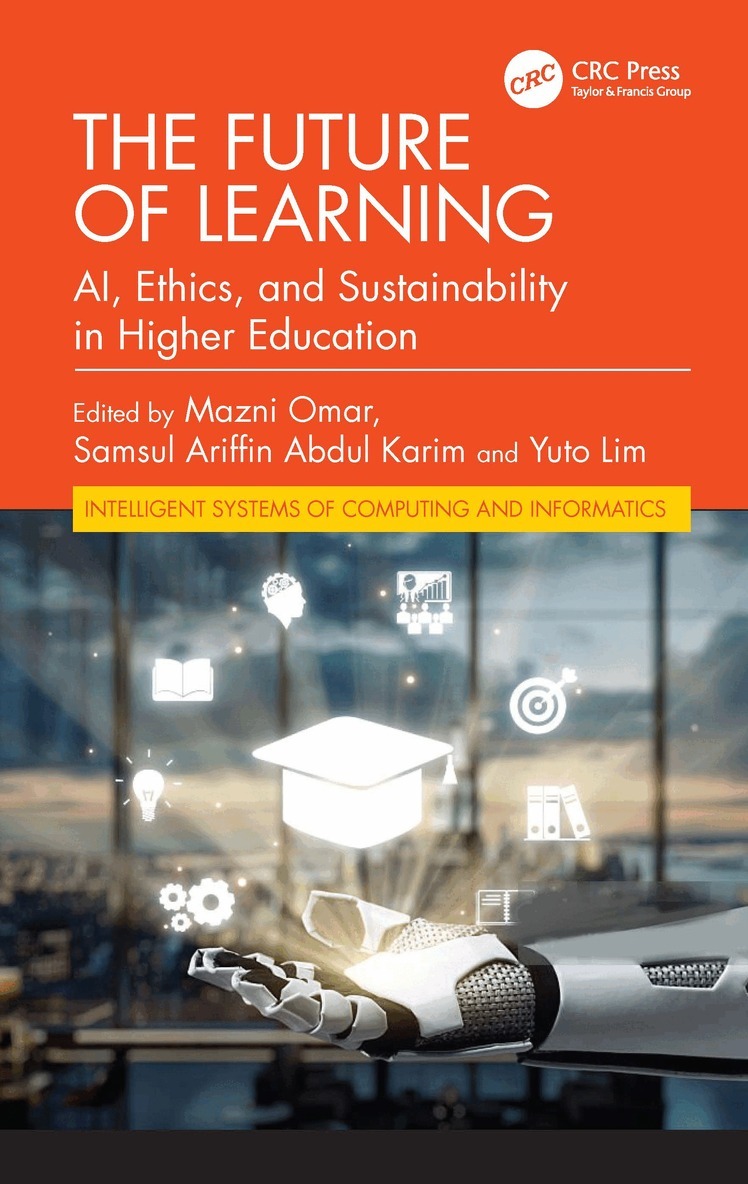
This book examines AI's transformative impact on higher education, from enhancing teaching and learning to raising ethical challenges like academic integrity and bias. It provides a balanced exploration of AI-driven tools, policies, and governance, aligning with SDG 4: Quality Education, to ensure AI is used responsibly and effectively. It serves as a comprehensive guide for navigating the opportunities and risks of AI integration in academia.A key highlight is the book's focused exploration of Generative AI and OpenAI tools, distinguishing it from broader discussions. It specifically addresses how these technologies impact assessment and academic integrity. The book offers a practical, structured approach by integrating AI concepts with established educational taxonomies like Bloom's and SOLO. This allows for a targeted discussion on personalized learning and skill development. It provides case studies, real-world applications, and comparative analyses of institutional strategies, offering actionable guidance for educators and policymakers. By delving into policies and governance, it helps universities navigate the complexities of AI adoption.The book’s research-based insights and practical focus make it an essential guide for managing AI in a rapidly evolving academic landscape. This book is for researchers, and practitioners, including educators and policymakers, seeking a comprehensive and practical guide to understanding and responsibly implementing AI in higher education.