MD Abu Bin Hasan Susan – författare
Emerging Applications of Nanomaterials
1 326 kr
Skickas inom 5-8 vardagar
Applications of Emerging Nanomaterials and Nanotechnology
1 122 kr
Skickas inom 5-8 vardagar
2 467 kr
Skickas inom 10-15 vardagar
3 157 kr
Läs direkt efter köp
This book presents a comprehensive exploration of the latest research in nanomaterial development for environmental pollution control. It delves into various themes, including the utilization of nanosensors in environmental monitoring, the creation of nano adsorbents and nanocatalysts for pollutant removal and degradation, and the potential application of nanomaterials and nanotechnology in remediating contaminated sites. The book also addresses potential risks associated with using nanomaterials in environmental pollution control, discussing nanotoxicology and the potential environmental and health impacts of nanomaterials. Furthermore, it explores the existing regulatory framework for nanomaterial usage in environmental pollution control and outlines future directions for developing and implementing nanomaterials in this domain.
Featuring collected contributions from an international cross-section of active researchers in this broad and interdisciplinary field, this book caters to scientists, researchers, students, and professionals in environmental science, chemistry, materials science, and nanotechnology. It provides a detailed overview of recent advancements in nanomaterial development and application for environmental pollution control, emphasizing how nanotechnology holds promise for delivering effective solutions to environmental challenges.
2 467 kr
Skickas inom 10-15 vardagar
3 448 kr
Kommande
3 797 kr
Läs direkt efter köp
Accelerate clean fuel production from solar energy to net-zero emissions
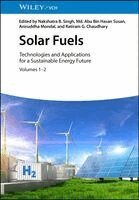
Transitioning global energy infrastructure toward net-zero emissions demands viable pathways for producing storable, carbon-neutral fuels from sunlight. Solar Fuels: Technologies and Applications for a Sustainable Energy Future, edited by a team of researchers in materials science, nanotechnology, and chemistry, reviews the principles, technological innovations, and economic and policy frameworks that define this rapidly advancing field.
Solar Fuels covers photochemistry, catalysis, nanotechnology, hydrogen production, and carbon-based solar fuel synthesis. Beyond laboratory fundamentals, the handbook addresses large-scale industrial applications, electric grid stability, and the role of artificial intelligence in optimizing solar fuel development. Economic analyses and policy frameworks provide context for translating research advances into deployable energy solutions.
The book also covers:
Photochemical reactions, artificial photosynthesis, electrochemical methods, and thermochemical processes for producing hydrogen, ammonia, and methanol from sunlight Nanotechnology-driven catalyst design and advanced materials strategies that improve solar-to-fuel conversion efficiency across multiple reaction pathways Grid stability considerations and infrastructure requirements for integrating solar fuel production into existing energy generation and distribution systems Artificial intelligence applications for accelerating solar fuel research, optimizing reactor design, and improving process control at industrial scale Economic viability assessments and policy framework analyses supporting the transition from laboratory-scale research to commercial solar fuel deploymentSolar Fuels serves power engineers, electrical engineers, engineering scientists in industry, and engineering consultants who require authoritative coverage of solar fuel production science, technology, and deployment. Researchers and policymakers focused on clean energy transition will find the integrated treatment of fundamentals, applications, and policy particularly valuable.
3 797 kr
Läs direkt efter köp
Accelerate clean fuel production from solar energy to net-zero emissions
Transitioning global energy infrastructure toward net-zero emissions demands viable pathways for producing storable, carbon-neutral fuels from sunlight. Solar Fuels: Technologies and Applications for a Sustainable Energy Future, edited by a team of researchers in materials science, nanotechnology, and chemistry, reviews the principles, technological innovations, and economic and policy frameworks that define this rapidly advancing field.
Solar Fuels covers photochemistry, catalysis, nanotechnology, hydrogen production, and carbon-based solar fuel synthesis. Beyond laboratory fundamentals, the handbook addresses large-scale industrial applications, electric grid stability, and the role of artificial intelligence in optimizing solar fuel development. Economic analyses and policy frameworks provide context for translating research advances into deployable energy solutions.
The book also covers:
Photochemical reactions, artificial photosynthesis, electrochemical methods, and thermochemical processes for producing hydrogen, ammonia, and methanol from sunlight Nanotechnology-driven catalyst design and advanced materials strategies that improve solar-to-fuel conversion efficiency across multiple reaction pathways Grid stability considerations and infrastructure requirements for integrating solar fuel production into existing energy generation and distribution systems Artificial intelligence applications for accelerating solar fuel research, optimizing reactor design, and improving process control at industrial scale Economic viability assessments and policy framework analyses supporting the transition from laboratory-scale research to commercial solar fuel deploymentSolar Fuels serves power engineers, electrical engineers, engineering scientists in industry, and engineering consultants who require authoritative coverage of solar fuel production science, technology, and deployment. Researchers and policymakers focused on clean energy transition will find the integrated treatment of fundamentals, applications, and policy particularly valuable.