Mehdi Amineh – författare
Visar alla böcker från författaren Mehdi Amineh. Handla med fri frakt och snabb leverans.
2 produkter
2 produkter
Del 92 - International Studies in Sociology and Social Anthropology
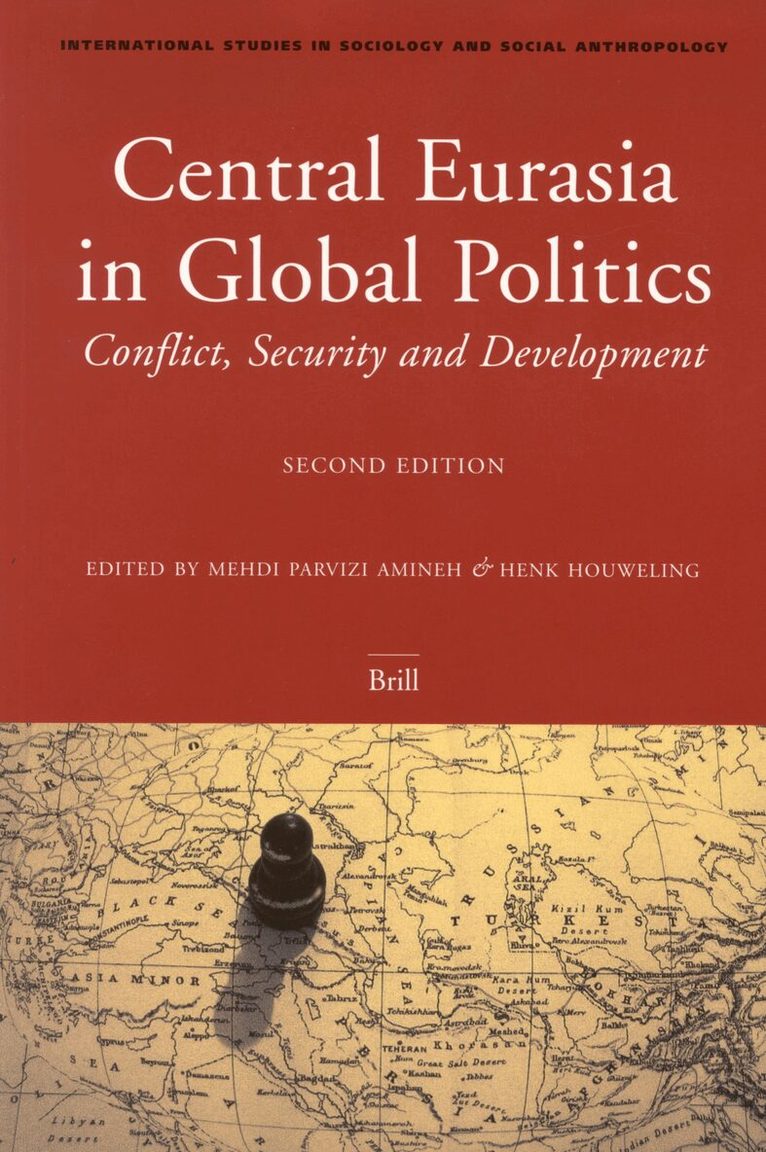
Central Eurasia in Global Politics
Conflict, Security, and Development, Second Edition
Häftad, Engelska, 2005
1 105 kr
Skickas inom 5-8 vardagar
This anthology brings together studies of post-colonial, post-Cold War Central Eurasia. This part of the world is in transition from Soviet institutions to independent statehood, nation building, resistance against state expansion, cultural change and the release of market forces. The theoretical framework of the study is called ‘critical geo-politics.’ The objective of the work is to better comprehend the nature of the post-colonial ‘Great Game'. Part I studies US power projection activity in the region. America is extending its World War II trans-oceanic 'defense perimeter into the fossile fuel rich area between integrating Europe, recovering Russia and industrializing China. Part II details various aspects of state-nation building and soci-cultural and economic change in the region. Part III studies interactions between outsiders, neighbors and Central Asian Republics. Conflict and cooperation in the Caspian region is studied in part IV, with Aral Sea and Azerbijan as cases.This is the revised edition of the book that was published under the same title in 2004.
Del 106 - International Studies in Sociology and Social Anthropology
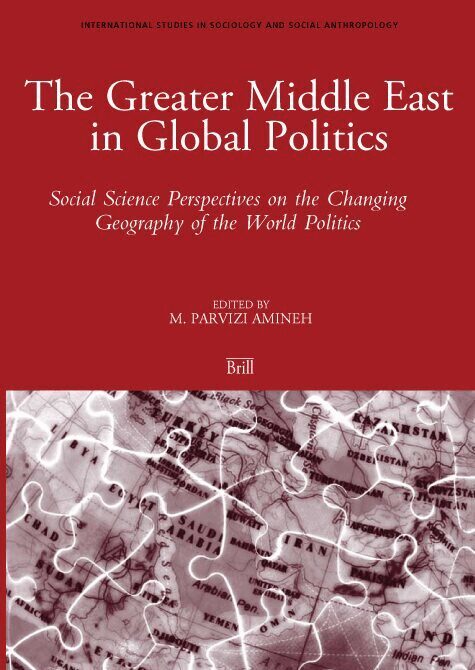
Greater Middle East in Global Politics
Social Science Perspectives on the Changing Geography of the World Politics
Häftad, Engelska, 2007
2 196 kr
Skickas inom 5-8 vardagar
This anthology unites in one volume two studies of the Greater Middle East in global politics – each conceptual and empirical. First, it is a historical-comparative study of politics and societies in selected Greater Middle Eastern countries from Napoleon’s invasion of Ottoman Egypt in 1798 up until today. It addresses development and change in these societies as results of the complex interactions between external developments, the rise and expansion of European industrialized powers, and internal developments, the disintegration of Islamic Empires, their transformation into nation-states, and their efforts to industrialize and modernize. Second, it is an empirical case study of states and societies of the Greater Middle East in global politics, addressing themes such as nationalism, revolution, political Islam, democracy, globalization, regionalism, revolution, war, energy, and conflict and cooperation. The book is comprised of three parts and nineteen chapters. Contributors include: Mehdi Parvizi Amineh, Simon Bromley, Robert M. Cutler, Louisa Dris-Aït-Hamadouche, S.N. Eisenstadt, Femke Hoogeveen, Henk Houweling, B.M. Jain, Mehran Kamrava, Roger Kangas, Fred H. Lawson, Prithvi Ram Mudiam, Nilgun Onder, Wilbur Perlot, Richard Pomfret, Kurt W. Radtke, Mirzohid Rahimov, Eva Patricia Rakel, and Yahia H. Zoubir.