Meine Pieter Van Dijk - Böcker
Visar alla böcker från författaren Meine Pieter Van Dijk. Handla med fri frakt och snabb leverans.
12 produkter
12 produkter
1 064 kr
Skickas inom 10-15 vardagar
This text examines two major themes: the strain placed on local economic cultures and economic networks in the Southern hemisphere and Eastern Europe by global deregulation; and the success rates of both novel, locally-rooted and more traditional economic structures in their attempts to adapt to deregulation. Contributions from a variety of authors combine a "flexible specialization in clusters" approach with original empirical data. An introduction and concluding chapter by the editors brings out the common issues and conclusions.
411 kr
Skickas inom 10-15 vardagar
The completion of the Uruguay Round in April 1994 has not solved all the problems. The issue of regionalism versus multilateral agreements such as the Uruguay Round remains a crucial one, as is argued in the first five chapters of this volume. Successive chapters deal with specific issues such as green protectionism, technical standards, intellectual property rights protection, the effects of disarmament on international trade, the effects of abolishing the Multi-fibre Agreement and the external impact of the European Union's Common Agricultural Policy. The volume, on the whole, takes up where the newly created World Trade Organization will have to start.
843 kr
Skickas inom 10-15 vardagar
Enterprise Clusters and Networks in Developing Countries analyses the functions and advantages of clusters and networks for small enterprises in developing countries.In the opening chapter the editors describe different types of clusters and networks and compare the diverse forms of external economies and co-operation effects derived from them. Taking a multidiscplinary approach, they point out it is trust that is the social basis for positive effects of clustering and networking, which are often sources of co-operation and technology diffusion for small enterprises in developing countries.
2 793 kr
Skickas inom 10-15 vardagar
Enterprise Clusters and Networks in Developing Countries analyses the functions and advantages of clusters and networks for small enterprises in developing countries.In the opening chapter the editors describe different types of clusters and networks and compare the diverse forms of external economies and co-operation effects derived from them. Taking a multidiscplinary approach, they point out it is trust that is the social basis for positive effects of clustering and networking, which are often sources of co-operation and technology diffusion for small enterprises in developing countries.
843 kr
Skickas inom 10-15 vardagar
The completion of the Uruguay Round in April 1994 has not solved all the problems. The issue of regionalism versus multilateral agreements such as the Uruguay Round remains a crucial one, as is argued in the first five chapters of this volume. Successive chapters deal with specific issues such as green protectionism, technical standards, intellectual property rights protection, the effects of disarmament on international trade, the effects of abolishing the Multi-fibre Agreement and the external impact of the European Union's Common Agricultural Policy. The volume, on the whole, takes up where the newly created World Trade Organization will have to start.
2 187 kr
Skickas inom 7-10 vardagar
Innovation is crucial for small enterprises to become and remain competitive in the global economy. In this book, the authors have combined theoretical insights with comprehensive case studies on innovation among small-scale enterprises in developing countries, paying particular attention to technological change in clusters of small firms.The authors deliberately use a broad definition of innovation in order to emphasise the fact that technological change and innovation adoption takes place on a wider scale and in a greater number of forms than is frequently assumed. The unusual case studies such as the Kenyan food processing sector, furniture making in Nicaragua and tile manufacturing in Indonesia highlight the patterns of innovation adoption and diffusion, and serve as a unique and fascinating backdrop to the study. The authors pay specific attention to innovation by small enterprises in times of economic crisis and go on to assess the mechanisms employed to promote innovation. They demonstrate that although radical innovation among small enterprises occurs on a limited scale, innovation through gradual incremental improvements in production processes and products is continuous. Innovation and Small Enterprises in the Third World will be widely read by academics, researchers and policymakers concerned with innovation adoption and diffusion, and third world development issues.
Managing Cities in Developing Countries
The Theory and Practice of Urban Management
Häftad, Engelska, 2008
628 kr
Skickas inom 7-10 vardagar
Urban management is a relatively new topic, which has gained increasing importance due to a rise in urbanization and a wave of decentralization programs in recent decades. This innovative book is the first systematic treatment of the critical urban management issues facing developing countries. The volume brings together a number of theoretical approaches and practical experiences in order to study the economic and financial aspects of urban management. The author argues that urban managers have to make their cities more competitive via the new opportunities provided by decentralization, and suggests that the formulation of a development strategy and the use of elements from new public management theory will improve urban governance and service delivery. In addition, emphasis is placed on the importance of involving different stakeholders, which will lead to an integrated analysis of urban problems and, therefore, integrated solutions. Related issues such as urban environmental sustainability and the role of modern information technology are also explored in detail. The book concludes with a review of the emerging new themes at the forefront of contemporary urban management studies.This important new volume will be an essential resource for students, scholars and practitioners with an interest in urban planning, development and management.
244 kr
Tillfälligt slut
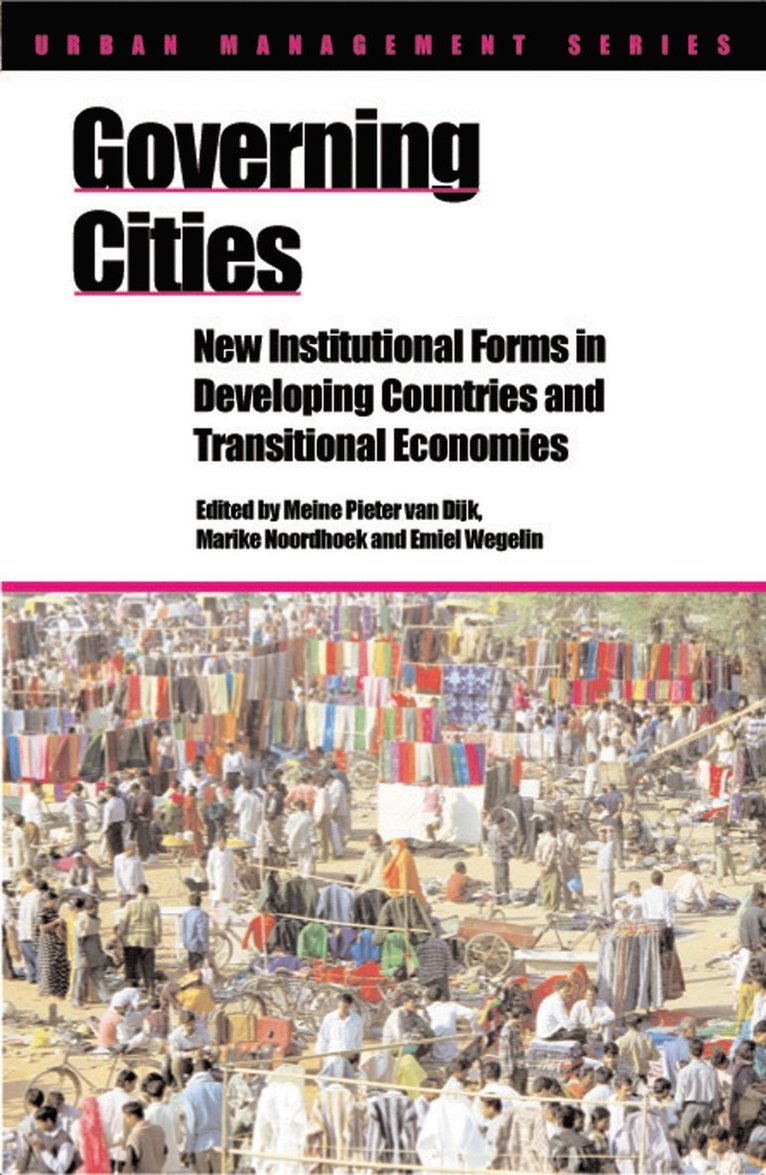
Governing Cities
New institutional forms in developing countries and transitional economies
Häftad, Engelska, 2002
262 kr
Tillfälligt slut
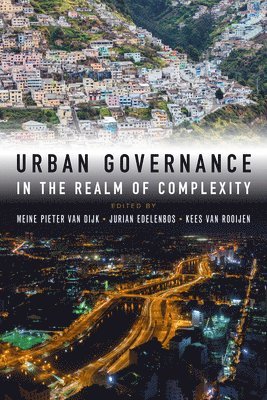
Urban Governance in the Realm of Complexity
Evidence for sustainable pathways
Inbunden, Engelska, 2017
963 kr
Skickas inom 5-8 vardagar
394 kr
Skickas inom 5-8 vardagar
683 kr
Skickas inom 10-15 vardagar
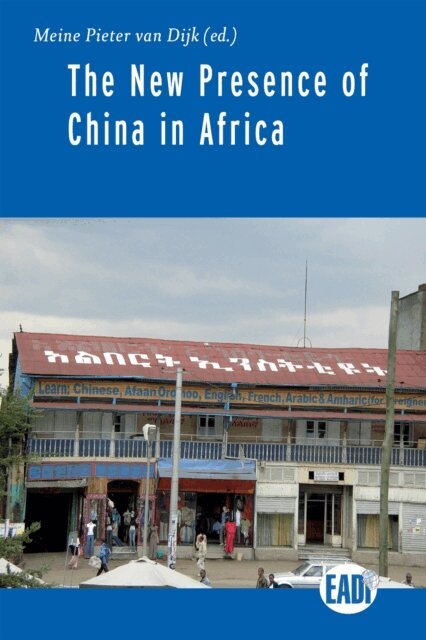
This book describes China's growing range of activities in Africa, especially in the sub-Saharan region. The three most important instruments China has at its disposal in Africa are development aid, investments and trade policy. The Chinese government, which believes the Western development aid model has failed, is looking for new forms of aid and development in Africa. China's economic success can partly be ascribed to the huge availability of cheap labour, which is primarily employed in export-oriented industries. China is looking for the required raw materials in Africa, and for new marketplaces. Investments are being made on a large scale in Africa by Chinese state-controlled firms and private companies, particularly in the oil-producing countries (Angola, Nigeria and Sudan) and countries rich in minerals (Zambia). Third, the trade policy China is conducting is analysed in China and compared with that of Europe and the United States.In case studies the specific situation in several African countries is examined. In Zambia the mining industry, construction and agriculture are described. One case study of Sudan deals with the political presence of China in Sudan and the extent to which Chinese arms suppliers contributed to the current crisis in Darfur. The possibility of Chinese diplomacy offering a solution in that conflict is discussed.The conclusion considers whether social responsibility can be expected of the Chinese government and companies and if this is desirable, and to what extent the Chinese model in Africa can act as an example – or not – for the West.