Merethe Dotterud Leiren - Böcker
Visar alla böcker från författaren Merethe Dotterud Leiren. Handla med fri frakt och snabb leverans.
5 produkter
5 produkter
2 088 kr
Skickas inom 10-15 vardagar
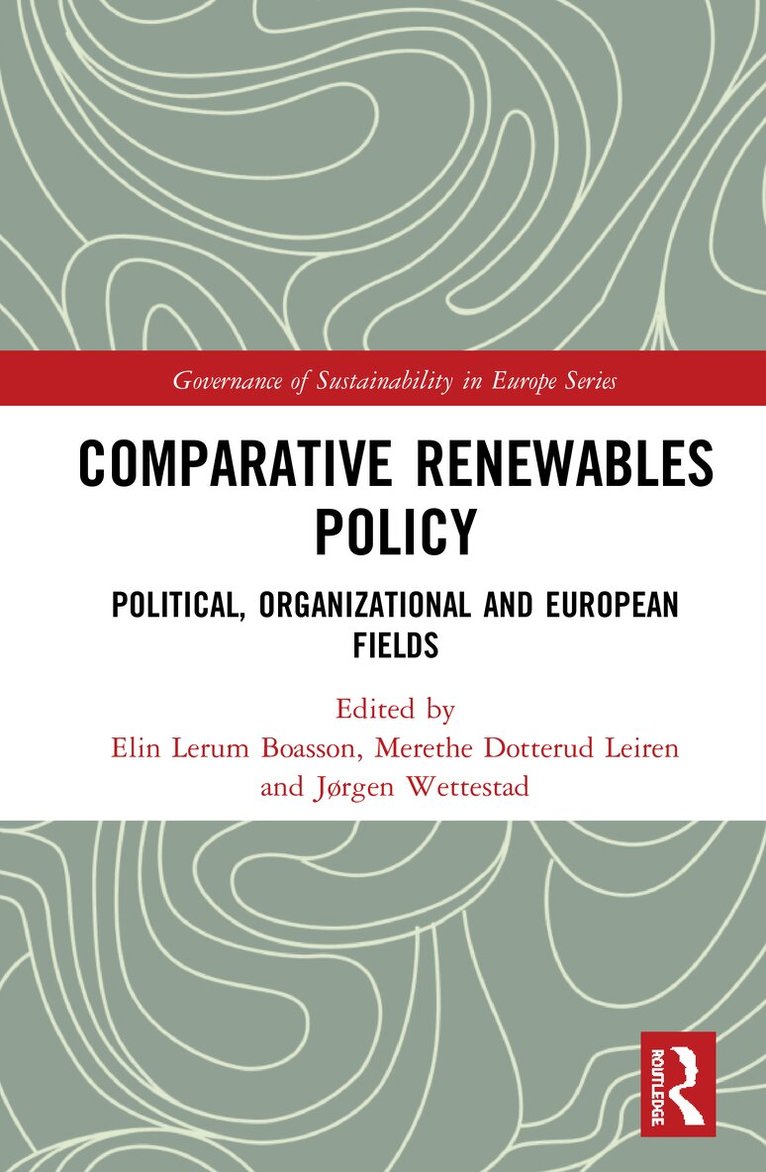
Challenging one-eyed technology-focused accounts of renewables policy, this book provides a ground-breaking, deep-diving and genre-crossing longitudinal study of policy development. The book develops a multi-field explanatory approach, capturing inter-relationships between actors often analyzed in isolation. It provides empirically rich and systematically conducted comparative case studies on the political dynamics of the ongoing energy transition in six European countries. While France, Germany, Poland and the United Kingdom opted for ‘technology-specific’ renewables support mixes, Norway and Sweden embarked on ‘technology-neutral’ support mixes. Differences between the two groups result from variations in domestic political and organizational fields, but developments over time in the European environment also spurred variation. These findings challenge more simplistic and static accounts of Europeanization. This volume will be of key interest to scholars and students of energy transitions, comparative climate politics, policy theory, Europeanization, European integration and comparative European politics more broadly, as well practitioners with an interest in renewable energy and climate transition.The Open Access version of this book, available at: https://www.taylorfrancis.com/books/e/9780429198144, has been made available under a Creative Commons Attribution-Non Commercial-No Derivatives 4.0 license.
576 kr
Skickas inom 10-15 vardagar
Challenging one-eyed technology-focused accounts of renewables policy, this book provides a ground-breaking, deep-diving and genre-crossing longitudinal study of policy development. The book develops a multi-field explanatory approach, capturing inter-relationships between actors often analyzed in isolation. It provides empirically rich and systematically conducted comparative case studies on the political dynamics of the ongoing energy transition in six European countries. While France, Germany, Poland and the United Kingdom opted for ‘technology-specific’ renewables support mixes, Norway and Sweden embarked on ‘technology-neutral’ support mixes. Differences between the two groups result from variations in domestic political and organizational fields, but developments over time in the European environment also spurred variation. These findings challenge more simplistic and static accounts of Europeanization. This volume will be of key interest to scholars and students of energy transitions, comparative climate politics, policy theory, Europeanization, European integration and comparative European politics more broadly, as well practitioners with an interest in renewable energy and climate transition.The Open Access version of this book, available at: https://www.taylorfrancis.com/books/e/9780429198144, has been made available under a Creative Commons Attribution-Non Commercial-No Derivatives 4.0 license.
2 088 kr
Skickas inom 10-15 vardagar
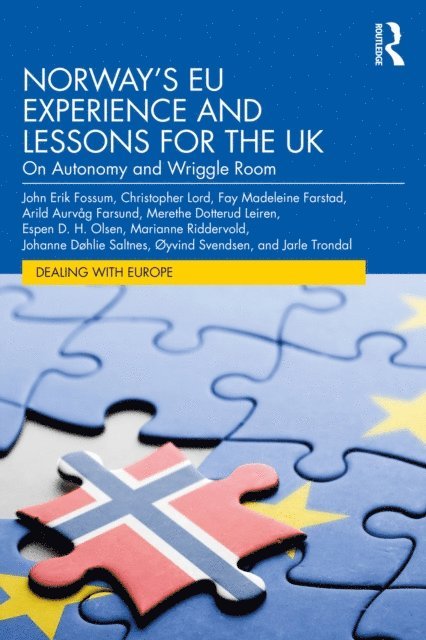
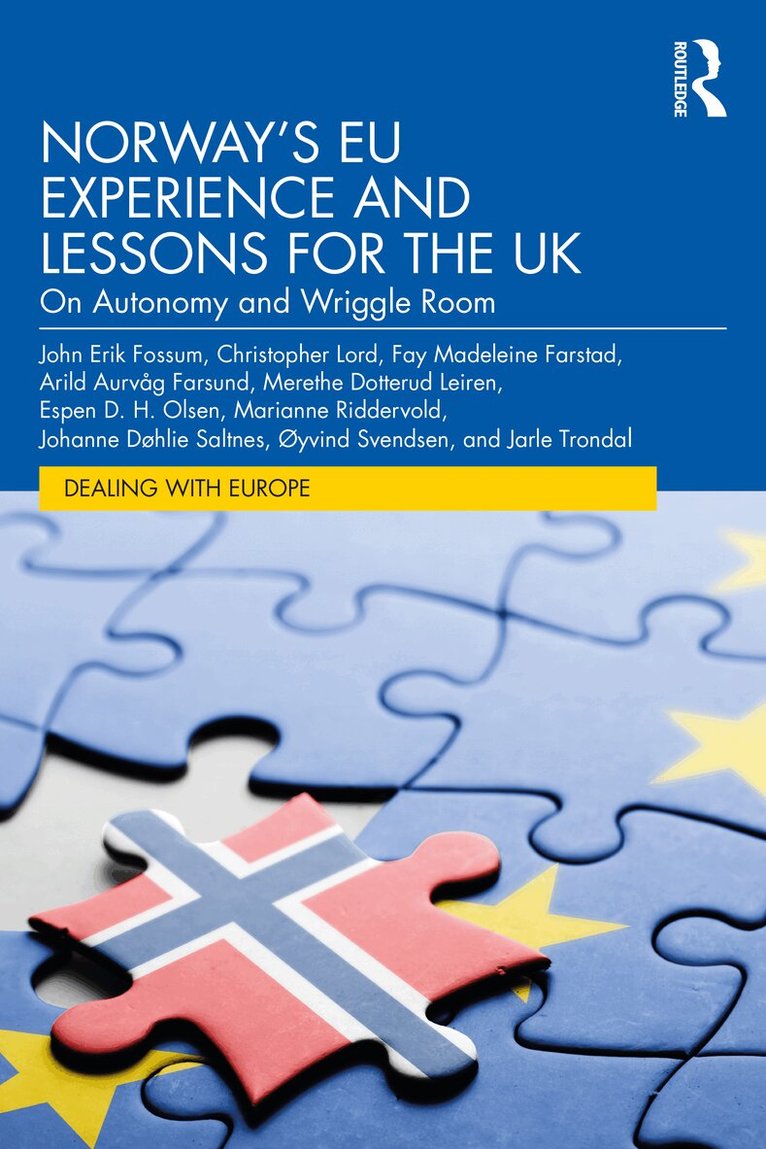
This book examines Norway’s affiliation to the EU and systematically assesses the potential suitability of this arrangement for the UK as a viable EU affiliation post-Brexit.Framing the book within the framework of the broader European context, the authors ask how much autonomy and room to manoeuvre tightly integrated non-member states have under this arrangement. They present an in-depth assessment of Norway’s close EU affiliation and provide insight into what this may reveal to us about the post-Brexit European political order. The book’s analytical framework centred on autonomy under complex interdependence has relevance well beyond the confines of the Norway case. This includes the UK, not least since the EU–UK Trade and Cooperation Agreement (TCA) leaves considerable uncertainty. It contains transitory elements; there will be implementation reviews, and there may be many more bilateral and multilateral agreements before the trade relationship is fully defined.This book will be of key interest to scholars and students of European Union politics, Norwegian politics, British politics, European integration, and, more broadly, to European studies and international relations.
576 kr
Skickas inom 10-15 vardagar
This book examines Norway’s affiliation to the EU and systematically assesses the potential suitability of this arrangement for the UK as a viable EU affiliation post-Brexit.Framing the book within the framework of the broader European context, the authors ask how much autonomy and room to manoeuvre tightly integrated non-member states have under this arrangement. They present an in-depth assessment of Norway’s close EU affiliation and provide insight into what this may reveal to us about the post-Brexit European political order. The book’s analytical framework centred on autonomy under complex interdependence has relevance well beyond the confines of the Norway case. This includes the UK, not least since the EU–UK Trade and Cooperation Agreement (TCA) leaves considerable uncertainty. It contains transitory elements; there will be implementation reviews, and there may be many more bilateral and multilateral agreements before the trade relationship is fully defined.This book will be of key interest to scholars and students of European Union politics, Norwegian politics, British politics, European integration, and, more broadly, to European studies and international relations.
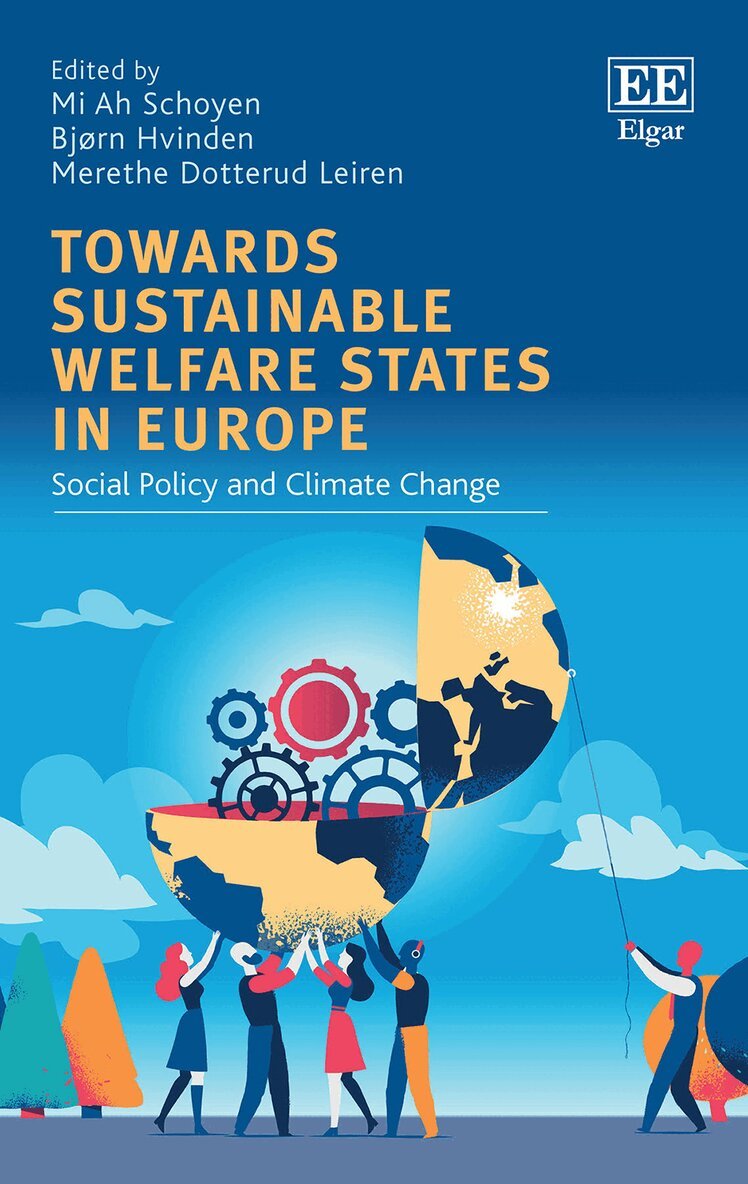
Towards Sustainable Welfare States in Europe
Social Policy and Climate Change
Inbunden, Engelska, 2022
1 866 kr
Skickas inom 7-10 vardagar
Foreword by Ian GoughThis seminal book addresses the critical and urgent question of ‘what makes welfare states sustainable?’ in the era of climate change. Expert authors challenge traditional perspectives on questions of sustainability which have focused on population ageing, global economic turbulence and on containing current and future public social spending.The chapters present new empirical evidence in the form of in-depth comparative country studies from across Europe, offering an insight into how political actors, social partners and civil society organisations in countries associated with different welfare models address questions of sustainability and the extent to which they balance social, ecological and economic considerations. The editors conclude by mapping out ways in which welfare states can address these increasingly urgent and complex issues and facilitate an eco-social transition towards true sustainability.This book will be an invaluable resource for scholars and students of comparative social policy, environmental politics and policy and climate change. Highlighting the political and structural challenges European societies face in the transition to low carbon economies, this book will also be beneficial for policymakers and practitioners in these areas.