Merle L. Bowen - Böcker
Visar alla böcker från författaren Merle L. Bowen. Handla med fri frakt och snabb leverans.
3 produkter
3 produkter
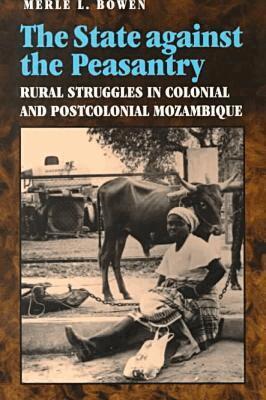
State Against the Peasantry
Rural Struggles in Colonial and Postcolonial Mozambique
Häftad, Engelska, 2000
338 kr
Skickas inom 10-15 vardagar
Through a careful consideration of the peasantry and the role of the NGOs, this work offers a nuanced understanding of the development process that has taken place in Mozambique and other southern African countries since independence. It draws on oral data and archival research.
1 133 kr
Skickas inom 7-10 vardagar
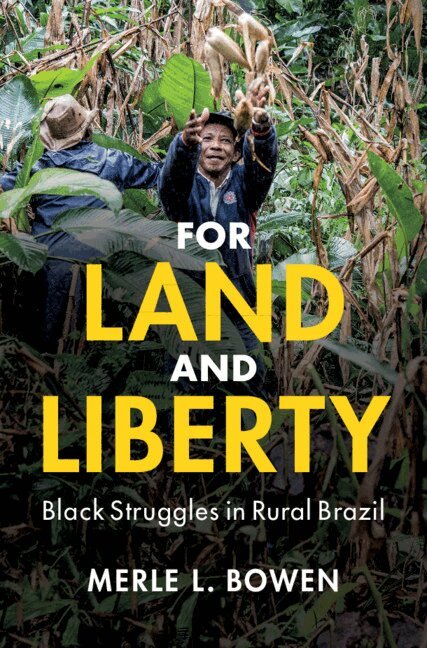
For Land and Liberty is a comparative study of the history and contemporary circumstances concerning Brazil's quilombos (African-descent rural communities) and their inhabitants, the quilombolas. The book examines the disposition of quilombola claims to land as a site of contestation over citizenship and its meanings for Afro-descendants, as well as their connections to the broader fight against racism. Contrary to the narrative that quilombola identity is a recent invention, constructed for the purpose of qualifying for opportunities made possible by the 1988 law, Bowen argues that quilombola claims are historically and locally rooted. She examines the ways in which state actors have colluded with large landholders and modernization schemes to appropriate quilombo land, and further argues that, even when granted land titles, quilombolas face challenges issuing from systemic racism. By analyzing the quilombo movement and local initiatives, this book offers fresh perspectives on the resurgence of movements, mobilization, and resistance in Brazil.
319 kr
Skickas inom 7-10 vardagar
For Land and Liberty is a comparative study of the history and contemporary circumstances concerning Brazil's quilombos (African-descent rural communities) and their inhabitants, the quilombolas. The book examines the disposition of quilombola claims to land as a site of contestation over citizenship and its meanings for Afro-descendants, as well as their connections to the broader fight against racism. Contrary to the narrative that quilombola identity is a recent invention, constructed for the purpose of qualifying for opportunities made possible by the 1988 law, Bowen argues that quilombola claims are historically and locally rooted. She examines the ways in which state actors have colluded with large landholders and modernization schemes to appropriate quilombo land, and further argues that, even when granted land titles, quilombolas face challenges issuing from systemic racism. By analyzing the quilombo movement and local initiatives, this book offers fresh perspectives on the resurgence of movements, mobilization, and resistance in Brazil.