Mervyn Griffiths – författare
Visar alla böcker från författaren Mervyn Griffiths. Handla med fri frakt och snabb leverans.
2 produkter
2 produkter
E-bok
PDF, Engelska, 2012672 kr
Läs direkt efter köp
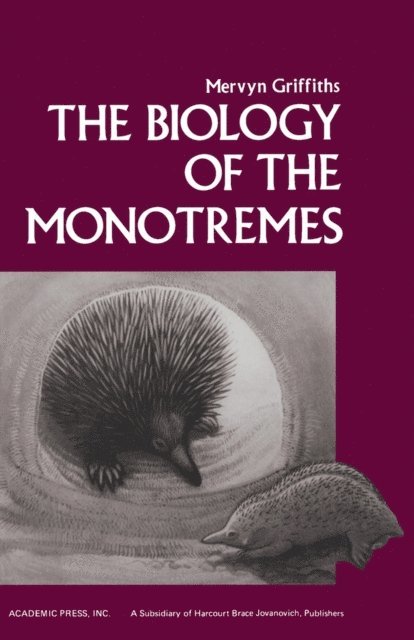
The Biology of the Monotremes is an attempt to make available all gathered information about monotremes to the greater public. This book specifically targets the students, newly graduates, teachers, and researchers interested in the study of life processes and evolution. This book comprises of 10 chapters. Each chapter except Chapter 10 discusses three genera - Ornithorhynchus, Tachyglossus, and Zaglossus. Chapter 1 serves as an introduction to the subject matter. It covers the discovery and general anatomy of the monotremes. In accordance, Chapter 2 discusses the different kinds of monotremes and its other aspects. Aside from the mentioned genera, it also includes Obdurodon insignis. In Chapter 3, the food and feeding habits of the monotremes is given focus. Meanwhile, the varied physiology of monotremes is the subject of Chapter 4, and temperature regulation in Chapter 5. A more detailed and thorough discussion regarding the anatomy of the monotremes is provided in Chapters 6 through 9. The discussion covers topics including the glands in the endocrine and immune systems, as well as special senses, organs, and behavior of monotremes. Its reproduction and embryology is also discussed. This book explains as well the mammal''s lactation, composition of the milk, sucking, and growth of the young. Lastly, Chapter 10 provides the readers with four differing views regarding the relationship of the monotremes with the rest of the mammals.
E-bok
PDF, Engelska, 2015756 kr
Läs direkt efter köp
Echidnas, Volume 38 presents the scientific classification of the mammal echidnas. This book describes the characteristics, behavior, reproduction, embryology, anatomy, and physiology of the spiny anteaters, Tachyglossidae. Organized into 11 chapters, this volume begins with an overview of the natural history, classification, and physical characteristics of echidnas. This text then examines the food intake and digestion mechanisms of echidnas whereby the ground-up insects in the buccal cavity are permeated with saliva secreted by the sublingual, subaxillary, and parotid salivary glands. Other chapters describe various stages in the development of echidna embryos and pouch young. This book discusses as well the primary division of the central nervous system of echidnas, including the prosencephalon, mesencephalon, and rhombencephalon. The final chapter deals with the similar anatomical characteristics that anteaters exhibit, and describes also their differences in the grinding techniques, forelimb anatomy, and stomach structures. This book is a valuable resource for biologists and zoologists.