Metin Gürcan – författare
Visar alla böcker från författaren Metin Gürcan. Handla med fri frakt och snabb leverans.
6 produkter
6 produkter
Häftad, Engelska, 2017
938 kr
Skickas inom 10-15 vardagar
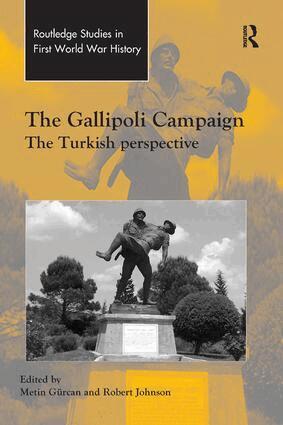
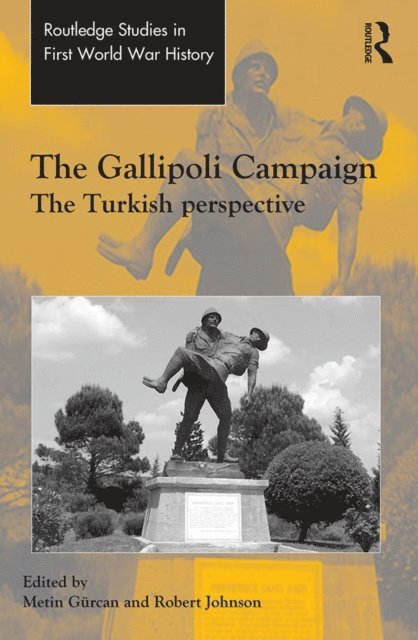
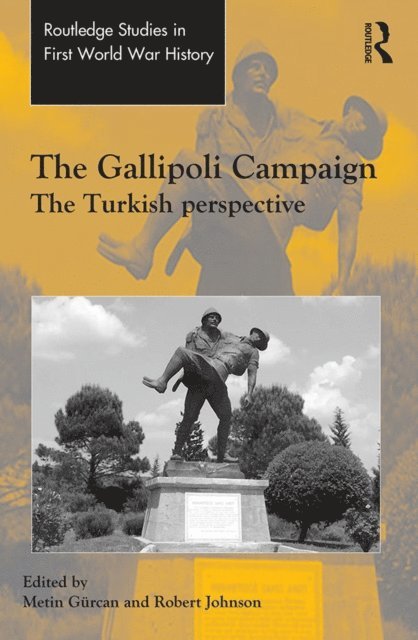
The war against the Ottomans, on Gallipoli, in Palestine and in Mesopotamia was a major enterprise for the Allies with important long-term geo-political consequences. The absence of a Turkish perspective, written in English, represents a huge gap in the historiography of the First World War. This timely collection of wide-ranging essays on the campaign, drawing on Turkish sources and written by experts in the field, addresses this gap. Scholars employ archival documents from the Turkish General Staff, diaries and letters of Turkish soldiers, Ottoman journals and newspapers published during the campaign, and recent academic literature by Turkish scholars to reveal a different perspective on the campaign, which should breathe new life into English-language historiography on this crucial series of events.
Inbunden, Engelska, 2016
2 508 kr
Skickas inom 10-15 vardagar
The war against the Ottomans, on Gallipoli, in Palestine and in Mesopotamia was a major enterprise for the Allies with important long-term geo-political consequences. The absence of a Turkish perspective, written in English, represents a huge gap in the historiography of the First World War. This timely collection of wide-ranging essays on the campaign, drawing on Turkish sources and written by experts in the field, addresses this gap. Scholars employ archival documents from the Turkish General Staff, diaries and letters of Turkish soldiers, Ottoman journals and newspapers published during the campaign, and recent academic literature by Turkish scholars to reveal a different perspective on the campaign, which should breathe new life into English-language historiography on this crucial series of events.
Häftad, Engelska, 2016
218 kr
Skickas
E-bok
Engelska, 2021127 kr
Läs direkt efter köp
Since 20 December 2001 - the date which marked the authorization of the International Security Assistance Force (ISAF) to assist the Afghan Government - hundreds of thousands of coalition soldiers from around 50 different states have physically been and served in Afghanistan. Roughly 20 rotation periods have been experienced; billions of US dollars have been spent; and almost 3,500 coalition soldiers and 7,400 Afghani security personnel have fallen for Afghanistan. In this badly-managed success story, the true determiner of both tactical outcomes on the ground and strategic results was always the tribal and rural parts of Muslim-populated Afghanistan. Although there has emerged a vast literature on counterinsurgency theories and tactics, we still lack reliable information about the motivations and aspirations of the residents of Tribalised Rural Muslim Environments (TRMEs) that make up most of Afghanistan. The aim of this book is to describe some on-the-ground problems of counterinsurgency (COIN) efforts in TRMEs - specifically in rural Afghanistan - and then to propose how these efforts might be improved. Along the way, it will be necessary to challenge many current assumptions about the conduct of counterinsurgency in Afghanistan. Most generally, the book will show how counterinsurgency succeeds or fails at the local level (at the level of tactical decisions by small-unit leaders) and that these decisions cannot be successful without understanding the culture and perspective of those who live in TRMEs. Although engaging issues of culture, the author is not an anthropologist or an academic of any kind. He is a Muslim who spent his childhood in a TRME - a remote village in Turkey - and he offers his observations on the basis of 15 years' worth of field experience as a Turkish Special Forces officer serving in rural Iraq, Turkey, Kazakhstan, Kyrgyzstan and Afghanistan. Cultures in these areas are not the same, but there are sufficient similarities to suggest some overall characteristics of TRMEs and some general problems of COIN efforts in these environments. In summary, this book not only challenges some of the fundamentals of traditional counterinsurgency wisdom and emphasizes the importance of the tactical level - a rarely-studied field from the COIN perspective - but also blends the firsthand field experiences of the author with deep analyses. In this sense, it is not solely an autobiography, but something much more.EPUB3: Reflowable
Häftad, Engelska, 2019
440 kr
Skickas inom 3-6 vardagar
E-bok
Engelska, 2019154 kr
Läs direkt efter köp
A scholarly analysis of the Turkish military in the 21st century by the Near East policy expert and author of What Went Wrong in Afghanistan. On July 15th, 2016, a faction within the Turkish Armed Forces attempted a coup d’état against sitting President Recep Tayyip Erdoğan. Though the attempt was unsuccessful, the TAF would never be the same. In Opening the Black Box, former Turkish military advisor Metin Gurcan offers a rare look inside the TAF to examine how it has evolved in the 21stcentury. With twenty years of experience inside the Turkish military, both on the field and in the corridors of the Turkish General Staff, as well as extensive academic research, Gurcan provides two detailed snapshots of the TAF: one before July 15thand one after. Offering a complete view of this complex institution, Gurcan offers scholarly perspectives on the TAF as a security organization, a social institution and, in the case of career officers, a profession. Gurcan also examines the evolution of civilian-military relations in Turkey over the last decade with a specific focus on the impact of the July 15 Military Uprising on institutional identity.