Michael A. Aung-Thwin – författare
Visar alla böcker från författaren Michael A. Aung-Thwin. Handla med fri frakt och snabb leverans.
3 produkter
3 produkter
887 kr
Skickas inom 5-8 vardagar
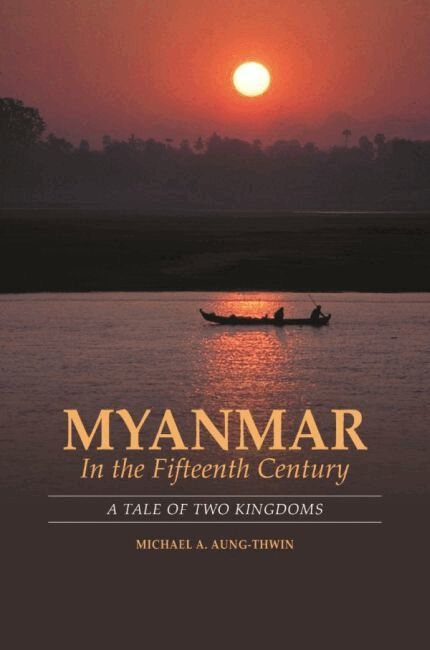
When the great kingdom of Pagan declined politically in the late thirteenth and early fourteenth centuries, its territory devolved into three centers of power and a period of transition occurred. Then two new kingdoms arose: the First Ava Dynasty in Upper Myanmar and the First Pegu Dynasty in Lower Myanmar. Both originated around the second half of the fourteenth century, reached their pinnacles in the fifteenth, and declined before the first half of the sixteenth century was over. Their story is the only missing piece in Myanmar’s mainstream historiography, a gap this book is designed to fill.Renowned historian Michael Aung-Thwin reconstructs the chronology of this nearly two-hundred-year period while challenging a number of long-held beliefs. Contrary to conventional histories, he contends that Ava was the continuation of an old kingdom (Pagan) led by its traditional ethno-linguistic group, the Burmese speakers, while Pegu was a new kingdom led by more recent arrivals, the Mon speakers. Although both kingdoms shared many cultural components of the “classical” Pagan tradition, Ava was inland and agrarian, while Pegu was maritime and commercial, so that each was shaped by very different geopolitical and economic environments. In that difference rests the dynamism of their “upstream-downstream” relationship, which, thereafter, became a regular historical pattern in Myanmar history, represented today by in-land Naypyidaw and “coastal” Yangon.Original in conception and impressive in scope, this well written book not only fills in the history of early modern Myanmar but places it in a broad interpretive context based on years of familiarity with a wealth of primary sources. Full of arresting anecdotes and colorful personalities, it represents an important contribution to Myanmar studies that will not easily be superseded.
296 kr
Skickas inom 5-8 vardagar
When the great kingdom of Pagan declined politically in the late thirteenth and early fourteenth centuries, its territory devolved into three centers of power and a period of transition occurred. Then two new kingdoms arose: the First Ava Dynasty in Upper Myanmar and the First Pegu Dynasty in Lower Myanmar. Both originated around the second half of the fourteenth century, reached their pinnacles in the fifteenth, and declined before the first half of the sixteenth century was over. Their story is the only missing piece in Myanmar’s mainstream historiography, a gap this book is designed to fill.Renowned historian Michael Aung-Thwin reconstructs the chronology of this nearly two-hundred-year period while challenging a number of long-held beliefs. Contrary to conventional histories, he contends that Ava was the continuation of an old kingdom (Pagan) led by its traditional ethno-linguistic group, the Burmese speakers, while Pegu was a new kingdom led by more recent arrivals, the Mon speakers. Although both kingdoms shared many cultural components of the "classical" Pagan tradition, Ava was inland and agrarian, while Pegu was maritime and commercial, so that each was shaped by very different geopolitical and economic environments. In that difference rests the dynamism of their "upstream-downstream" relationship, which, thereafter, became a regular historical pattern in Myanmar history, represented today by inland Naypyidaw and "coastal" Yangon.Original in conception and impressive in scope, this well written book not only fills in the history of early modern Myanmar but places it in a broad interpretive context based on years of familiarity with a wealth of primary sources. Full of arresting anecdotes and colorful personalities, it represents an important contribution to Myanmar studies that will not easily be superseded.
Myth and History in the Historiography of Early Burma
Paradigms, Primary Sources, and Prejudices
Häftad, Engelska, 1998
384 kr
Skickas inom 10-15 vardagar
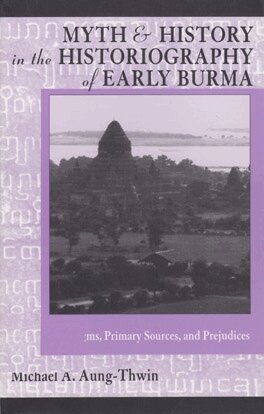
After careful re-reading and analysis of original Old Burmese and other primary sources, the author discovered that four out of the five events considered to be the most important in the history of early Burma, and believed to have been historically accurate, are actually late-nineteenth and twentieth-century inventions of colonial historians caught in their own intellectual and political world.Only one of these is a genuine indigenous Burmese myth, but it too has been embellished by modern historians.The author discusses each of these five myths and concludes with an assessment of the current situation in Burma in the context of the new myths springing up today, thereby bringing the thirteenth century into the twentieth.