Michael A. Jochim – författare
Visar alla böcker från författaren Michael A. Jochim. Handla med fri frakt och snabb leverans.
3 produkter
3 produkter
Häftad, Engelska, 1998
562 kr
Skickas inom 10-15 vardagar
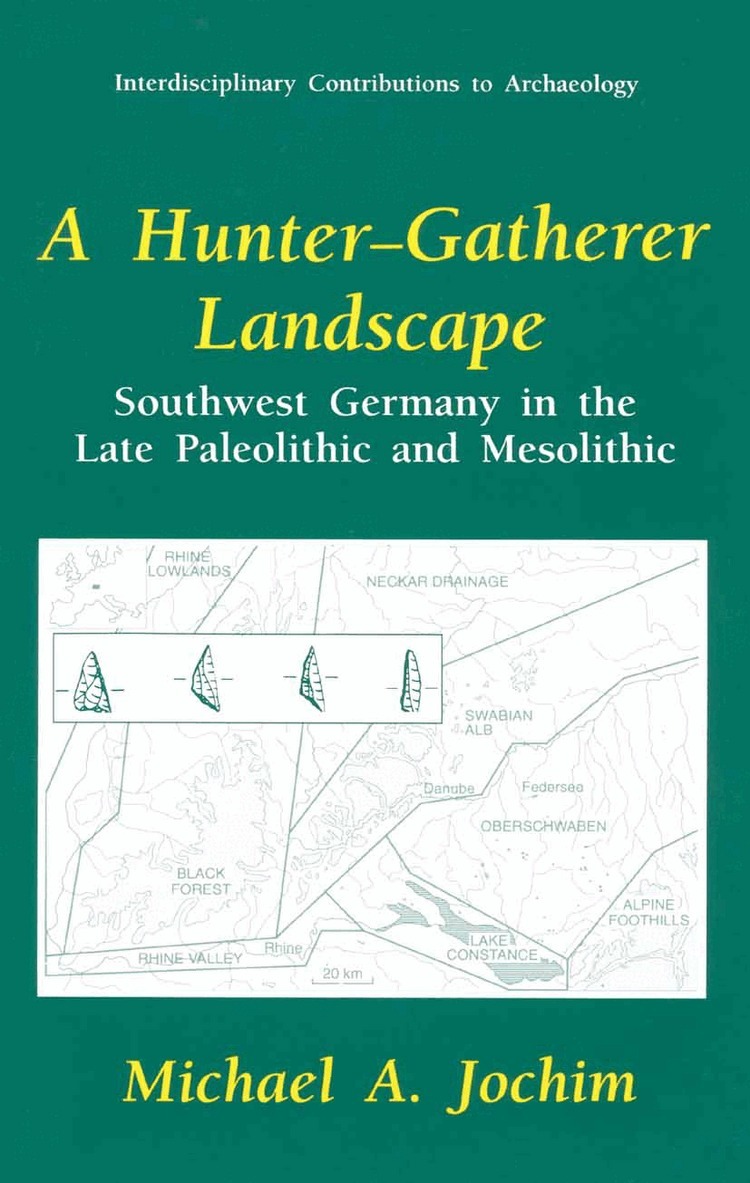
As an archaeologist with primary research and training experience in North American arid lands, I have always found the European Stone Age remote and impenetrable. My initial introduction, during a survey course on world prehis tory, established that (for me, at least) it consisted of more cultures, dates, and named tool types than any undergraduate ought to have to remember. I did not know much, but I knew there were better things I could be doing on a Saturday night. In any event, after that I never seriously entertained any notion of pur suing research on Stone Age Europe-that course was enough for me. That's a pity, too, because Paleolithic Europe-especially in the late Pleistocene and early Holocene-was the scene of revolutionary human adaptive change. Iron ically, all of it was amenable to investigation using precisely the same models and analytical tools I ended up spending the better part of two decades applying in the Great Basin of western North America. Back then, of course, few were thinking about the late Paleolithic or Me solithic in such terms. Typology, classification, and chronology were the order of the day, as the text for my undergraduate course reflected. Jochim evidently bridled less than I at the task of mastering these chronotaxonomic mysteries, yet he was keenly aware of their limitations-in particular, their silence on how individual assemblages might be connected as part of larger regional subsis tence-settlement systems.
E-bok
PDF, Engelska, 2012734 kr
Läs direkt efter köp
As an archaeologist with primary research and training experience in North American arid lands, I have always found the European Stone Age remote and impenetrable. My initial introduction, during a survey course on world prehis tory, established that (for me, at least) it consisted of more cultures, dates, and named tool types than any undergraduate ought to have to remember. I did not know much, but I knew there were better things I could be doing on a Saturday night. In any event, after that I never seriously entertained any notion of pur suing research on Stone Age Europe-that course was enough for me. That''s a pity, too, because Paleolithic Europe-especially in the late Pleistocene and early Holocene-was the scene of revolutionary human adaptive change. Iron ically, all of it was amenable to investigation using precisely the same models and analytical tools I ended up spending the better part of two decades applying in the Great Basin of western North America. Back then, of course, few were thinking about the late Paleolithic or Me solithic in such terms. Typology, classification, and chronology were the order of the day, as the text for my undergraduate course reflected. Jochim evidently bridled less than I at the task of mastering these chronotaxonomic mysteries, yet he was keenly aware of their limitations-in particular, their silence on how individual assemblages might be connected as part of larger regional subsis tence-settlement systems.
E-bok
PDF, Engelska, 2013783 kr
Läs direkt efter köp
Strategies for Survival: Cultural Behavior in an Ecological Context focuses on the ecological relationships between cultural behavior and its environmental context. The proliferation of ecological studies within anthropology suggests the increasing emphasis given to the systemic context of behavior. The aim of this book is to develop a framework for examining these relationships and for comparing diverse ecological studies within a coherent conceptual structure. It seeks to include any aspect of behavior, to investigate the links between ideological and material factors, to broaden the view of relevant factors and possible assumptions, and to relate the processes of decision-making to their specific context in a manner allowing cross-cultural comparisons. In the process, certain popular forms of ecological explanation will be examined. In addition, specific behavioral examples will be investigated in an attempt to explain patterns of similarities and differences. This book is addressed to all individuals interested in human-environmental interactions, including professional anthropologists and general students of human behavior.