Michael Aronna – författare
Visar alla böcker från författaren Michael Aronna. Handla med fri frakt och snabb leverans.
4 produkter
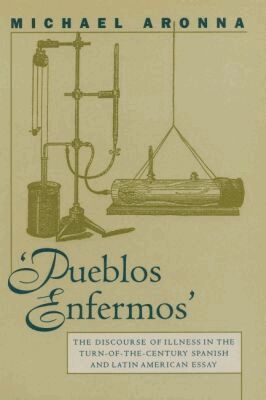
Pueblos Enfermos
The Discourse of Illness in the Turn-of-the-Century Spanish and Latin American Essay
Häftad, 1999
381 kr
Lägg i varukorg
This book investigates three examples of the turn-of-the-century essay in Spain and Latin America: Angel Ganivet's Idearium espanol (1897), Jose Enrique Rodo's Ariel (1900), and Alcides Arguedas's Pueblo enfermo (1909). Michael Aronna traces the reactions of these historically and rhetorically …
Postmodernism Debate in Latin America
Av John Beverley, Michael Aronna m. fl.
Häftad, 1995
385 kr
Lägg i varukorg
Postmodernism may seem a particularly inappropriate term when used in conjunction with a region that is usually thought of as having only recently, and then unevenly, acceded to modernity. Yet in the last several years the concept has risen to the top of the agenda of cultural and political debate …
Postmodernism Debate in Latin America
Av Jose Oviedo, Michael Aronna m. fl.
E-bok, 1995
655 kr
Lägg i varukorg
Postmodernism may seem a particularly inappropriate term when used in conjunction with a region that is usually thought of as having only recently, and then unevenly, acceded to modernity. Yet in the last several years the concept has risen to the top of the agenda of cultural and political debate …
Postmodernism Debate in Latin America
Av John Beverley, Michael Aronna m. fl.
Inbunden, 1995
1325 kr
Tillfälligt slut
Postmodernism may seem a particularly inappropriate term when used in conjunction with a region that is usually thought of as having only recently, and then unevenly, acceded to modernity. Yet in the last several years the concept has risen to the top of the agenda of cultural and political debate …